 Image 1 of 4
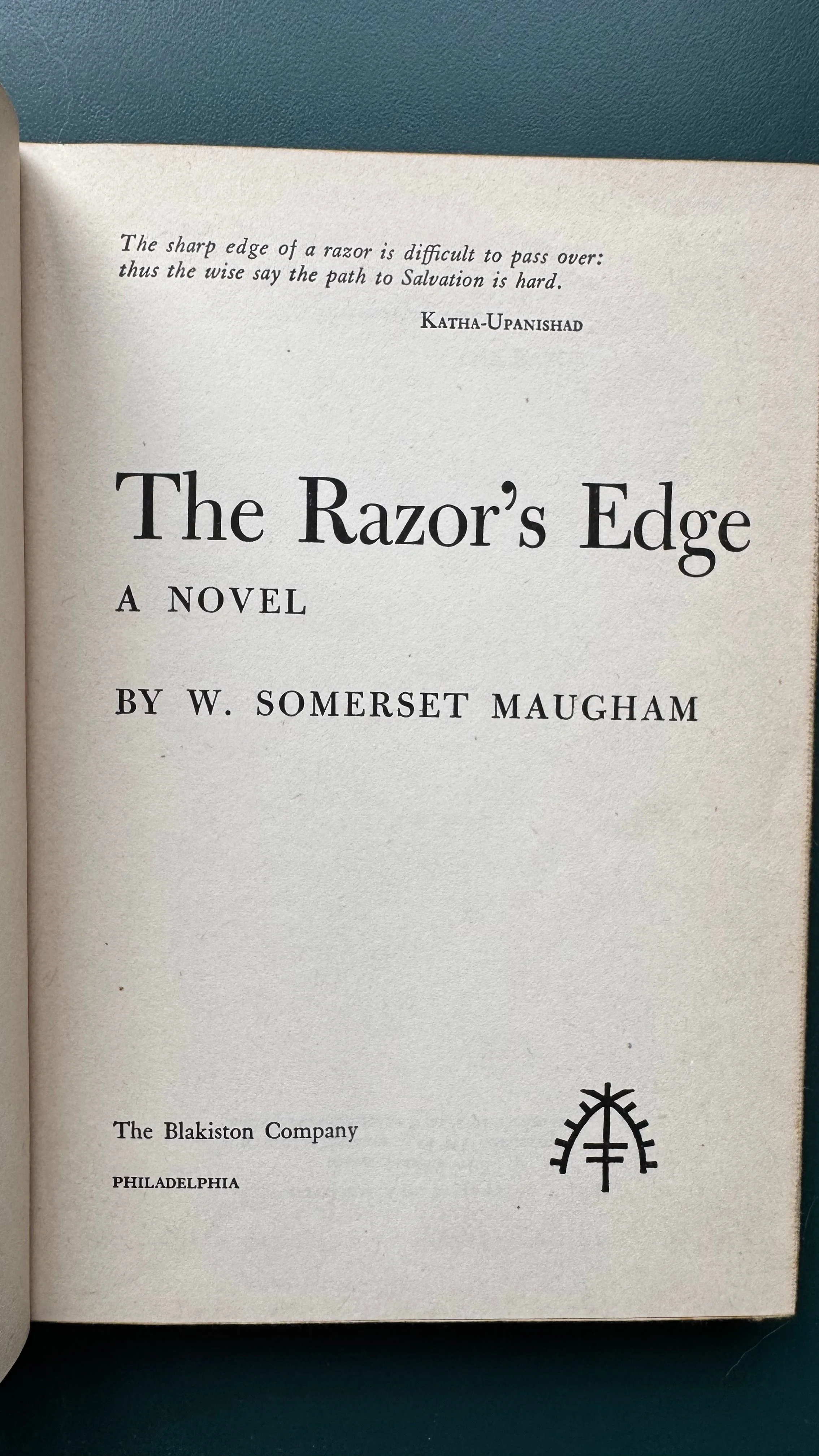 Image 2 of 4
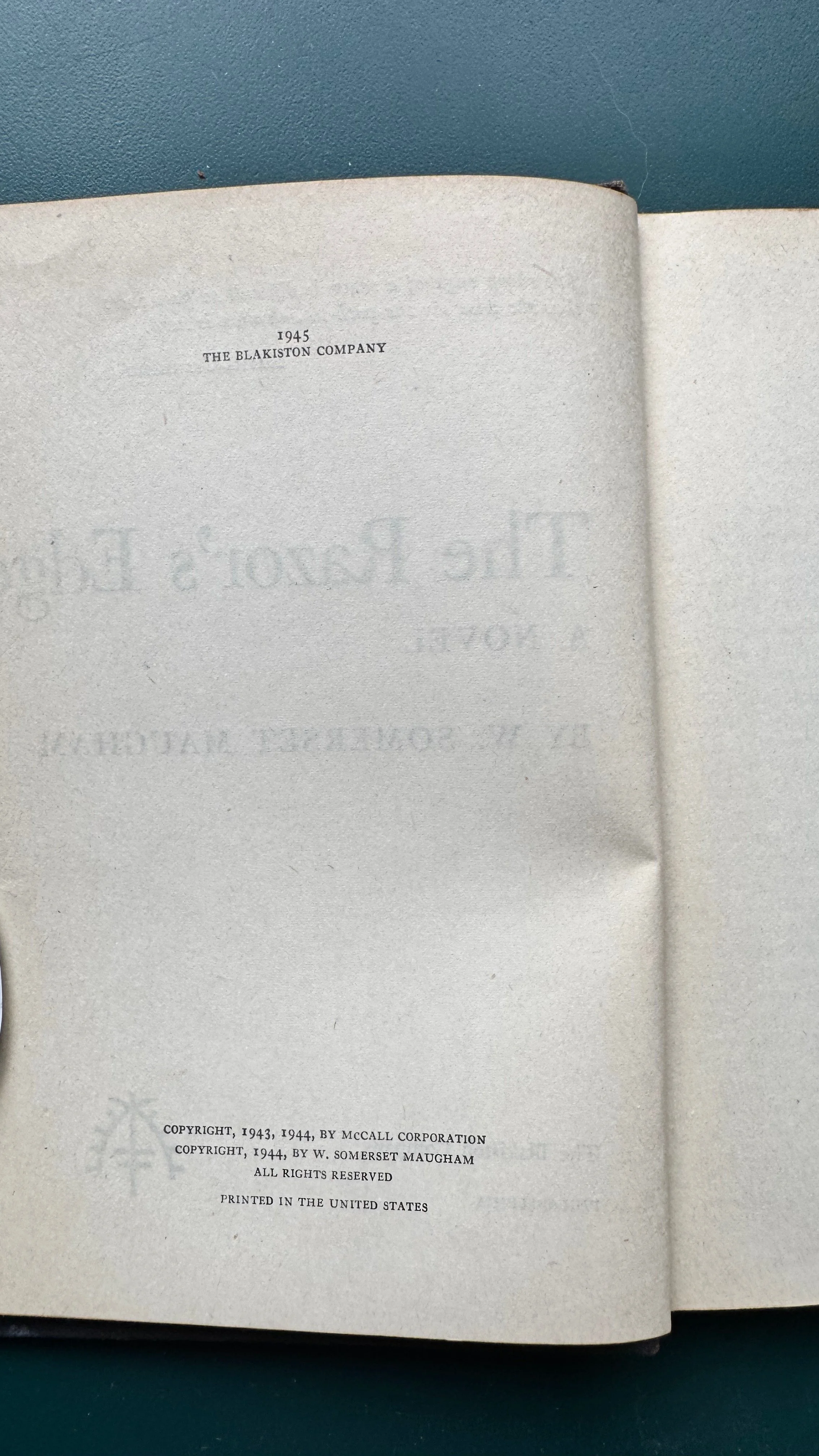 Image 3 of 4
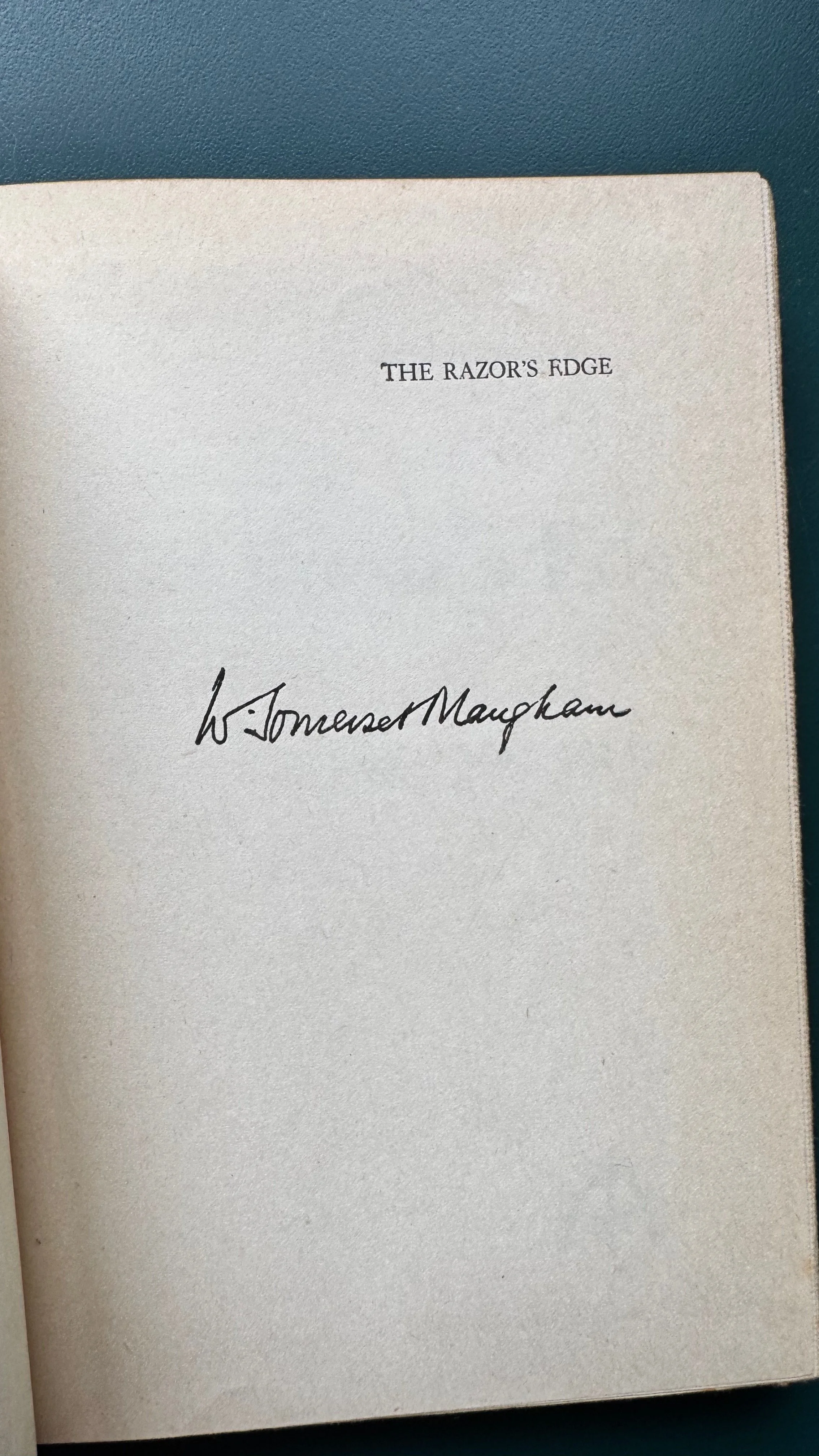 Image 4 of 4
Copyright Details
Copyright 1943, 1944 by McCall Corporation
Copyright 1944 by W. Somerset Maugham
Printed in the United States
Your copy shows 1945 on the edition page
This is a wartime/early post-war book club or trade reprint, issued soon after the novel’s initial 1944 publication by Doubleday, Doran.
It is not a first edition, since the true first was published in 1944 by Doubleday.
📘 Book History
The Razor’s Edge is one of Maugham’s most influential novels, written late in his career and published during WWII. The book explores themes of:
Eastern philosophy
The meaning of life
Post-war disillusionment
Spiritual awakening
The protagonist, Larry Darrell, seeks enlightenment after traumatic wartime experiences. The novel became a bestseller and was later adapted into two major films (1946 and 1984).
Blakiston’s edition circulated widely among wartime and postwar readers who wanted inexpensive or readily available copies during paper shortages.
📚 Description of Contents
This edition contains:
The full text of the novel
Epigraph from the Katha Upanishad:
“The sharp edge of a razor is difficult to pass over…”A facsimile reproduction of Maugham’s signature on the front free endpaper (printed, not hand-signed)
Standard Blakiston typography and layout
No illustrations beyond publisher marks
The facsimile signature is a common feature of mid-1940s reprints and should not be mistaken for an autograph.
📦 Physical Condition
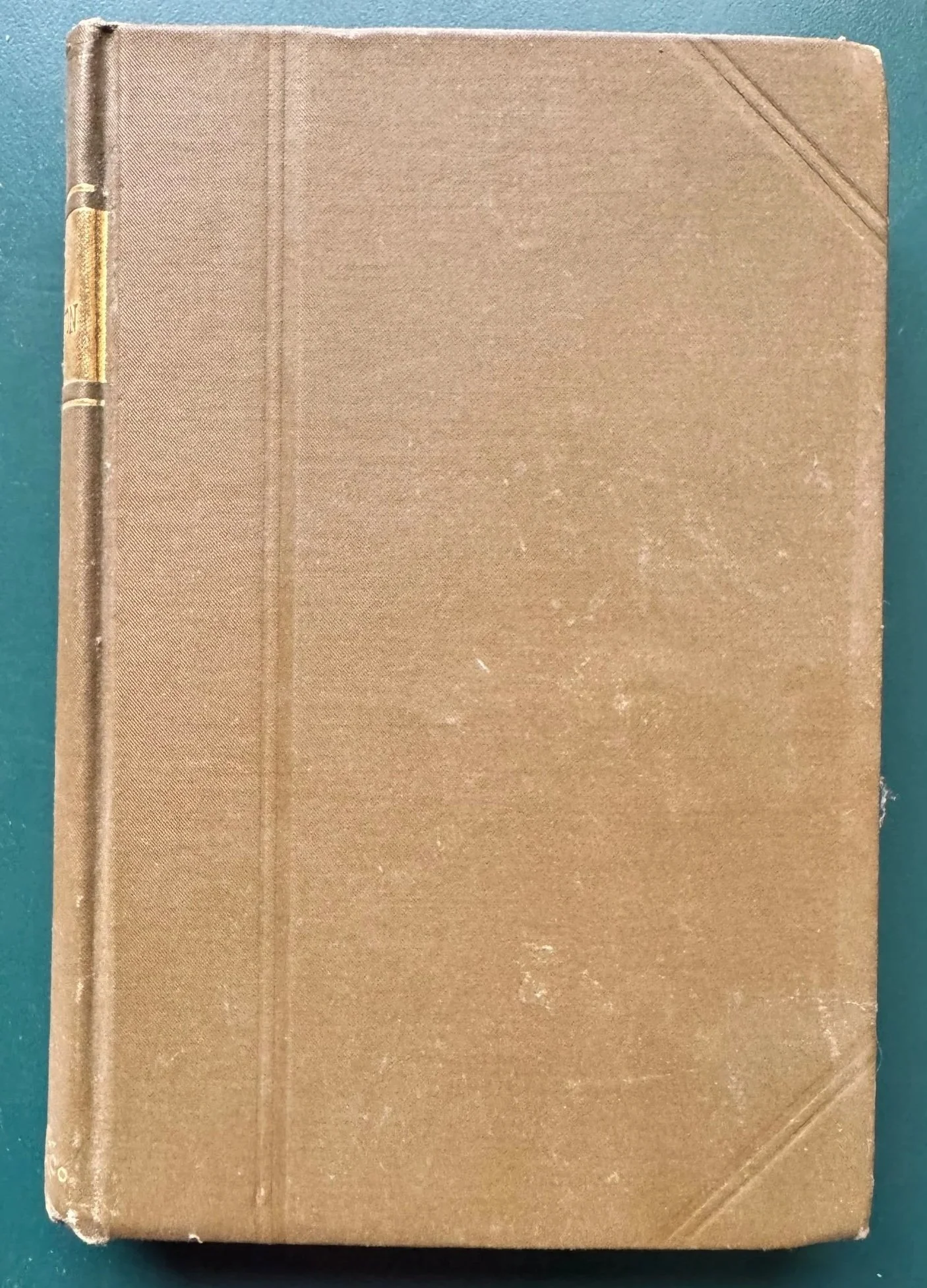
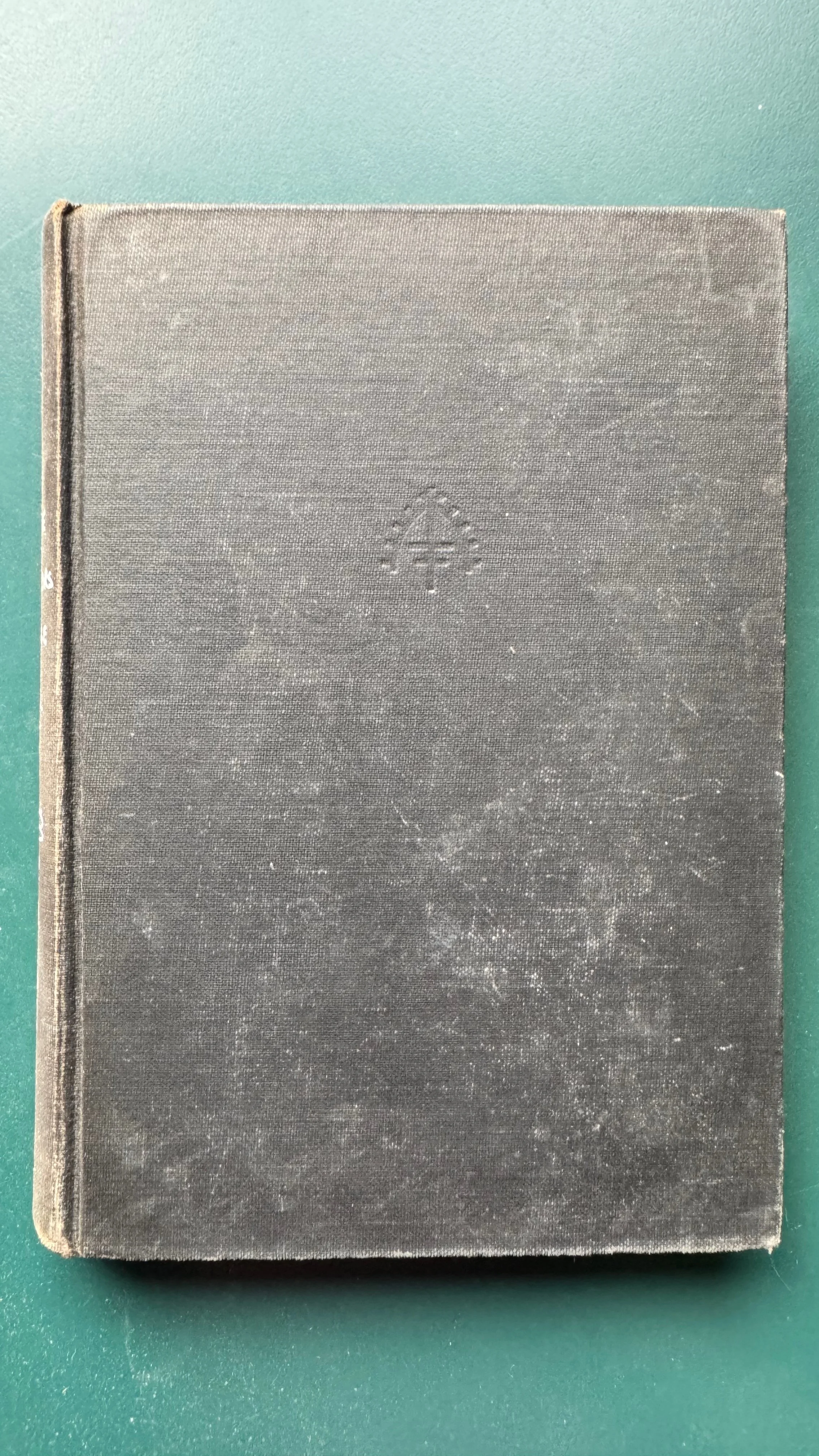
Covers
Black cloth boards with embossed Blakiston device
Noticeable rubbing, scuffing, and edge wear
Spine shows some fading
Corners slightly bumped
No dust jacket present
Interior
Paper shows typical 1940s toning
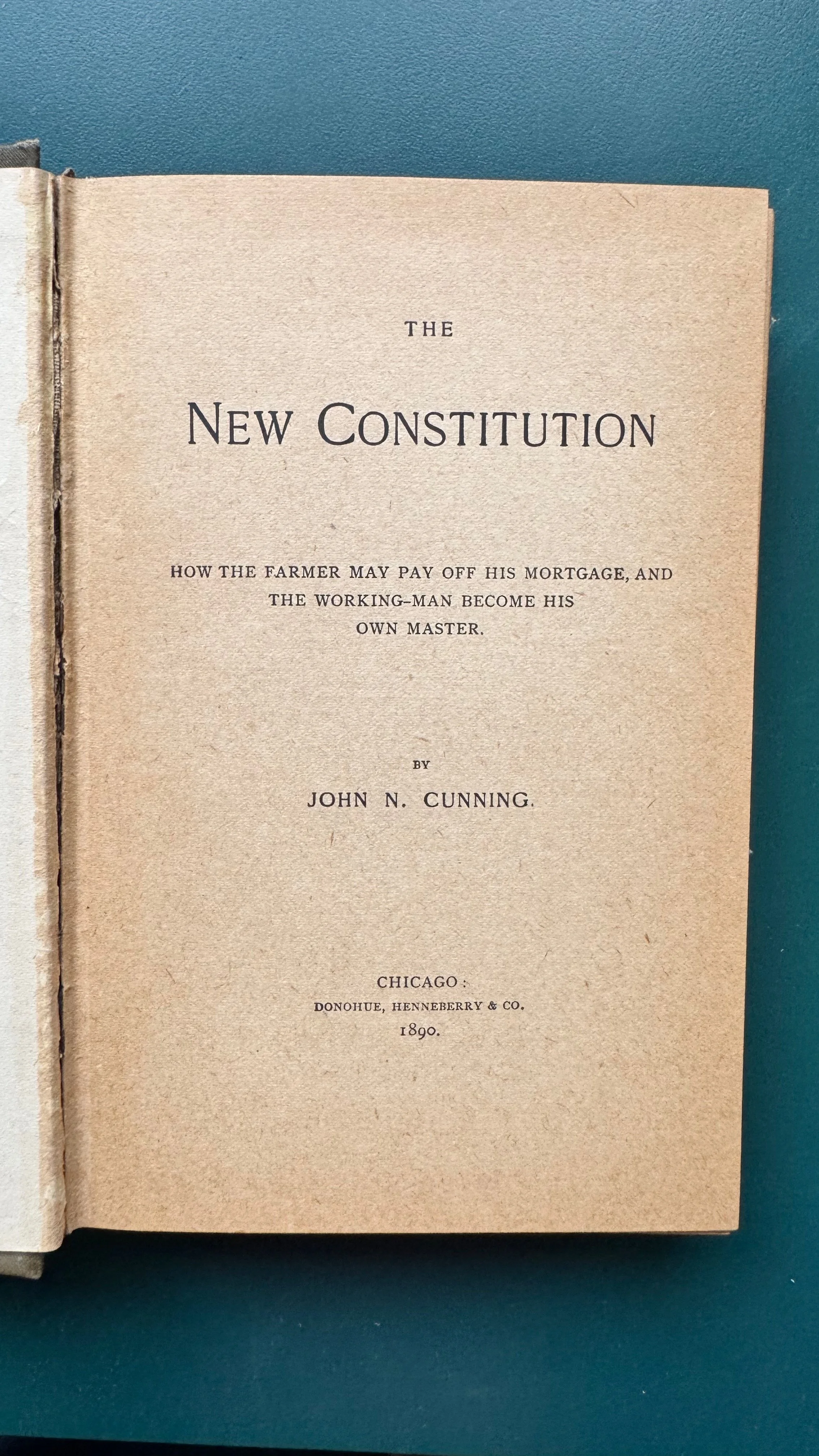
Title page, copyright page, and signature page all intact
Binding appears firm
No major foxing visible, though mild discoloration in margins
Overall condition: Good– (G–) due to exterior wear, but internally clean.
⭐ Special Features
Early 1945 printing of one of Maugham’s most enduring novels
Includes printed signature facsimile
Wartime-era publisher uncommon for this title
Represents a transitional period when publishers shared printing rights due to rationing
Historically interesting but not rare
Collectors generally prize first editions and jacketed copies; Blakiston printings are valued for readership rather than rarity.