Why Do Families Homeschool?
How common is homeschooling?
Homeschooling has become one of the fastest-growing educational choices in the United States. What was once viewed as an alternative used by a small number of families is now a much more common option. Today’s homeschool families come from many different backgrounds. They represent different political views, income levels, religions, cultures, family structures, and educational philosophies. Some families homeschool for only a year or two during a season of transition. Others continue through high school. The reasons are just as varied as the families themselves.
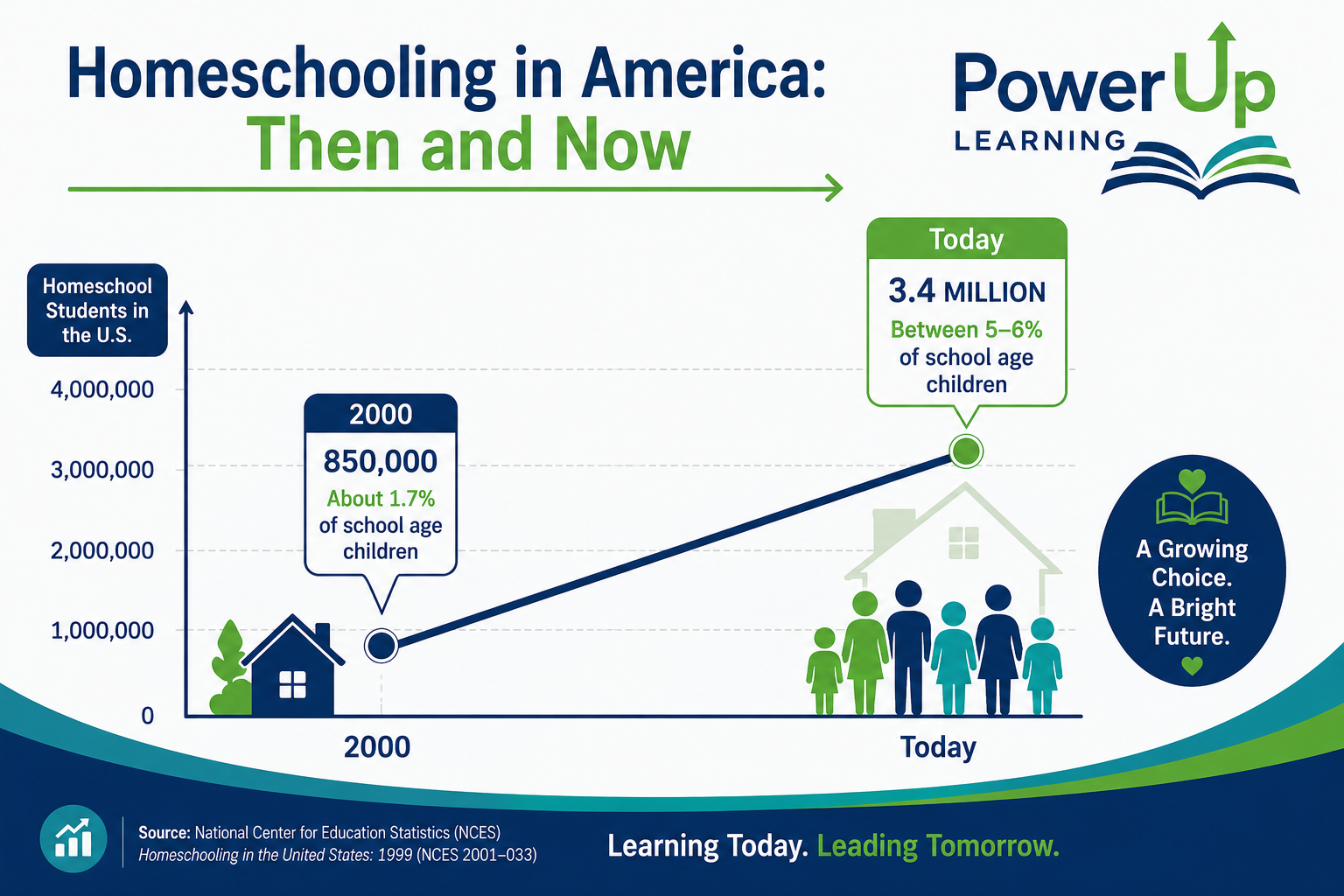
According to the National Center for Education Statistics, the percentage of homeschooled students increased from 1.7% in 1999 to 3.4% in 2012, showing that homeschooling had already been growing steadily before the pandemic years. More recent NCES data reported that in the 2022–23 school year, about 3.4% of students were homeschooled, while 5.2% received instruction at home when full-time virtual education was also included.
That matters because homeschooling is no longer easy to describe in one simple way. Families homeschool for academic reasons, safety reasons, family reasons, health reasons, religious or moral reasons, lifestyle reasons, and sometimes simply because their child learns better in a different setting. Most families do not make the decision because of one isolated issue. They usually weigh several concerns together before deciding what makes the most sense for their child and their home.
What appears to be the most compelling reason why parents decide to homeschool?
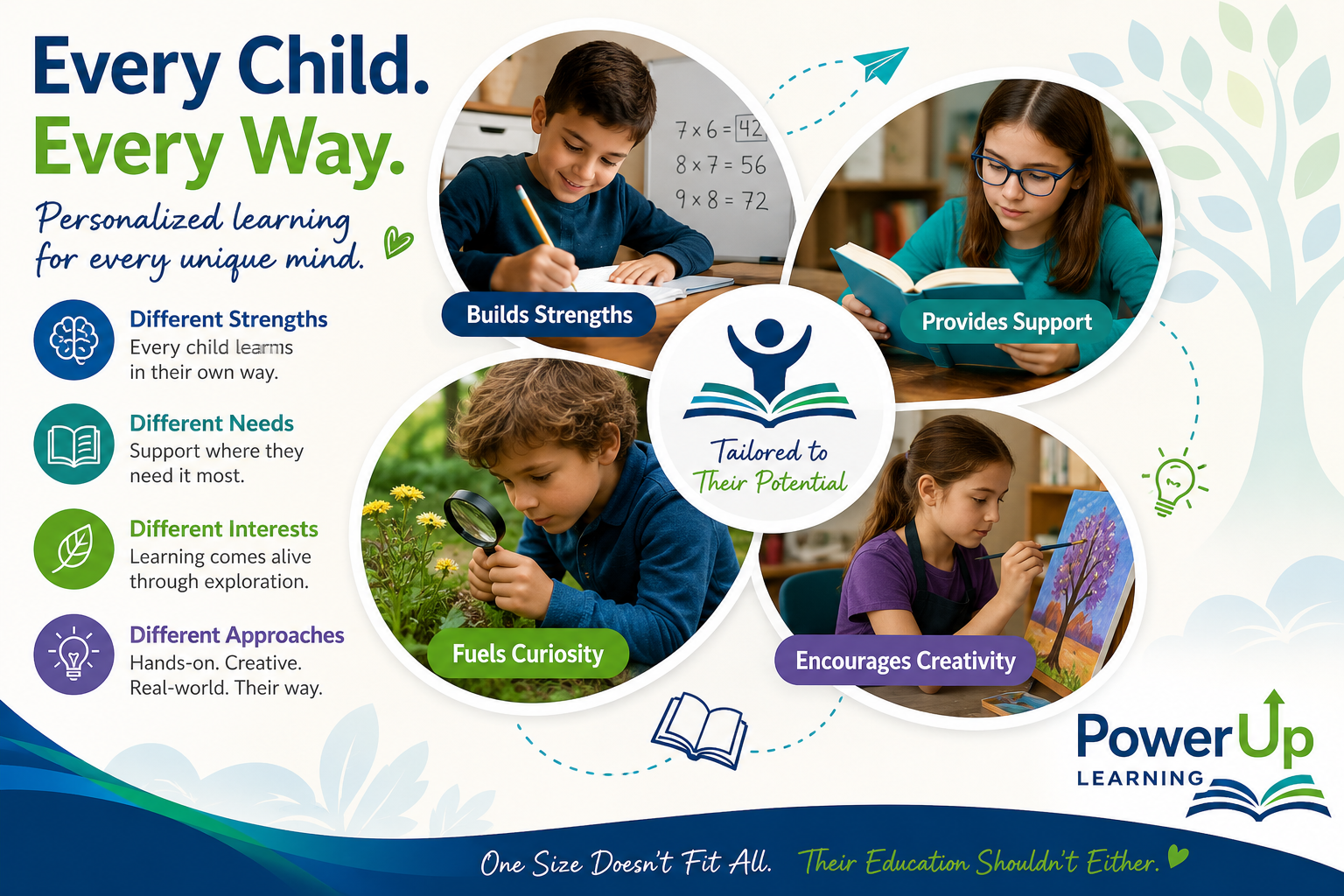
One of the most common reasons families choose homeschooling is the chance to personalize education. Every child learns differently. One child may race through math but need more time with reading. Another may love history but struggle with writing. Some children learn best by building, drawing, moving, discussing, experimenting, or spending time outdoors. Others need quiet, repetition, structure, or one-on-one instruction before a concept really clicks.
Homeschooling gives parents room to respond to those differences. A lesson can move faster when a child understands the material, or it can slow down when more practice is needed. Parents can choose curriculum that fits the child, change methods when something is not working, and build learning around strengths rather than constantly focusing on weaknesses. This is one of the strongest themes in the original draft: homeschooling allows learning to become more personalized and less standardized.
This flexibility can be especially helpful for children with learning differences, gifted abilities, ADHD, autism, dyslexia, anxiety, medical needs, or other exceptional learning needs. In a classroom, even a strong teacher must divide attention among many students. At home, parents can often adjust the schedule, environment, pacing, and learning tools to better match the child in front of them.
Are school environments a factor in families deciding to homeschool?
Another leading reason families homeschool is concern about the school environment. Parents may worry about bullying, peer pressure, classroom disruptions, safety, drugs, school violence, or a learning environment that feels too stressful for their child. NCES data shows that concern about the environment of other schools was the most frequently selected reason parents gave for homeschooling, with 83% of homeschooling parents selecting it in the 2022–23 data. Earlier NCES data also reported that 80.3% of homeschooled students had parents who selected concern about school environment as one of their reasons.
This does not mean every school is unsafe or unsupportive. Many children thrive in school settings. Many teachers and administrators work hard to create safe, caring classrooms. But for some families, the child’s school experience becomes difficult enough that parents begin looking for another option. A calmer home environment can give a child space to recover confidence, focus on learning, and feel emotionally secure.
Families Are Looking for Academic Flexibility
Some families choose homeschooling because they are dissatisfied with the academic fit of a traditional classroom. A child may be bored because the pace is too slow. Another may feel lost because the pace is too fast. Some parents want more time for reading, writing, science, history, art, music, nature study, or hands-on projects. Others want to use a curriculum that better matches their educational philosophy.
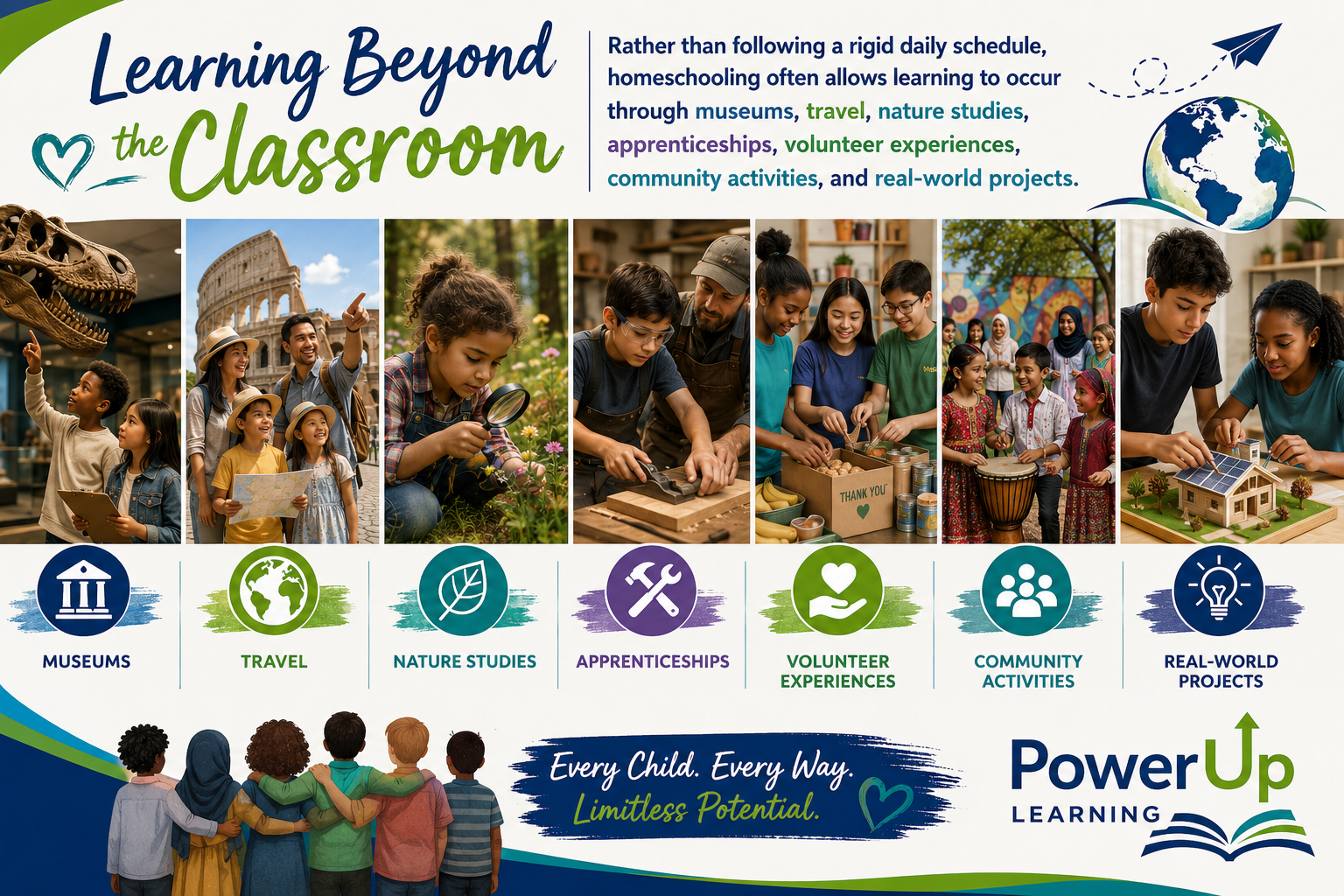
Homeschooling allows families to spend more time where it is needed and move ahead where a child is ready. It also allows learning to happen outside a traditional school schedule. Museums, libraries, local history sites, nature trails, volunteer work, apprenticeships, travel, family businesses, and community activities can all become part of the learning experience. The original draft emphasizes that homeschooling can make room for real-world projects and experiences that may receive less attention in a classroom schedule.
This is one reason project-based learning fits so naturally with homeschooling. A child studying astronomy can read about planets, build a model solar system, track the night sky, visit an observatory, and write about what was discovered. A child interested in history can visit a museum, interview a veteran, create a documentary, build a timeline, or write historical fiction. Instead of treating subjects as separate boxes, homeschooling can help children see how reading, writing, science, history, technology, art, and problem-solving connect.
Family Life Often Becomes Part of Learning
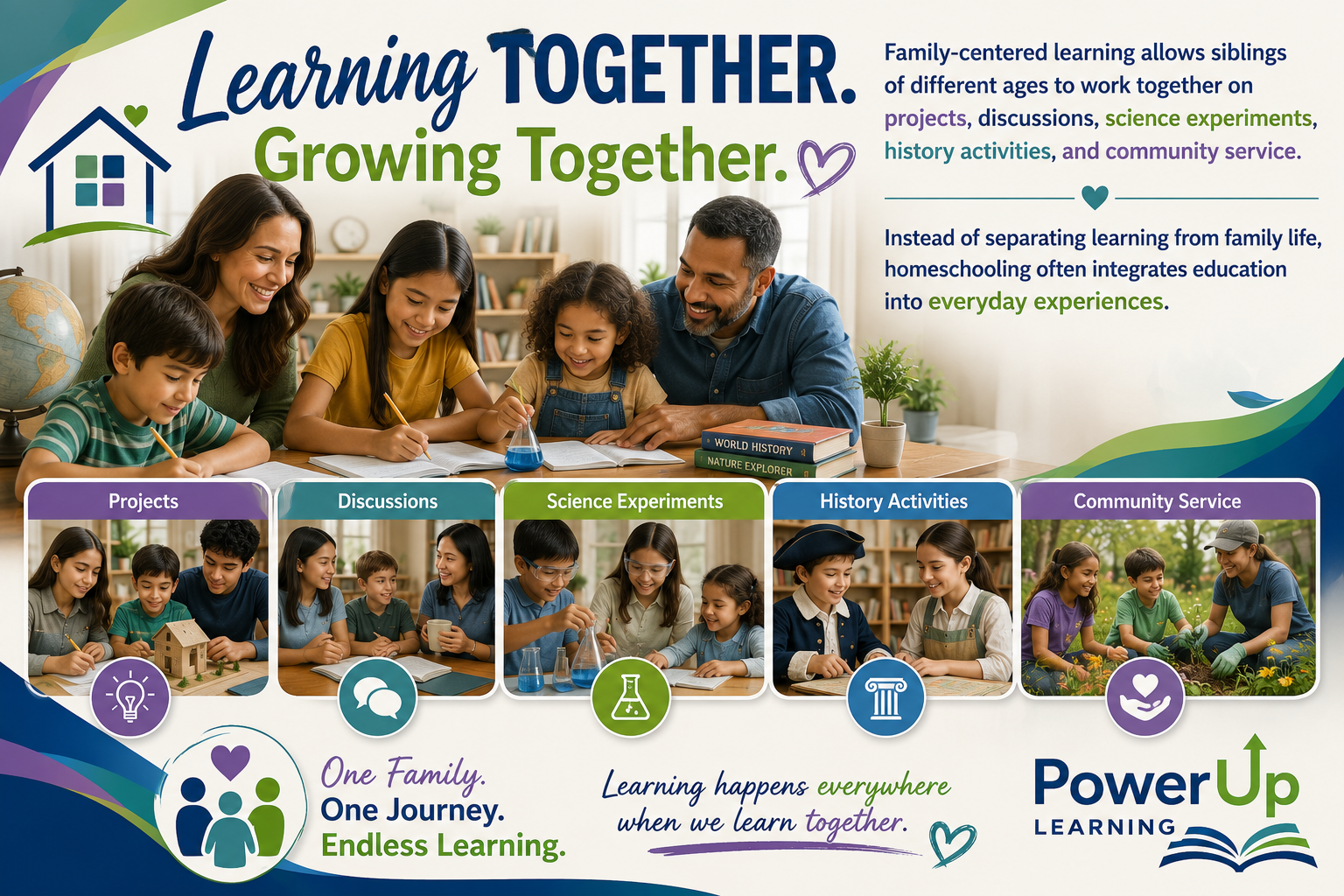
For many parents, homeschooling is not only an educational method. It becomes part of family life. Families may choose homeschooling because they want more time together, more shared experiences, and more opportunities to learn alongside one another. NCES has identified emphasis on family life together as one of the commonly cited motivations for homeschooling, and the original draft also highlights family-centered learning as a major reason parents choose this path.
This can change the rhythm of the home. Siblings of different ages may work together on projects. A younger child may listen in while an older child studies history. An older child may help a younger sibling with a science activity. A family may read aloud together, cook together, garden together, volunteer together, or turn a trip into a learning opportunity. Homeschooling often blurs the line between “school time” and “life,” which can make learning feel more natural and connected.
Some Families Want Education to Reflect Their Values
For some parents, homeschooling provides a way to include moral, ethical, religious, cultural, or family values in daily learning. This may mean faith-based instruction. It may mean teaching family heritage, cultural traditions, character development, civic responsibility, or service to others. It may also mean discussing current events through the lens of family beliefs and encouraging children to think about responsibility, compassion, citizenship, and community.
NCES data has consistently shown that moral instruction is one of the common reasons parents choose homeschooling, and the original draft identifies family values as one of the important motivations behind the decision. For some families, this is central. For others, it is only one part of a larger decision. Either way, homeschooling gives parents more influence over how values and learning are connected.
Modern Family Schedules Do Not Always Fit a Traditional School Calendar
Families today often live with schedules that do not fit neatly into the traditional school day. Some parents work remotely. Some travel often. Some own businesses. Some have children involved in athletics, performing arts, agriculture, caregiving responsibilities, or specialized training. Some families move frequently because of military life or work demands. Homeschooling can provide flexibility that allows education to fit family life rather than forcing family life to revolve entirely around school schedules.
Lessons can happen in the morning, afternoon, evening, on weekends, or while traveling. Vacations can become opportunities to visit historical sites, museums, national parks, science centers, or cultural landmarks. This kind of flexibility does not mean learning is less serious. It simply means learning can happen in more places and at different times.
Children With Special Needs May Benefit From a More Flexible Setting
Some families homeschool because a child has physical, emotional, developmental, sensory, or learning needs that are difficult to meet in a traditional setting. A child may need therapy appointments built into the day. Another may need sensory breaks, medical routines, movement, quiet, or a slower pace. Some children need learning broken into smaller pieces. Others need enrichment because they are ready to move ahead.
Homeschooling is not automatically the best answer for every child with special needs. Some children receive excellent services through public or private schools. Some families need professional supports that are difficult to provide at home. But for many parents, homeschooling offers more control over pacing, routines, instructional strategies, and the overall learning environment.
Homeschooling Can Encourage Curiosity
One of the most powerful possibilities in homeschooling is to encourage curiosity. Children are natural question-askers. They want to know how things work, why events happened, what animals do, how machines are built, where people lived, and what might happen next. In a traditional classroom, time limits may require moving on quickly. In a homeschool setting, a question can turn into a project.
The original draft gives examples of children following interests in astronomy or history. One child might build a telescope, visit an observatory, and study planetary motion. Another might recreate historical events, interview local veterans, or create a documentary. This type of learning encourages children to see themselves as investigators, creators, researchers, and problem-solvers.
Homeschooling Can Build Independent Learners
Many homeschool parents want their children to become independent learners. That does not mean children are left alone to figure everything out. It means they gradually learn how to set goals, manage projects, ask questions, conduct research, think critically, solve problems, and use time well. These are not just school skills. They are life skills.
The original draft emphasizes that students in homeschool settings often have opportunities to manage projects, practice critical thinking, solve real-world problems, and develop time management skills. These habits matter long after a child finishes a lesson or completes a grade level. A child who learns how to learn is better prepared for college, work, family responsibilities, community life, and lifelong growth.
The Homeschool Community Is More Diverse Than Many People Realize
A common misunderstanding is that homeschool families all look alike or homeschool for the same reasons. Current research does not support that stereotype. The homeschool community includes urban families, rural families, single-parent families, military families, secular families, religious families, families from many racial and ethnic backgrounds, and families using a wide range of educational approaches. The original draft notes that researchers Robert Kunzman and Milton Gaither describe homeschool motivations as clustering around several broad themes, including school environment concerns, academic considerations, family relationships, and religious or moral formation.
This diversity matters because it helps explain why homeschooling continues to evolve. Some families are drawn to classical education. Others prefer unschooling, unit studies, Charlotte Mason methods, online courses, co-ops, project-based learning, or hybrid programs. Many families blend several approaches. Homeschooling is not one model. It is a broad category that includes many ways of organizing learning.
Homeschooling Does Not Have to Mean Learning Alone
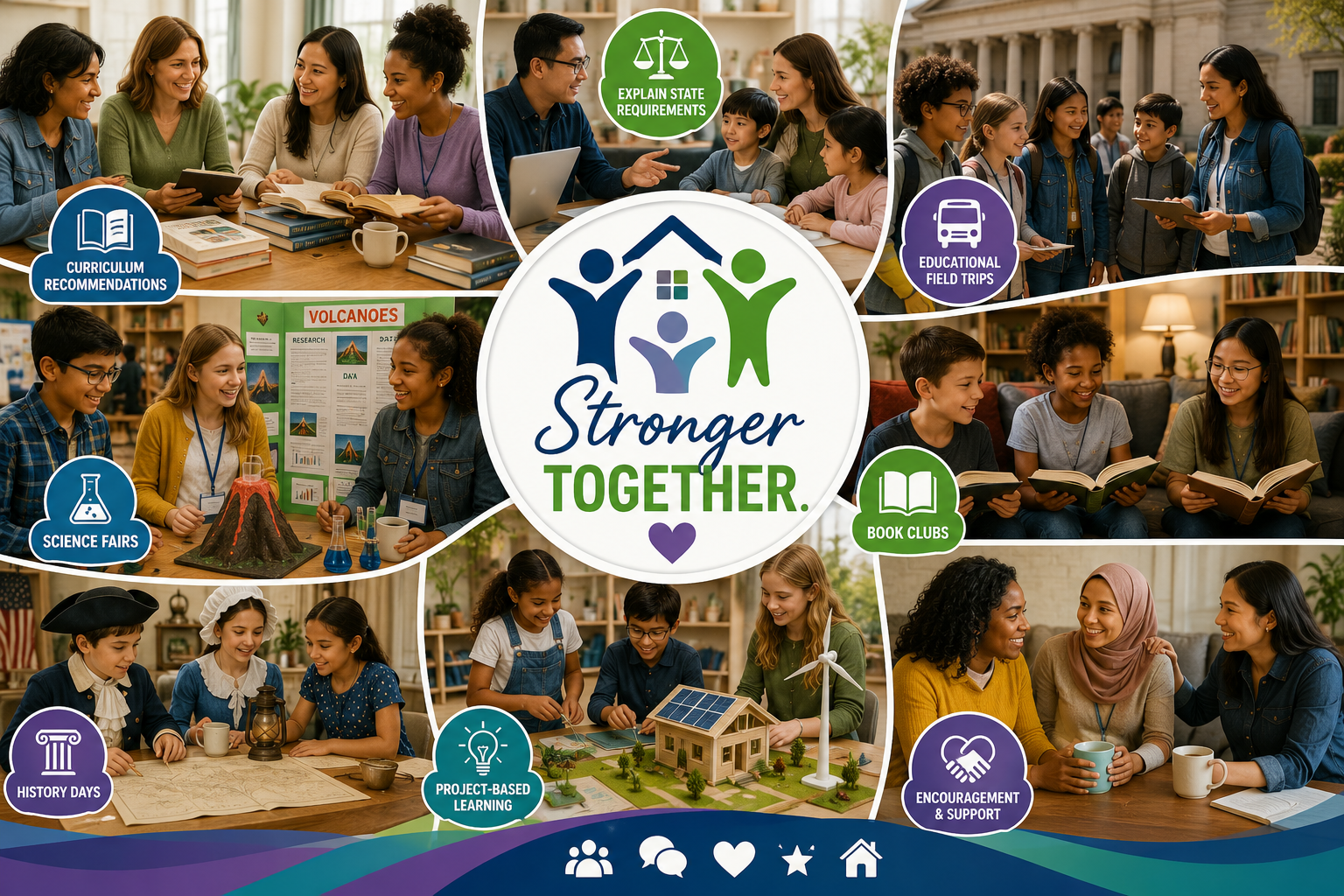
Although the word “homeschooling” suggests learning at home, successful homeschooling is rarely done in complete isolation. Many families rely on local groups, online communities, co-ops, library programs, field trip groups, sports teams, music lessons, theater groups, robotics clubs, service projects, nature programs, and community classes.
The original draft stresses that homeschool communities can help parents understand curriculum choices, state requirements, field trips, co-op classes, science fairs, history days, book clubs, and project-based learning opportunities. These communities also give new homeschool families a place to ask practical questions and learn from parents who have already walked the path.
Research on homeschool support groups also points to the role these groups play in resource sharing, co-op classes, parent involvement, and social opportunities for children. One study summarized by the National Home Education Research Institute described homeschool support groups as places where families share curriculum resources, organize classes, and create educational and social opportunities.
Students Need Friendship, Teamwork, and Shared Experiences
One concern people often raise about homeschooling is socialization. In practice, many homeschool families intentionally create social opportunities through co-ops, sports, music, debate, theater, outdoor education, community service, and mixed-age learning groups. The original draft points out that homeschool groups can help students build friendships with children of different ages and backgrounds while developing teamwork, communication, leadership, and collaboration skills.
This is important because learning is not only academic. Children need to practice conversation, cooperation, conflict resolution, responsibility, empathy, and leadership. Homeschooling families who participate in strong communities often find that social learning happens in many places: a co-op class, a robotics team, a nature hike, a service project, a book club, or a group presentation.
Online Communities Have Become Part of the Homeschool Landscape
Online homeschool communities have also become increasingly important. Social media groups, virtual co-ops, webinars, discussion forums, online courses, and educational websites allow parents to find help regardless of where they live. This can be especially valuable for rural families, families who are new to homeschooling, families looking for specialized resources, or parents trying to understand state requirements.
The original draft notes that online communities give parents a way to ask questions, exchange ideas, discover resources, and feel connected to a larger network of homeschool educators. These communities cannot replace every benefit of local relationships, but they can reduce isolation and help families find answers more quickly.
Support Builds Parent Confidence
One of the most important points to emphasize for new homeschool families is this: confidence grows over time. Very few parents begin homeschooling with every answer. Most begin with questions. What curriculum should I use? What does my state require? How do I plan the week? What if my child resists writing? How do I know if we are doing enough? What about high school? What about transcripts? What about friends?
Support groups can help families move through those questions. The original draft notes that participation in homeschool support groups can contribute to parent confidence, resource sharing, and sustained engagement. These networks provide both educational and emotional support as families navigate curriculum, legal requirements, extracurricular options, and children’s changing needs.
This is why homeschool community is not a minor add-on. For many families, it becomes one of the most important resources they have.
Every Family’s Homeschool Story Is Different
There is no single “right” reason to homeschool. Some families homeschool because of school environment concerns. Some choose it for academic flexibility. Some want more family time. Some need a different setting for a child with special needs. Some want to include faith, values, culture, or family heritage more intentionally. Some want to travel. Some want more time for project-based learning. Some are responding to a difficult school experience. Others are drawn to the possibility of a more personalized education from the beginning.
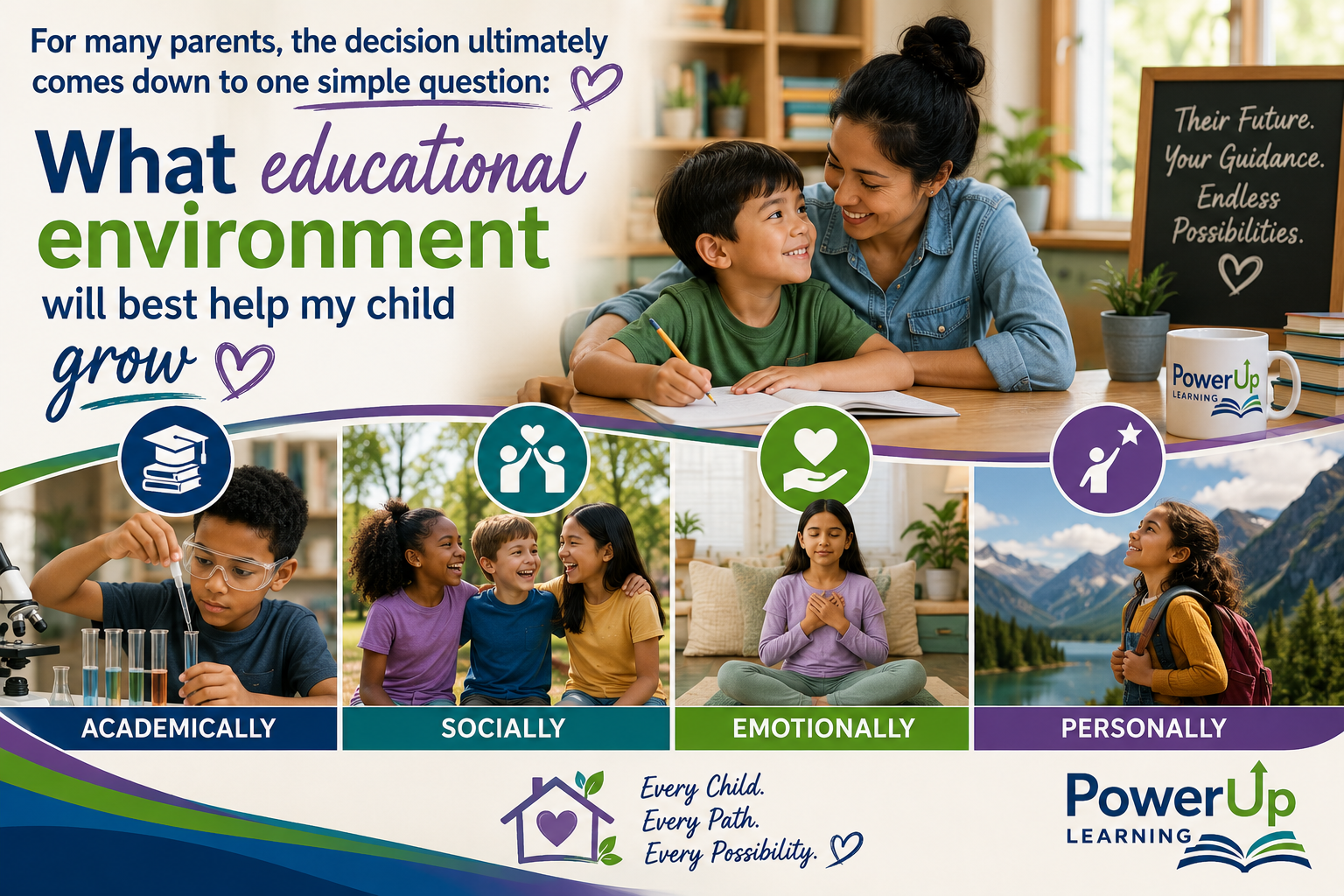
For many parents, the decision comes down to one question: What educational environment will best help my child grow academically, socially, emotionally, and personally?
Homeschooling is not a one-size-fits-all solution. It is not the best choice for every family, nor it does look the same in every home. But its continued growth shows that many parents want to play an active role in shaping their children’s education. For families who choose it thoughtfully, homeschooling can offer a pathway toward individualized learning, stronger family relationships, curiosity, independence, community connection, and lifelong learning.
Share Your Homeschool Journey
Every homeschool story is different, and that is part of what makes the conversation valuable. What led your family to consider homeschooling? Was it academics, flexibility, family life, a difficult school experience, curiosity, special needs, values, or something else entirely?
Please share your homeschool journey in the comments. Feel free to respond to others with encouragement, ideas, and practical suggestions, while respecting that every family’s educational path is personal.
References
Anthony, K. V., & Burroughs, S. (2012). Day to day operations of homeschooling: A case study of families in the homeschool learning network. Journal of School Choice, 6(3), 309–328.
Bielick, S., Chandler, K., & Broughman, S. P. (2001). Homeschooling in the United States: 1999 (NCES 2001–033). National Center for Education Statistics, U.S. Department of Education. https://nces.ed.gov/pubs2001/homeschool/
Gaither, M. (2022). Homeschooling: An updated comprehensive survey of the research. Journal of School Choice, 16(2), 248–265.
Kunzman, R., & Gaither, M. (2022). Homeschooling: An updated comprehensive survey.Journal of School Choice, 16(2), 248–265.
National Center for Education Statistics. (2022). Homeschooled children and reasons for homeschooling. U.S. Department of Education. https://nces.ed.gov/programs/coe/indicator/tgk
National Home Education Research Institute. (2026). Fast facts on homeschooling.https://nheri.org/research-facts-on-homeschooling/