May 31: Joseph E. Johnston Is Wounded at the Battle of Seven Pines
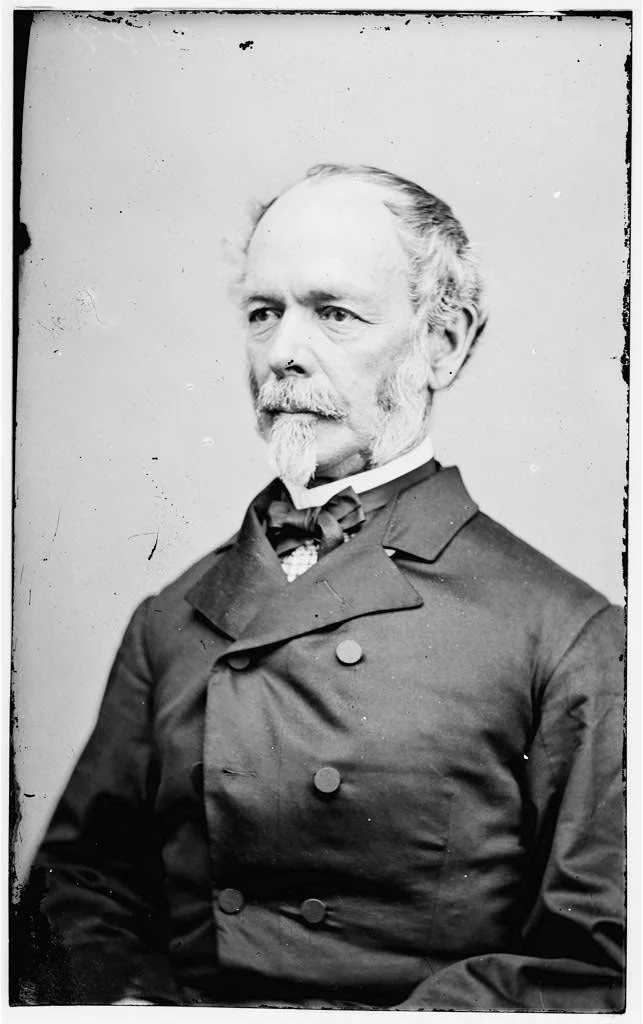
General Joseph E. Johnston | Library of Congress
On May 31, 1862, during the Battle of Seven Pines near Richmond, Virginia, Confederate General Joseph E. Johnston was seriously wounded. The battle took place during the Peninsula Campaign, when Union General George B. McClellan’s army was pressing toward Richmond. The battle developed because Confederate General Joseph E. Johnston saw an opportunity to strike part of McClellan’s army while it was divided by the Chickahominy River. Heavy rain had swollen the river and made communication, movement, and reinforcement difficult for the Union army. Johnston hoped to attack the exposed Union left wing near Seven Pines before the rest of McClellan’s forces could effectively support it.
The fighting was fierce, muddy, and disorganized. Union troops were pushed back in some areas, but reinforcements arrived and prevented a complete Confederate breakthrough. Neither side achieved a clean victory. The American Battlefield Trust lists the battle’s result as inconclusive, with estimated casualties of 13,736 total: about 5,739 Union and 7,997 Confederate. As the fighting continued Joseph E. Johnston was seriously wounded, reportedly by a bullet and then by shell fragments. His injury removed him from command at a critical moment. Confederate President Jefferson Davis then turned command over to Robert E. Lee, who soon reorganized the Confederate army and gave it the name by which it became famous: the Army of Northern Virginia.
This is why Seven Pines matters so much. On the battlefield, it was a costly and confusing fight without a clear winner. Strategically, however, it changed the direction of the Civil War in Virginia. Lee’s appointment led almost immediately to a more aggressive Confederate strategy. Within weeks, Lee launched the Seven Days Battles, driving McClellan away from Richmond and changing the momentum of the Peninsula Campaign. A battle that seemed indecisive in military terms became decisive because of its consequences for leadership.
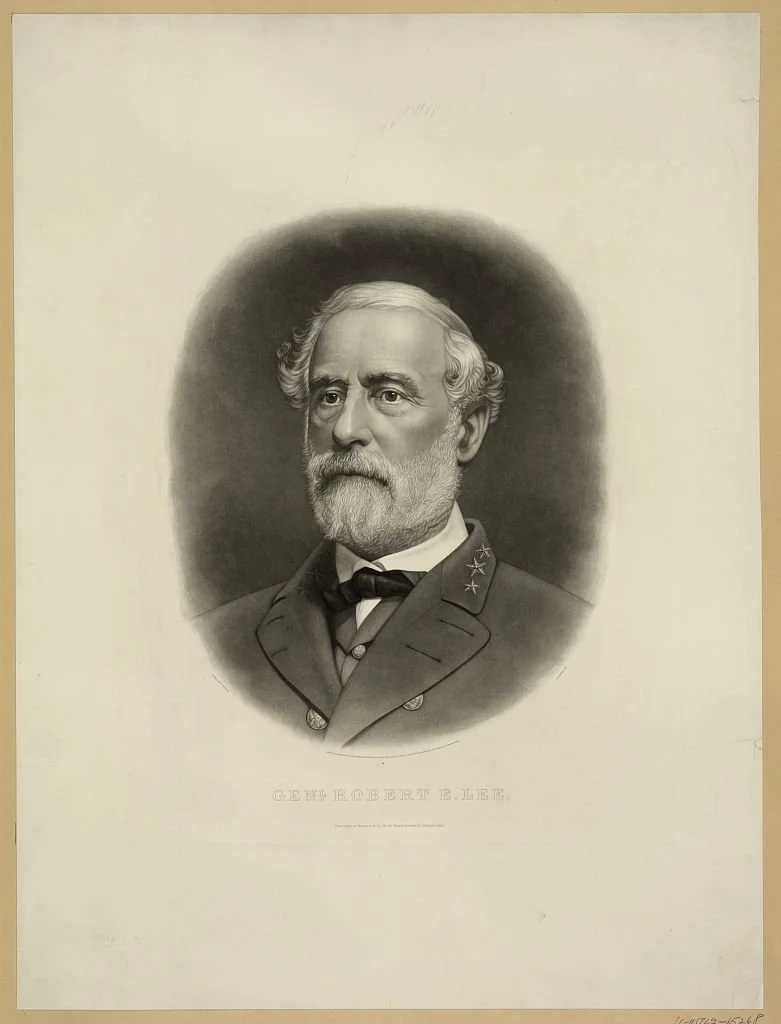
Robert E. Lee | Library of Congress
The Battle of Seven Pines also teaches an important lesson about military history: not every turning point looks like a dramatic victory. Sometimes the most important result is a change in command, a shift in strategy, or the emergence of a new leader. Johnston’s wounding and Lee’s rise reshaped Confederate military operations for the rest of the war. From that point forward, the war in Virginia would increasingly be defined by Lee’s style of command: aggressive, risky, and focused on seizing the initiative even when facing a larger Union army.
Research Questions
Why was the Peninsula Campaign important to the Union plan to capture Richmond?
What happened at the Battle of Seven Pines?
How did Johnston’s injury change Confederate command?
How did Robert E. Lee’s leadership style differ from Johnston’s?
How can one unexpected event alter the course of a military campaign?
Project Idea
Project Goal:
Students will analyze how the Battle of Seven Pines created a leadership turning point in the Civil War.
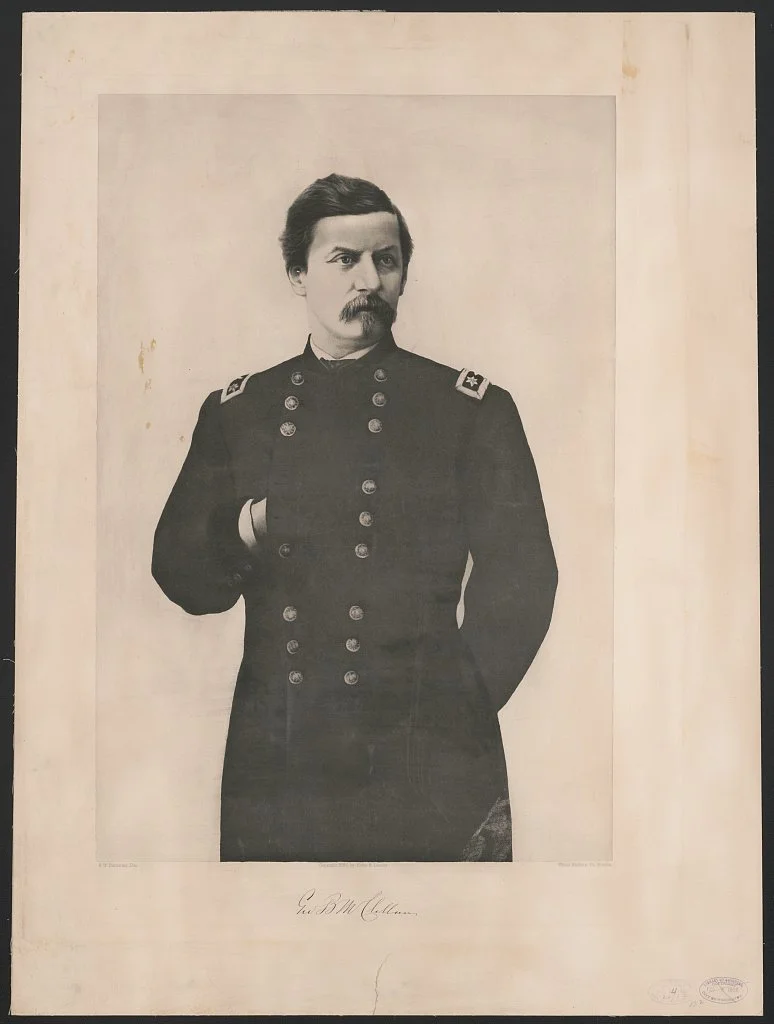
General McClellan | Library of Congress
Project Description:
Students will research the Peninsula Campaign, the Battle of Seven Pines, Joseph E. Johnston’s wounding, and Robert E. Lee’s rise to command. They will explain why a battle that did not produce a clear battlefield victory still became one of the most important command changes of the Civil War.
Final Project Options:
Students may create a leadership comparison chart, battle map, campaign timeline, newspaper front page from 1862, short documentary script, or cause-and-effect poster.
Reflection Question:
How can a single moment on a battlefield change the leadership, strategy, and outcome of a larger war?
Project 2: Civil War Leadership Change Case Study
Project Goal:
Students will examine how the wounding of Joseph E. Johnston at the Battle of Seven Pines led to a major leadership change in the Confederate army and altered the direction of the war in Virginia.
Project Description:
Students will compare Joseph E. Johnston and Robert E. Lee as military leaders. They will research Johnston’s command during the Peninsula Campaign, the circumstances of his injury on May 31, 1862, and Lee’s appointment to command afterward. Students will then analyze how Lee’s leadership changed Confederate strategy, especially during the Seven Days Battles that followed.
Research Questions:
Who was Joseph E. Johnston, and what role did he play before the Battle of Seven Pines?
What happened to Johnston on May 31, 1862?
Why did Robert E. Lee replace Johnston?
How did Lee’s leadership style differ from Johnston’s?
How did this command change affect the Confederate defense of Richmond?
Why can leadership changes become turning points in military history?
Final Project Options:
Students may create:
A Johnston–Lee leadership comparison chart
A cause-and-effect poster
A military command timeline
A short research essay
A mock newspaper article from June 1862
A classroom presentation on leadership under pressure
Reflection Question:
How can a change in leadership reshape the outcome of a larger conflict?
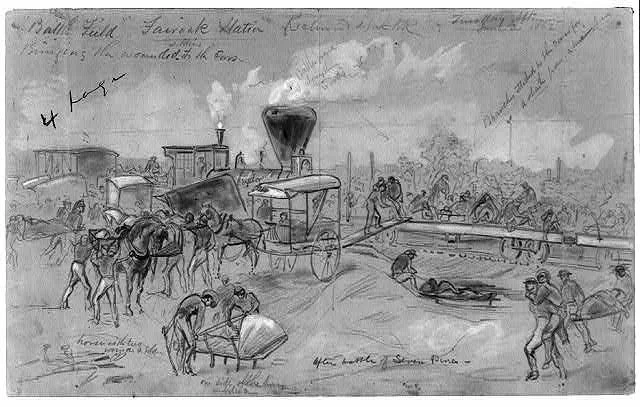
Battlefield Sketch by Arthur Lumley 1862 | Library of Congress | Bringing the wounded to the carts.
Project 3: Mapping the Peninsula Campaign
Project Goal:
Students will use geography and military history to explain why the Battle of Seven Pines mattered in the larger Peninsula Campaign.
Project Description:
Students will create a map-based project showing the Union advance toward Richmond during the Peninsula Campaign. They will identify key locations, including the Virginia Peninsula, Yorktown, the Chickahominy River, Richmond, and Seven Pines/Fair Oaks. Students will explain how geography, weather, roads, rivers, and troop movement affected military decisions. They will then connect the Battle of Seven Pines to the larger question of why Richmond was so important to both sides.
Research Questions:
What was the goal of the Union Peninsula Campaign?
Why was Richmond such an important military and political target?
How did geography affect the movement of Union and Confederate armies?
Why did the Battle of Seven Pines occur near Richmond?
How did rivers, roads, mud, and weather influence the campaign?
What does this campaign show about the relationship between geography and military strategy?
Final Project Options:
Students may create:
An annotated campaign map
A battlefield movement diagram
A geography-and-strategy slideshow
A military planning briefing
A timeline with map locations
A 3D or illustrated battlefield display
Reflection Question:
Why is geography often as important as leadership in military history?