June 15: George Washington Takes Command of the American Revolution
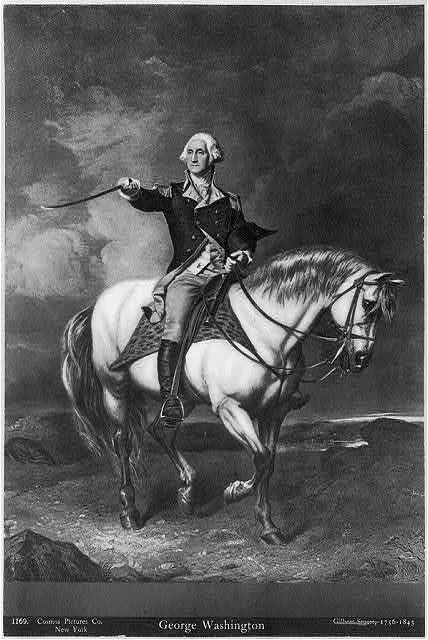
George Washington, full-length portrait, with right arm extended holding sword, on horseback | Library of Congress
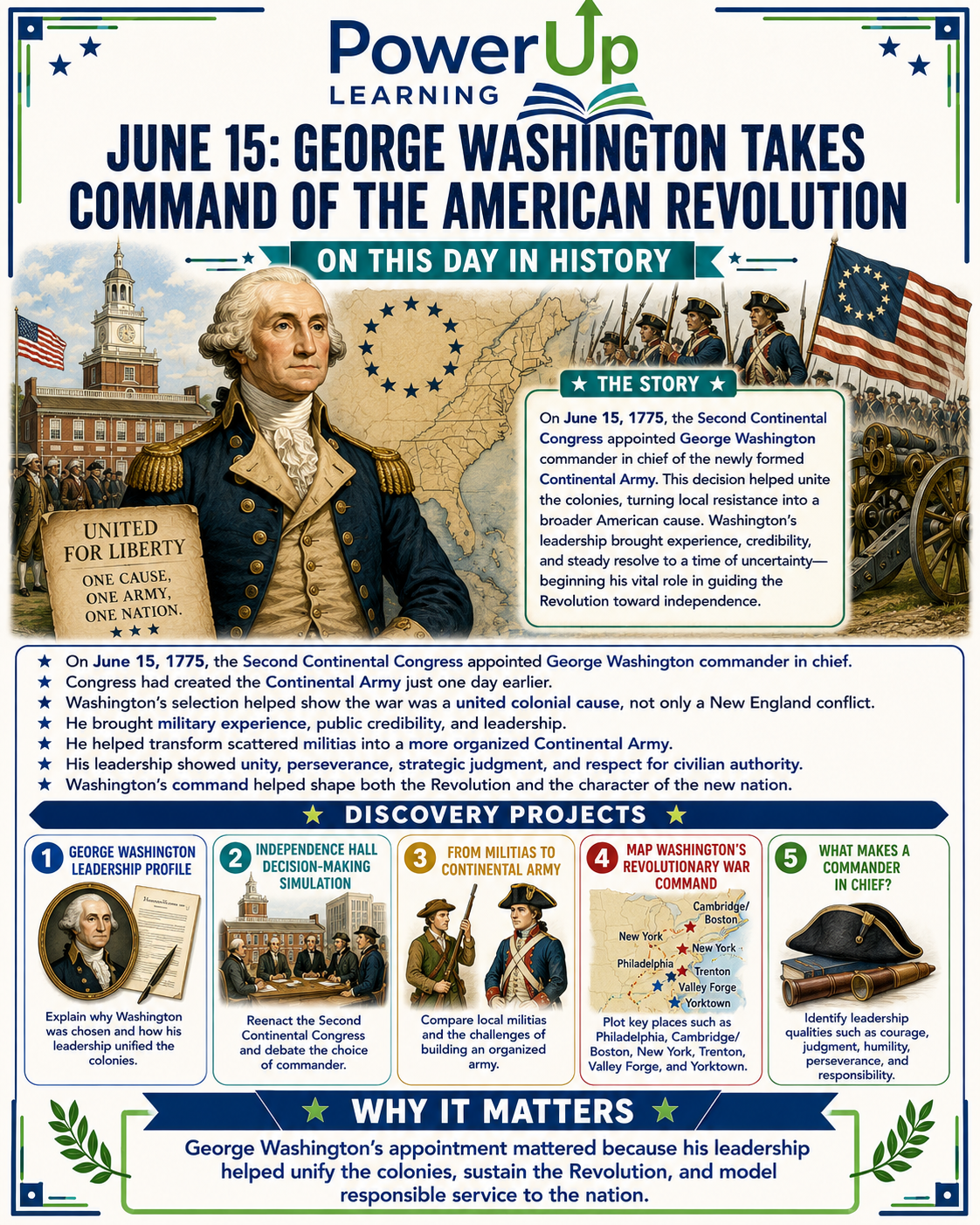
On June 15, 1775, the Second Continental Congress appointed George Washington as commander in chief of the newly formed Continental Army. This decision came just one day after Congress formally created the army, as the colonies faced the growing reality of war with Great Britain. Washington was attending Congress in military uniform, and his selection helped show that the struggle was no longer only a New England conflict but a broader colonial cause. The National Park Service notes that Washington was appointed after a unanimous vote in Independence Hall.
George Washington’s leadership was essential to the success of the American Revolution because he helped turn a loose collection of colonial militias into a more unified Continental Army. When Congress appointed him commander in chief in 1775, the colonies faced enormous challenges. Soldiers lacked supplies, training, discipline, and long-term commitment, and the colonies did not always agree on strategy. Washington’s first major leadership contribution was his ability to unite people around a common cause. As a Virginian leading an army first centered around New England, he helped show that the Revolution belonged to all the colonies, not just one region.
A second example of Washington’s leadership was his perseverance during times of defeat and hardship. He did not win every battle, but he kept the army together when the Revolution might have collapsed. After losses in New York and New Jersey, Washington made the bold decision to cross the Delaware River and attack Hessian forces at Trenton in December 1776. This victory lifted morale at a critical moment and showed that careful planning, courage, and timing could change the direction of the war. His leadership at Valley Forge also showed endurance, as he worked to hold the army together through hunger, cold, illness, and discouragement.
A third example of Washington’s importance was his respect for civilian authority and republican government. He accepted command from the Continental Congress and understood that the army served the people through their representatives. At the end of the war, instead of using his military power for personal control, Washington resigned his commission and returned to private life. This decision set a powerful example for the new nation by showing that true leadership includes restraint, humility, and responsibility. Washington’s leadership mattered not only because he helped win the war, but because he helped shape the character of the United States as a nation built on unity, perseverance, and civilian government.
Discovery Projects
Project 1. George Washington Leadership Profile
Project Goal:
Students will explain why George Washington was chosen to lead the Continental Army and how his leadership helped unify the colonies during the American Revolution.
Focus of Study:
This project focuses on Washington’s background, reputation, and leadership qualities at the time of his appointment. Students should examine his experience in the French and Indian War, his public character, his presence at the Second Continental Congress, and the symbolic importance of choosing a commander from Virginia. The project should also explore why Washington’s appointment helped make the conflict feel like a united colonial cause rather than only a New England military crisis.
Suggested Project Management Directions:
Begin by having students create a short timeline of Washington’s life before June 15, 1775, including his military experience, public service, and role in colonial politics. Next, students should identify 4–6 leadership qualities that made him a strong choice, such as courage, restraint, perseverance, credibility, and ability to unify people. Students may then create a biography poster, leadership profile, podcast script, slideshow, or museum panel. Older students should include a written explanation answering this question: Why did Congress believe Washington was the right person to command the Continental Army?
Project 2. Independence Hall Decision-Making Simulation
Project Goal:
Students will understand how the Second Continental Congress made a major wartime decision and why Washington’s appointment required political strategy as well as military judgment.
Focus of Study:
This project focuses on the Second Continental Congress, colonial unity, regional concerns, and the political importance of leadership selection. Students should study why Congress needed one commander, what challenges the colonies faced in organizing an army, and why choosing Washington helped bring support from the southern colonies. Students should also consider how delegates balanced military experience, public trust, regional identity, and the need for unity.
Suggested Project Management Directions:
Assign students roles as delegates from different colonies. Each student or group should prepare a brief position statement explaining what kind of commander they believe the army needs. Students may research Washington and other possible colonial leaders, then hold a simulated congressional debate. After the debate, students should vote and explain their decision in writing. To manage the project, divide it into stages: background research, role assignment, argument preparation, debate, vote, and reflection. The final reflection should answer: What factors mattered most in choosing a commander in chief?
Project 3. From Militias to Continental Army
Project Goal:
Students will analyze how local colonial militias began to become a more organized Continental Army under Washington’s command.
Focus of Study:
This project focuses on the challenges of creating an army during the American Revolution. Students should examine the differences between local militias and a continental fighting force, including training, supplies, enlistment periods, discipline, leadership structure, weapons, communication, and funding. The project should help students understand that independence required organization, cooperation, and long-term military planning, not simply courage on the battlefield.
Suggested Project Management Directions:
Have students begin with a two-column chart comparing local militias and the Continental Army. Next, students should choose 3–5 major challenges Washington faced as commander, such as feeding soldiers, training troops, keeping soldiers enlisted, maintaining morale, and coordinating different colonies. Students may create an infographic, chart, illustrated report, or classroom presentation. Older students can add a problem-and-solution section explaining how Washington tried to manage each challenge. The final product should show why building an army was one of the most difficult tasks of the Revolution.
Project 4. Map Washington’s Revolutionary War Command
Project Goal:
Students will connect geography to Washington’s military leadership during the American Revolution.
Focus of Study:
This project focuses on the places connected to Washington’s command and why location mattered during the war. Students should study sites such as Philadelphia, Cambridge/Boston, New York, Trenton, Princeton, Valley Forge, and Yorktown. The project should help students see how geography shaped strategy, movement, supply lines, weather challenges, military risks, and opportunities for victory.
Suggested Project Management Directions:
Students should begin with a blank map of the eastern United States and mark key locations connected to Washington’s command. Each location should include a date, short caption, and explanation of why the site mattered. Students may use arrows to show movement, color-code different phases of the war, and add small symbols for battles, winter camps, congressional decisions, or major victories. Younger students may create a visual map with brief captions, while older students can add a written explanation of how geography influenced Washington’s decisions. Final products may include a poster map, digital map, travel-style journal, or military campaign display.
Project 5. What Makes a Commander in Chief?
Project Goal:
Students will evaluate the qualities needed for military and civic leadership and apply those qualities to Washington’s appointment as commander in chief.
Focus of Study:
This project focuses on leadership traits such as courage, judgment, self-control, responsibility, perseverance, humility, strategic thinking, and respect for civilian authority. Students should examine Washington not only as a military commander, but also as a leader who understood that the army served a civilian government. This project should also help students think about the difference between power and responsible leadership.
Suggested Project Management Directions:
Begin by asking students to brainstorm the qualities they believe a commander in chief should have. Then have them compare their list with evidence from Washington’s life and leadership. Students should create a leadership guide, rubric, poster, or presentation that identifies 5–7 key leadership qualities and gives historical evidence for each one. Older students may compare Washington with another American military or civic leader and explain similarities and differences. The project should end with a short reflection answering: Which leadership quality was most important for Washington in 1775, and why?