June 17 in American History: The Statue of Liberty Arrives in New York Harbor
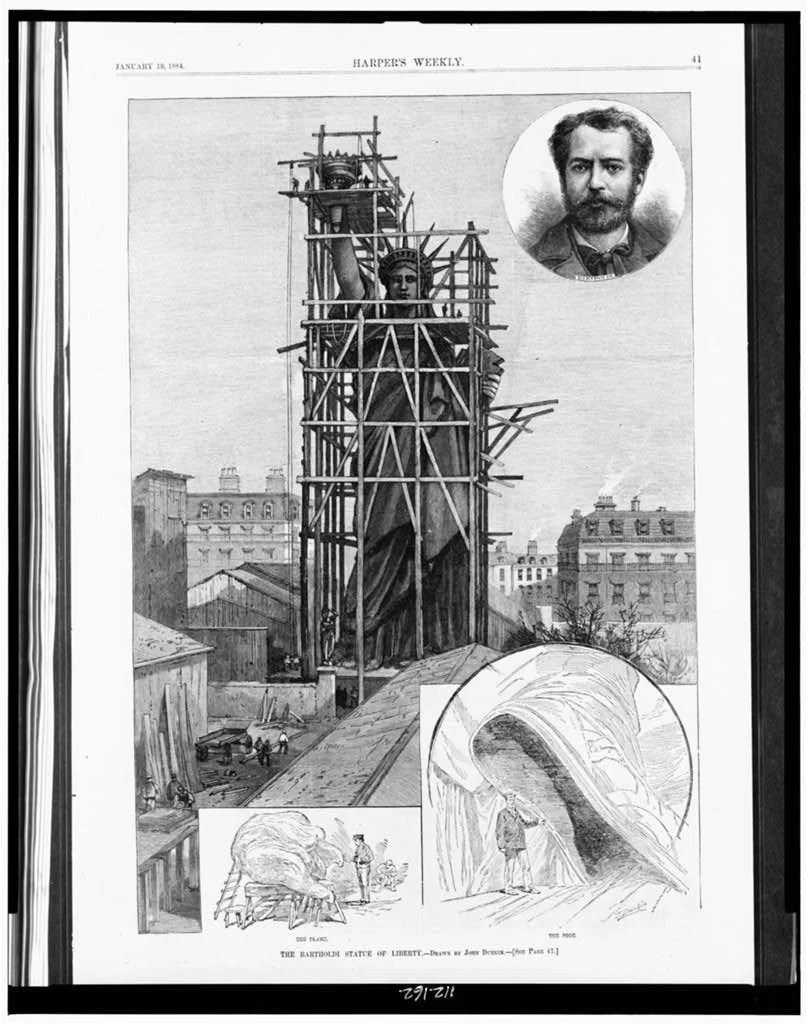
The Bartholdi Statue of Liberty / drawn by John Durkin in 1884 showing the statue in scaffolding | Library of Congress
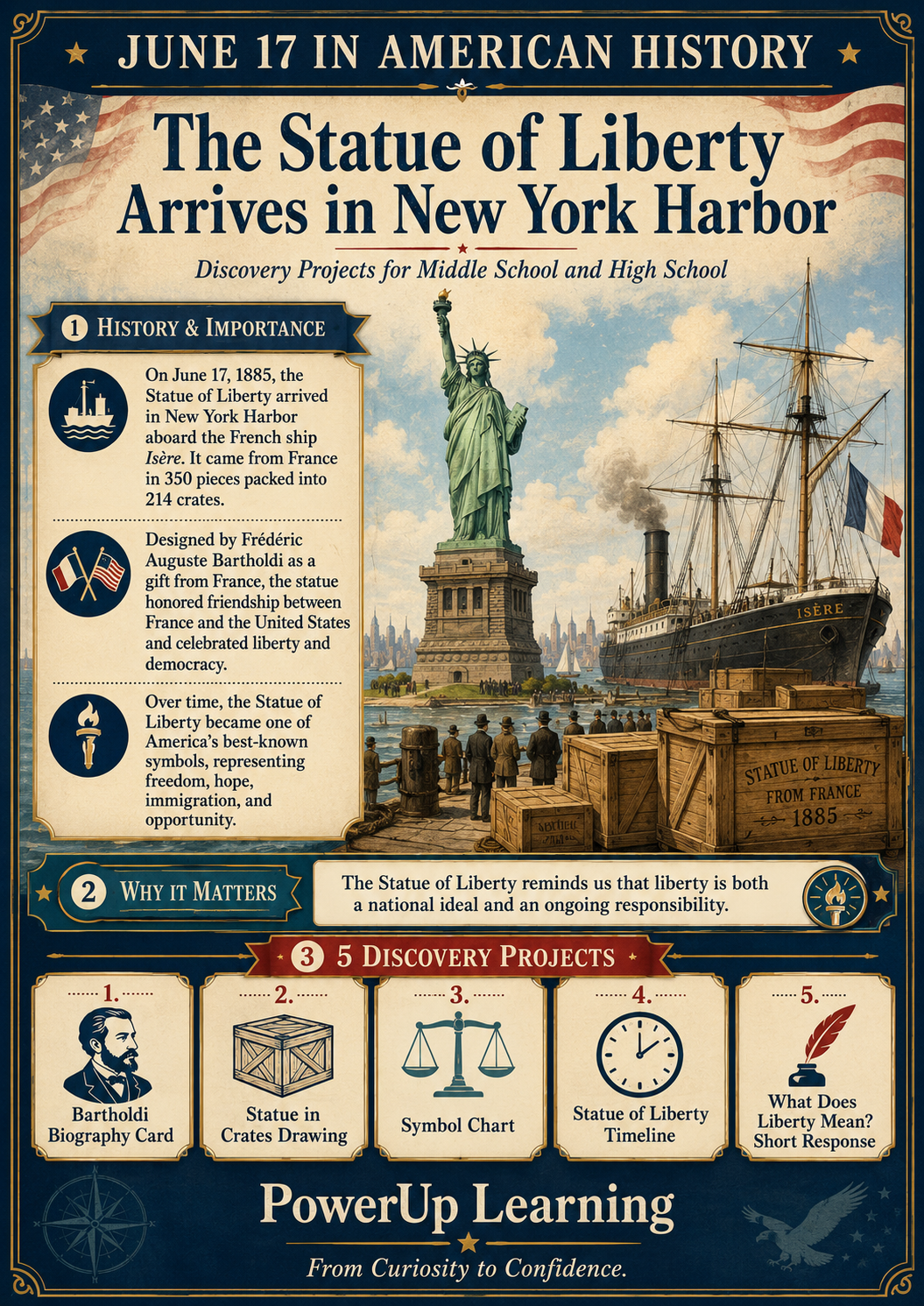
On June 17, 1885, the Statue of Liberty arrived in New York Harbor aboard the French ship Isère. Designed by French sculptor Frédéric Auguste Bartholdi, the statue was created to honor the friendship between France and America and to celebrate the ideals of liberty and democratic government. The statue did not arrive standing tall as Americans know it today. It had been disassembled into 350 individual pieces and packed into 214 crates for its journey across the Atlantic Ocean. Because the pedestal was not yet finished, the statue remained in pieces on Bedloe’s Island until it could be reassembled and dedicated the following year, on October 28, 1886.
The Statue of Liberty is important because it represents the idea of freedom in a visual and powerful way. Every part of the statue carries meaning. The torch represents enlightenment and the light of liberty. The tablet in her hand includes the date of American independence, July 4, 1776. The broken chains near her feet symbolize freedom from oppression. Standing in New York Harbor, the statue became one of the first sights many immigrants saw as they arrived in the United States, giving it an even deeper meaning as a symbol of hope, opportunity, and new beginnings.
Over time, the Statue of Liberty became one of the most recognized symbols of the United States. Its meaning has continued to grow as Americans have debated and expanded the meaning of liberty, citizenship, equality, and opportunity. The statue reminds people that liberty is both a national ideal and an ongoing responsibility. It connects American history to questions about freedom, immigration, democracy, and the promise of a better future.Why It Matters
Why it Matters
The arrival of the Statue of Liberty was a massive international project that required vision, fundraising, design, transportation, construction, and public support. It also raises important historical questions: What does liberty mean? Who has been included in America’s promise of liberty? How do monuments shape the way a nation remembers its values?
Discovery Projects
Project 1: Frédéric Auguste Bartholdi Biography Card
Project Goal:
Create a one-page biography card about Frédéric Auguste Bartholdi, the French sculptor who designed the Statue of Liberty.
What to Include:
The biography card should include Bartholdi’s name, birth and death dates, a short paragraph about his life, an explanation of his role in designing the Statue of Liberty, and one reason his work became important to American history.
Student Directions:
Research Bartholdi using reliable sources. Take notes about who he was, why he designed the statue, and what message he wanted the statue to communicate. Then create a biography card on paper or digitally. Add a drawing, image, or symbol connected to the Statue of Liberty.
Final Product:
A one-page illustrated biography card.
Reflection Question:
How did Bartholdi’s artwork become part of American history?
Project 2: The Statue in Crates Drawing
Project Goal:
Create a drawing or diagram showing how the Statue of Liberty arrived in New York Harbor in pieces.
What to Include:
The drawing should include the ship Isère, New York Harbor, Bedloe’s Island, several crates, and a few statue parts such as the torch, crown, arm, or tablet. Add labels to explain what each part represents.
Student Directions:
Begin by learning how the statue was shipped from France to the United States. Then sketch a simple scene showing the statue arriving in crates. This does not need to be a perfect drawing. The goal is to show that the Statue of Liberty was a large construction project that had to be transported and assembled.
Final Product:
A labeled drawing, diagram, or poster.
Reflection Question:
Why do you think the statue had to be shipped in pieces instead of fully assembled?
Project 3: Statue of Liberty Symbol Chart
Project Goal:
Create a chart explaining the symbols found on the Statue of Liberty.
What to Include:
Choose at least five symbols from the statue. These may include the torch, crown, tablet, robe, broken chains, raised foot, or location in New York Harbor.
For each symbol, include:
The name of the symbol
A simple drawing or image of the symbol
A short explanation of what the symbol means
Student Directions:
Study the parts of the Statue of Liberty and think about how each part communicates an idea. Create a chart with three columns: Symbol, What It Looks Like, and What It Means. Use complete sentences for the explanations.
Final Product:
An illustrated symbol chart.
Reflection Question:
Why do monuments often use symbols instead of only words?
Project 4: Statue of Liberty Timeline
Project Goal:
Create a timeline showing the major events connected to the Statue of Liberty’s creation, arrival, and dedication.
What to Include:
The timeline should include at least six important events. Possible events include the idea for the statue, Bartholdi’s design work, construction in France, shipment across the Atlantic, arrival in New York Harbor on June 17, 1885, assembly, and dedication in 1886.
Student Directions:
Research the main events in the history of the Statue of Liberty. Put the events in order by date. For each event, write one or two sentences explaining what happened. Add small drawings, printed images, or icons to make the timeline visually interesting.
Final Product:
A paper or digital timeline.
Reflection Question:
What part of the Statue of Liberty’s story surprised you most?
Project 5: What Does Liberty Mean? Short Response Project
Project Goal:
Write a short response explaining what the Statue of Liberty represents and whether its message still matters today.
What to Include:
The response should include an introduction, at least two body paragraphs, and a short conclusion. Students should explain what the Statue of Liberty meant when it arrived and what it may mean to people today.
Student Directions:
Begin by listing words connected to the Statue of Liberty, such as freedom, hope, welcome, democracy, opportunity, immigration, and responsibility. Then choose two or three of those ideas to explain in writing. Use at least one historical fact about the statue’s arrival or design.
Middle school students may write 2–3 paragraphs. High school students may write 4–5 paragraphs and include more historical evidence.
Final Product:
A short written response or essay.
Reflection Question:
Is the Statue of Liberty more important as a symbol of America’s past, America’s present, or America’s hopes for the future?
Student Project Tips
Students should begin by reading about the Statue of Liberty, taking notes, and choosing the project format that best fits their strengths. Some students may prefer drawing or designing, while others may prefer writing, research, or creating a timeline.
Before beginning, students should ask:
What is the main question I am answering?
What information do I need to find?
What final product will I create?
How will I show what I learned?
When the project is finished, students should review their work and make sure it is accurate, organized, and clear. Each project should help the student understand why the arrival of the Statue of Liberty on June 17, 1885, became an important moment in American history.