June 18 in American History: James Madison and the Beginning of the War of 1812
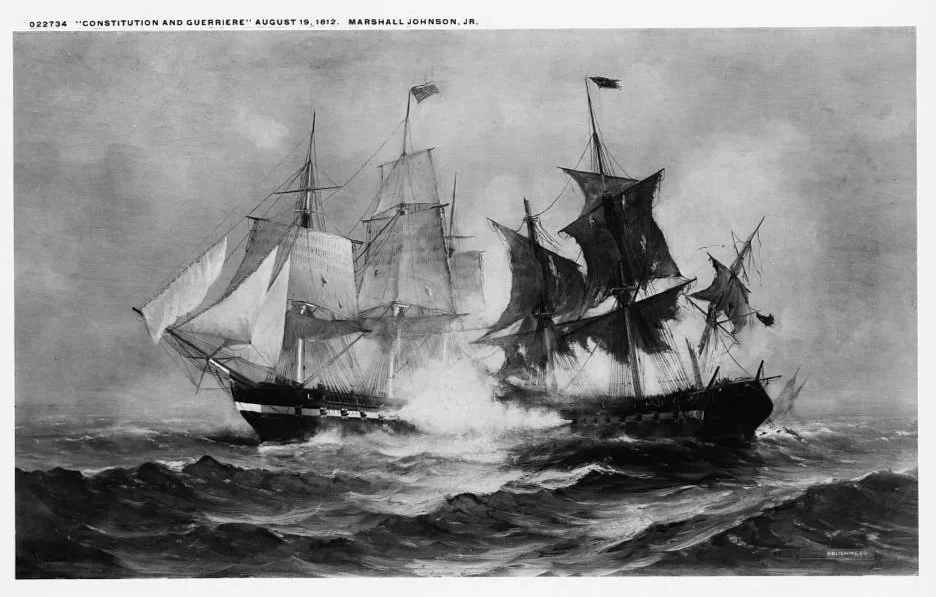
Constitution and Guerriere, August 19, 1812 | Library of Congress
On June 18, 1812, President James Madison signed a declaration of war against Great Britain, officially beginning the War of 1812. This was a major moment in American history because it was the first time the United States formally declared war on another nation. The young country was still trying to define its place in the world, defend its sovereignty, and protect its rights on the seas.
The causes of the War of 1812 were complicated. Many Americans were angry about British interference with American trade during the Napoleonic Wars. They were also frustrated by impressment, the British practice of forcing sailors from American ships into service in the British Royal Navy. Some Americans also believed Britain was encouraging Native American resistance to U.S. expansion in the Northwest Territory. Madison argued that these actions violated American independence and national honor.
The decision to go to war was not easy or universally supported. Members of Congress debated whether the United States was prepared for war and whether military action was the right response. Some Americans supported war as necessary to defend national rights, while others feared the country was too young, divided, and underprepared. The War of 1812 would later include major events such as the burning of Washington, D.C., the defense of Fort McHenry, and the writing of the poem that became “The Star-Spangled Banner.”
Why It Matters
The beginning of the War of 1812 helps students understand how a young republic makes difficult decisions about war, sovereignty, national identity, and leadership. It also shows that history is rarely simple. James Madison had helped shape the U.S. Constitution and Bill of Rights, yet as president, he faced the difficult responsibility of leading the nation into war. The event raises important questions: When should a country go to war? How should leaders respond when national rights are violated? What risks come with defending independence?
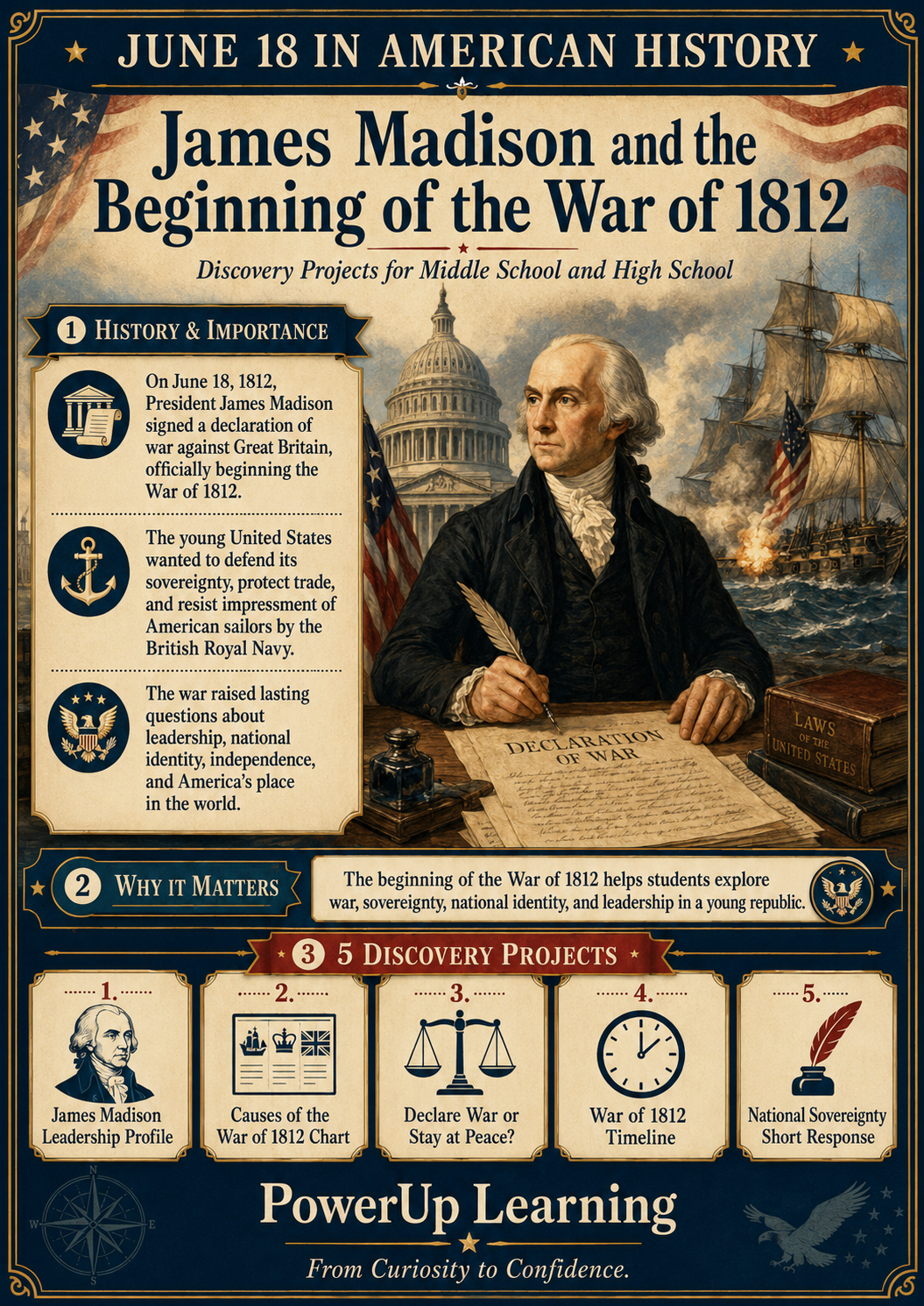
Discovery Projects
Project 1: James Madison Leadership Profile
Project Goal:
Create a one-page leadership profile about James Madison and his role in the decision to begin the War of 1812.
What to Include:
The profile should include Madison’s name, years as president, a short paragraph about his earlier role as a Founding Father, and an explanation of why he believed war with Great Britain was necessary. Include at least three leadership qualities Madison needed during this crisis.
Student Directions:
Research James Madison’s life and presidency. Take notes about his role in writing the Constitution, his presidency, and the challenges he faced in 1812. Then create a one-page profile that explains how Madison’s leadership was tested when the United States declared war.
Final Product:
A one-page illustrated leadership profile.
Reflection Question:
What made James Madison’s decision in 1812 difficult?
Project 2: Causes of the War of 1812 Chart
Project Goal:
Create a chart explaining the major causes of the War of 1812.
What to Include:
The chart should include at least four causes. Possible causes include impressment, interference with American trade, British naval power, conflict on the western frontier, and American concerns about national honor and independence.
For each cause, include:
The name of the cause
A short explanation
Why it angered Americans
A small drawing, icon, or symbol
Student Directions:
Begin by researching the causes of the War of 1812. Then create a chart with clear headings and complete sentences. The goal is to show that the war did not begin for only one reason. Several problems built up over time and pushed the United States toward conflict.
Final Product:
A paper or digital causes chart.
Reflection Question:
Which cause do you think was most important in leading the United States to war? Why?
Project 3: Declare War or Stay at Peace? Decision Organizer
Project Goal:
Create a decision organizer showing arguments for and against declaring war in 1812.
What to Include:
Divide the organizer into two sides: Reasons to Declare War and Reasons to Avoid War. Include at least three points on each side. At the bottom, write a short conclusion explaining what decision you would have supported if you were a member of Congress in 1812.
Student Directions:
Research the debate over war with Great Britain. Think about the problem from more than one point of view. Some Americans believed war was necessary to defend national rights. Others worried that the country was not ready for war. Use evidence to explain both sides before making your own historical decision.
Final Product:
A two-column decision chart with a short conclusion.
Reflection Question:
Why is it important to understand both sides of a historical decision?
Project 4: War of 1812 Timeline
Project Goal:
Create a timeline showing major events connected to the beginning and outcome of the War of 1812.
What to Include:
The timeline should include at least six events. Possible events include Madison’s war message to Congress, the declaration of war on June 18, 1812, early fighting, the burning of Washington, D.C., the defense of Fort McHenry, the Treaty of Ghent, and the Battle of New Orleans.
Student Directions:
Research the major events of the War of 1812 and place them in chronological order. For each event, write one or two sentences explaining what happened. Add small drawings, maps, or icons to make the timeline easier to understand.
Final Product:
A paper or digital timeline.
Reflection Question:
Which event on your timeline seems most important to American identity? Why?
Project 5: What Is National Sovereignty? Short Response Project
Project Goal:
Write a short response explaining why national sovereignty mattered to Americans in 1812.
What to Include:
The response should explain what sovereignty means and why Americans believed Great Britain was violating it. Students should include at least one historical fact about impressment, trade interference, or Madison’s argument for war.
Student Directions:
Begin by defining the word sovereignty in your own words. Then explain how the War of 1812 was connected to the idea that the United States wanted to be treated as an independent nation. Use examples from the conflict to support your explanation.
Middle school students may write 2–3 paragraphs. High school students may write 4–5 paragraphs and include more historical evidence.
Final Product:
A short written response or essay.
Reflection Question:
Why would a young nation care so deeply about being respected by other countries?
Student Project Tips
Students should begin by reading about James Madison and the War of 1812, taking notes, and choosing the project format that best fits their strengths. Some students may prefer creating charts or timelines, while others may prefer writing, researching leadership, or analyzing historical decisions.
Before beginning, students should ask:
What is the main question I am answering?
What information do I need to find?
What final product will I create?
How will I show what I learned?
When the project is finished, students should review their work and make sure it is accurate, organized, and clear. Each project should help the student understand why the declaration of war on June 18, 1812, became an important moment in American history.