Homeschooling: Your Voice, Your Kids, Your Choice
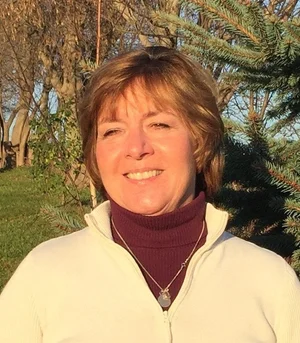
When I first started teaching, I came equipped with a Bachelor’s degree in Special Education tucked into my back pocket. I had two years of experience working in a variety of special education environments, from the classroom to state institutions where children lived and went to school. I was fairly secure in my ability to manage a K-3 classroom of students with significant learning disabilities. It didn’t take long before reality set in. Fortunately, I had an aide in my classroom of fourteen students who by all means could have been retired, but simply loved working with special needs children. Now my aide had never taken a college course in child development—no degree, no credentials except years of experience. What she did have was a deep love of children and a respect for the unique qualities of every child. As a special education teacher I had been taught to observe and evaluate. My aide taught me to sit at eye level with my students and listen to them. She taught me to set aside all of the test scores and past misdeeds, and to turn my classroom into a family environment where kids were free to risk failure and free to discover the joy of learning. And, with that I became a teacher.
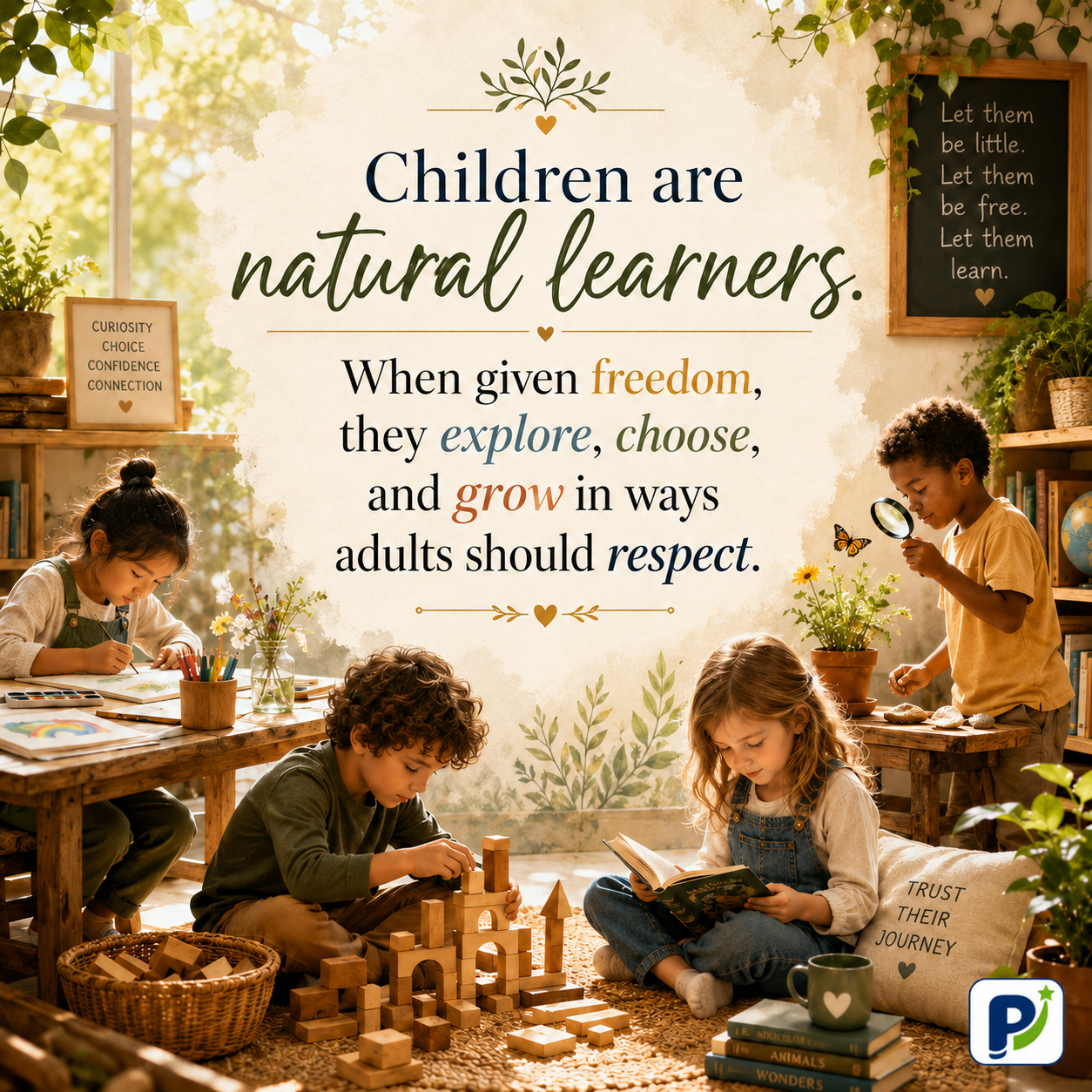
“Children have a powerful and innate ability to learn. When left to their own devices, they explore options and make choices that we cannot and should not make for them” (Robinson, 2022, p. 75-76).
I tell you all of this because so often homeschooling parents feel at a loss because they are not licensed teachers. Perhaps they’ve never gone to college or struggled in school, themselves. Perhaps a homeschooling parent has a teaching degree and, like me, years of teaching experience when finally deciding to homeschool my children. That distinction truly only matters to state governments who define laws governing homeschooling based on their belief of who is qualified to wear a teacher’s hat and / or to parents who feel a teaching degree is a qualifying factor for managing educational experiences. I’m here to tell you that it is a distinction that can be cast into the wind with a simple puff. Anyone can be an amazing teacher. All it takes is a willingness to learn with children, a humbleness to allow children to become subject matter experts, an acceptance that you will never have all the answers, and the recognition that a master teacher is one who helps learners ask really good questions and then helps them discover their answers. It’s all about the love of learning, of exploration and creativity, of collaboration, and of the excitement of sharing new found facts and insights. School is not drudgery. School is family. Should public school teachers be licensed? Sure. Licensing provides a benchmark of credibility, but not necessarily proficiency. A 2025 study published in the International Journal of Educational Innovation and Research notes that teacher experience (that’s your mom hat!) rather than credentials has the greatest impact on student performance (Yadav, 2025). And, while a teacher's subject matter credentials can impact student performance (Darling-Hammond et al., 2005), a belief that a college degree frames the teacher’s hat can be misguided.
“One of the common sources of difficulty with teachers can be found in the fact that most of them simply move from one side of the desk (as students) to the other side (as “teachers”) and there has not had much contact with the way things are outside of school rooms, 1971, p.139).
None of what I’ve said is meant to disparage teachers. There are thousands upon thousands of dedicated and amazing teachers in private and public schools. Teaching within the constraints of a top down institution is difficult at best, and downright impossible at times. I tip my hat to those who can manage the start and stop times, intercom announcements, and required adherence to policy decisions. I was a special education teacher. I was blessed by administrators who simply left me alone to manage my class as I wished. I was fortunate. But, when it came time to place my own children into a system that based student performance not on the ability to think critically and independently but on the ability to sit, memorize, and take tests, I knew I had to step into the world of homeschooling.
So, why do people homeschool? Studies show that most families homeschool because they believe a traditional school environment is unsafe (National Center for Education Statistics [NCES], 2022). Is this true for you? What do homeschoolers use for their curriculum? Do homeschooling parents step from one side of the teacher’s desk to the other and teach as they have been taught, or do they strive to find alternative approaches to learning? Are they willing to learn with their children or do they find that intimidating? Once when I wore a professional development hat training teachers in several states, I explained that teachers did not need to be proficient in the computer science curriculum I was presenting—that teachers simply needed to create learning environments where students felt comfortable asking their peers for help before asking their teacher. With that, one teacher looked at me and said, “You mean I can be the teacher I’ve always wanted to be?” I told her that “I was there to set her free.”
PowerUp Learning is here to set you free as a homeschool educator. We are in the process of developing a How to Get Started with Homeschooling guide and online course. We need your help. It will be built on the experiences and expertise of the homeschooling community. It is not our intention to tell you how to set up your environment, what to teach, and how to teach it. It is our intention to provide information and resources to guide sustainability and flexibility for homeschooling families in an organized, meaningful way, one that supports the impact of collaboration among homeschooling support groups (Morse, 2019) and the importance of independence among homeschoolers. Please take time to complete the anonymous survey. We will share the results in a month or so on Facebook and on the PowerUp Learning website. Thank you in advance. And all the best. CLICK HERE for the survey.
References
Engagement Hub. (2020, October 1). Engaging with stakeholders through blogs & news updates.https://engagementhub.com.au/stakeholder-engagement/engaging-with-the-stakeholders-through-blogs-news-updates/
Morse, M. L. (2019). Homeschool support groups: A model for parental involvement in education. Home School Researcher, 35(1), 1–9. National Home Education ResearchInstitute.https://nheri.org/homeschool-support-groups-a-model-for-parental-involvement-in-education/
National Center for Education Statistics. (2022). Homeschooled children and reasons for homeschooling. In Condition of education. U.S. Department of Education, Institute of Education Sciences.https://nces.ed.gov/programs/coe/indicator/tgk/homeschooled-children
Postman, N., & Weingartner, C. (1971). Teaching as a subversive activity. Delta.
Robinson, K., & Robinson, K. (2022). Imagine if . . .: Creating a future for us all. PenguinBooks.
Yadav, R. (2025). The impact of teacher experience and qualifications on student achievement. International Journal of Educational Innovations and Research, 1(3), 9–17.https://www.researchgate.net/publication/401344699_The_Impact_of_Teacher_Experien
ce_and_Qualifications_on_Student_Achievement