Where are we going to homeschool?
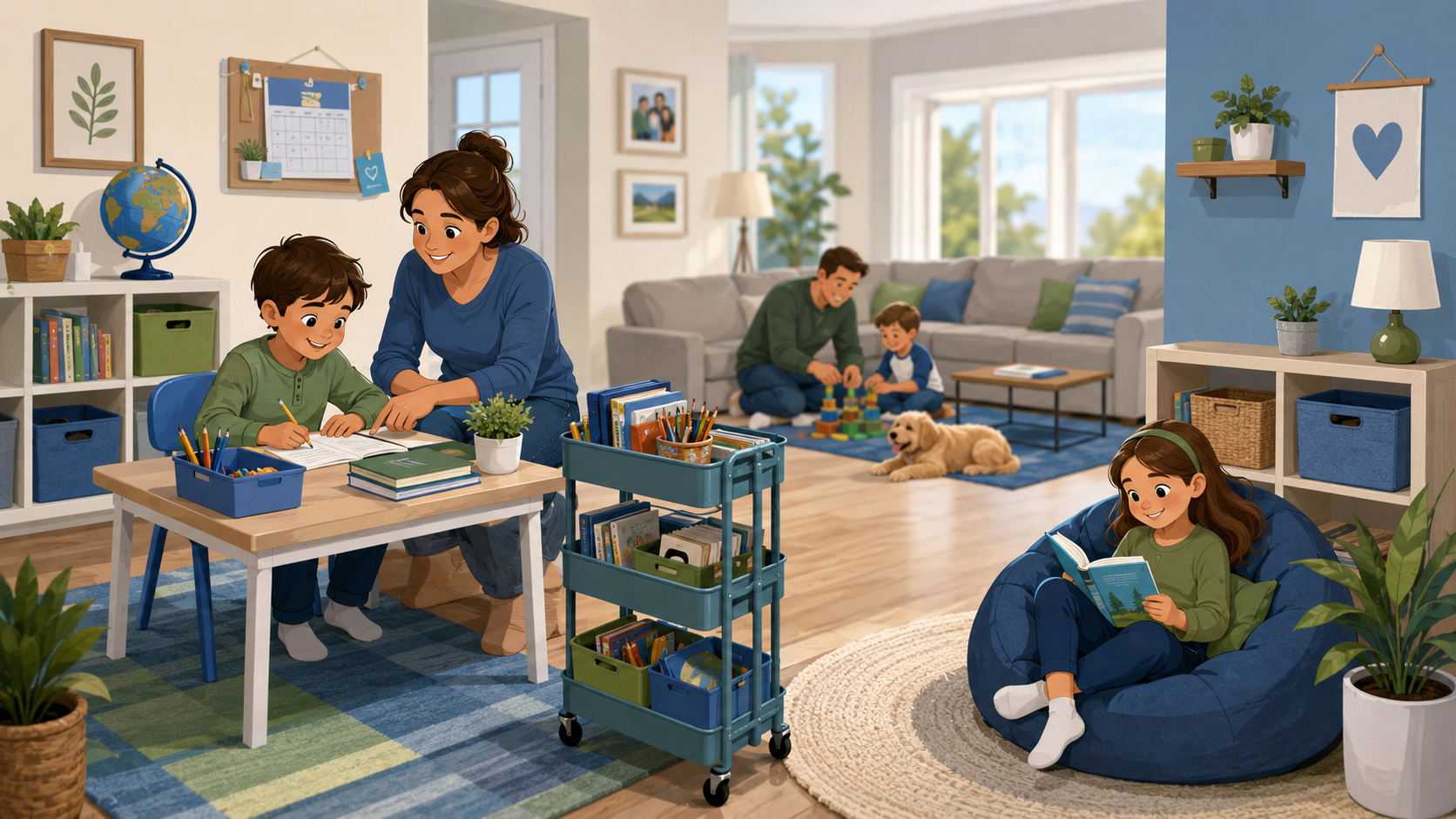
Homeschooling is filled with the joy of learning and exploring together. One of the first questions many new homeschooling families ask is, “Where are we going to do school?” Homeschooling means converting living spaces into learning spaces. The learning space answer is not necessarily an isolated room, a remodeled basement, or an expensive space filled with brand-new furniture. A viable homeschool space can be simple, affordable, flexible, and designed to protect the living areas of the home. The goal is not to recreate a traditional classroom. The goal is to create a functional learning environment that supports multiple ages, different activities, and family life.
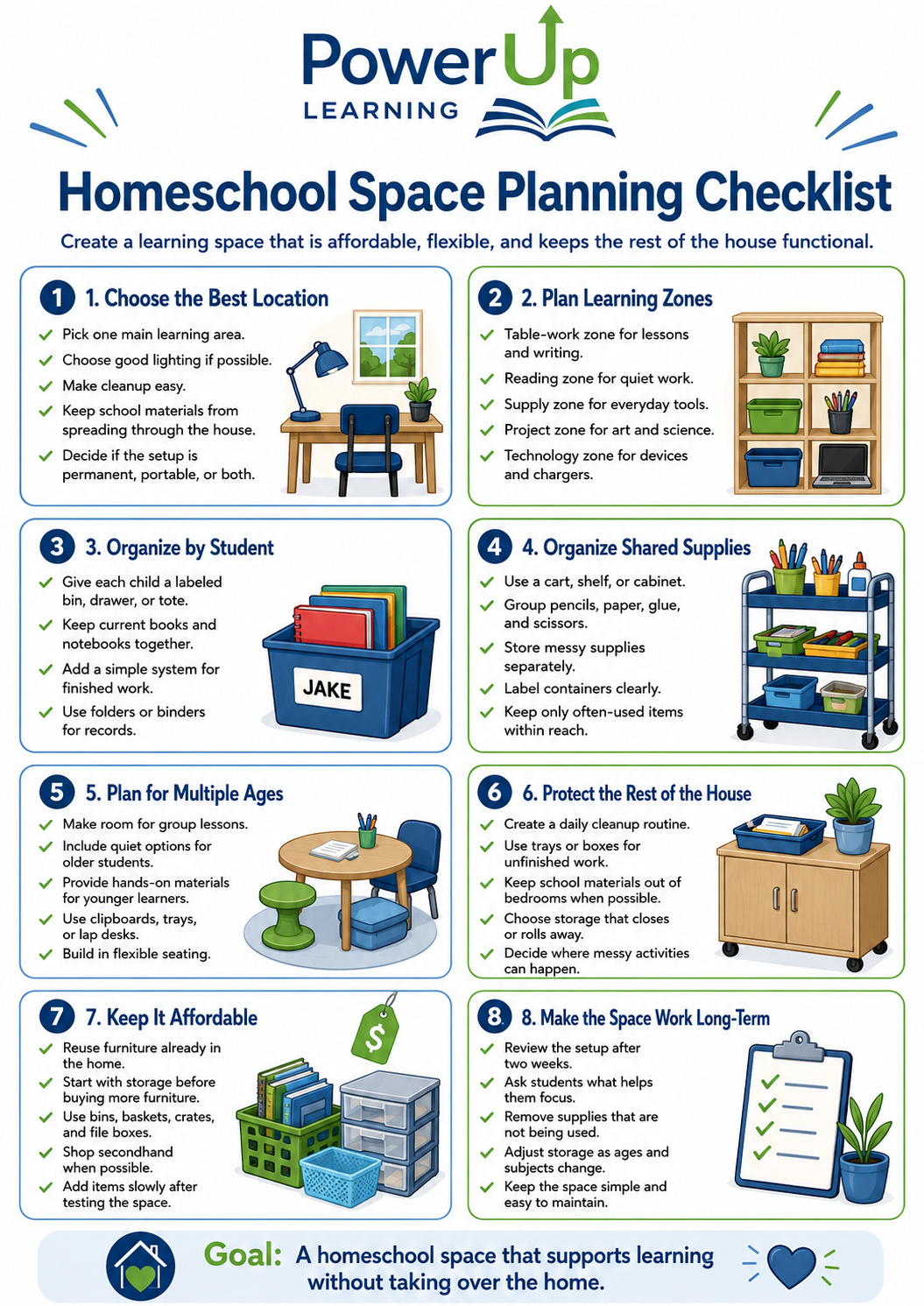
The best homeschool spaces begin with a realistic look at how the home is already used. Families often assume they need one dedicated room, but many homes do not have extra space available. Instead, a successful homeschool setup can be built around zones. A reading zone, a table-work zone, a supplies zone, a technology zone, and a project zone can often fit into one corner of a dining room, a section of a family room, a wide hallway, a basement wall, or even a closet with shelves. Thinking in zones rather than rooms helps families make better use of limited space without letting homeschool materials spread across the entire house.
A homeschool space should also be easy to clean up. This is one of the most important ways to keep homeschooling from taking over the home. If school materials do not have a clear storage location, they will migrate to counters, couches, kitchen tables, bedrooms, and floors. Affordable storage is often more important than expensive furniture. Bins, baskets, rolling carts, file boxes, magazine holders, plastic drawers, and labeled crates can make a small space work well. Each child can have a personal bin or tote for current books, notebooks, pencils, and assignments. Shared supplies can be placed in a central cart that can roll away when the school day is finished.
How should I set up the space if my homeschoolers are different ages?
For families with multiple ages, flexibility matters. A kindergartener, a middle school student, and a high school student will not use the space in the same way. Younger children may need hands-on materials, open floor space, art supplies, manipulatives, and easy access to picture books. Older students may need a quiet place to read, write, complete online lessons, or organize long-term assignments. The homeschool space should allow students to work together when appropriate and separate when needed. This may mean one shared table for group lessons and individual workboxes or lap desks for independent work.
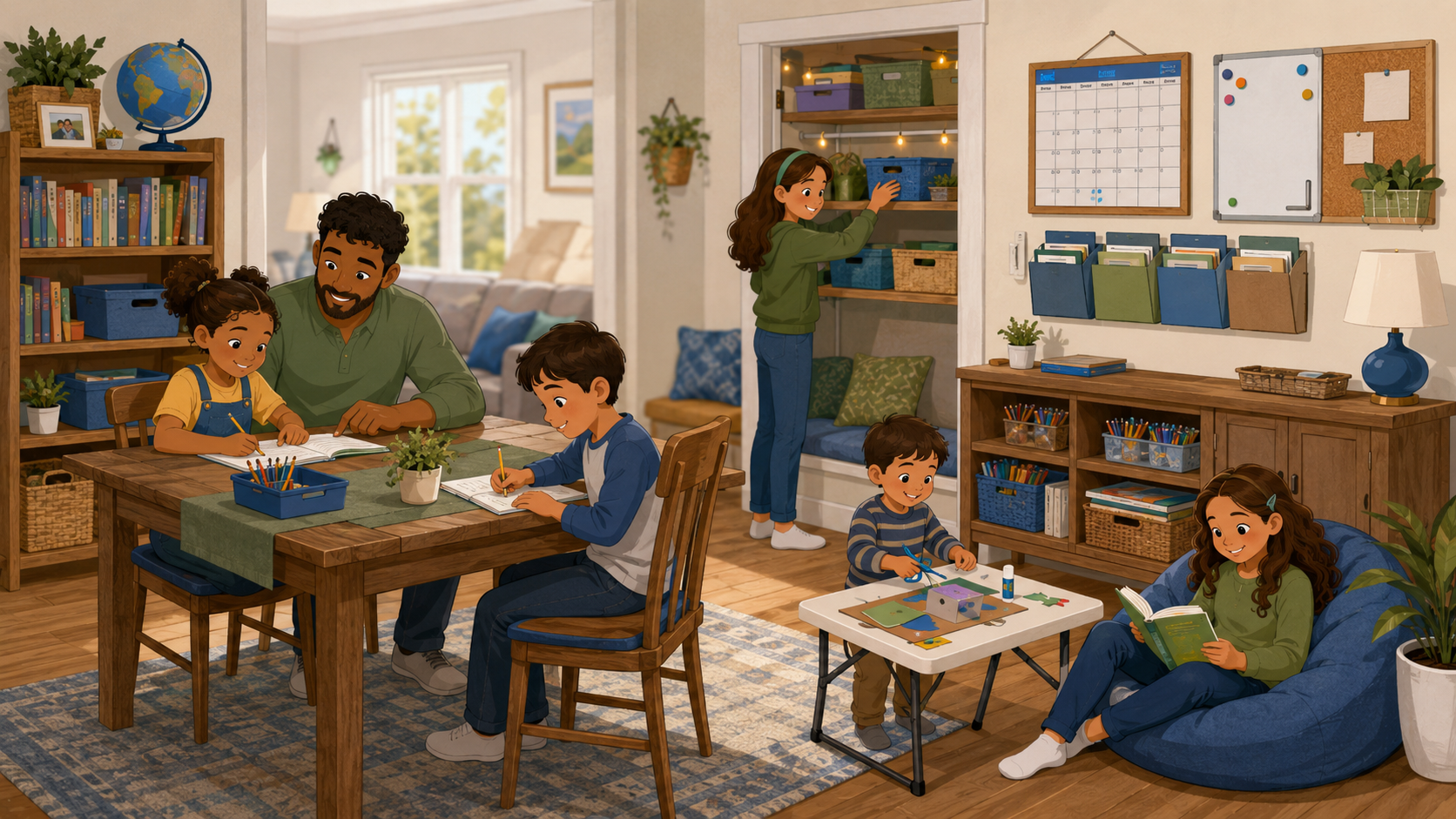
A good homeschool space also needs activity variety. Homeschooling often includes reading, writing, discussion, science experiments, art, music, online learning, projects, games, and movement. No single table can support all of those activities well unless the space is planned carefully. A wipeable tablecloth, trays, clipboards, portable supply caddies, and stackable project boxes can help families shift from one activity to another quickly. Messy activities should be assigned to a specific surface, such as a kitchen table, folding table, garage workbench, or outdoor table. This prevents paint, glue, science materials, and craft supplies from spreading into the rest of the house.
The most affordable homeschool spaces usually reuse what the family already owns. A bookshelf can become a curriculum station. A dining room cabinet can hold supplies. A closet can become a learning closet with labeled bins. A small folding table can serve as a project table and then be stored away. A wall can become a planning center with a calendar, whiteboard, corkboard, or hanging file system. Families do not need to buy everything at once. It is better to begin with the essentials, use the space for a few weeks, and then adjust based on what is actually needed. When looking for that just right cabinet or table, start with thrift stores for a great buy.
Lighting and comfort should not be overlooked. Students work better when they can see clearly, sit comfortably, and access materials without constant interruption. Natural light is helpful, but a simple desk lamp can improve a darker corner. Chairs should fit the students using them, especially younger children whose feet may not reach the floor. A few comfort items, such as a reading pillow, floor cushion, or small rug, can make the space feel welcoming without making it cluttered.
What should happen at the end of the homeschooling day?
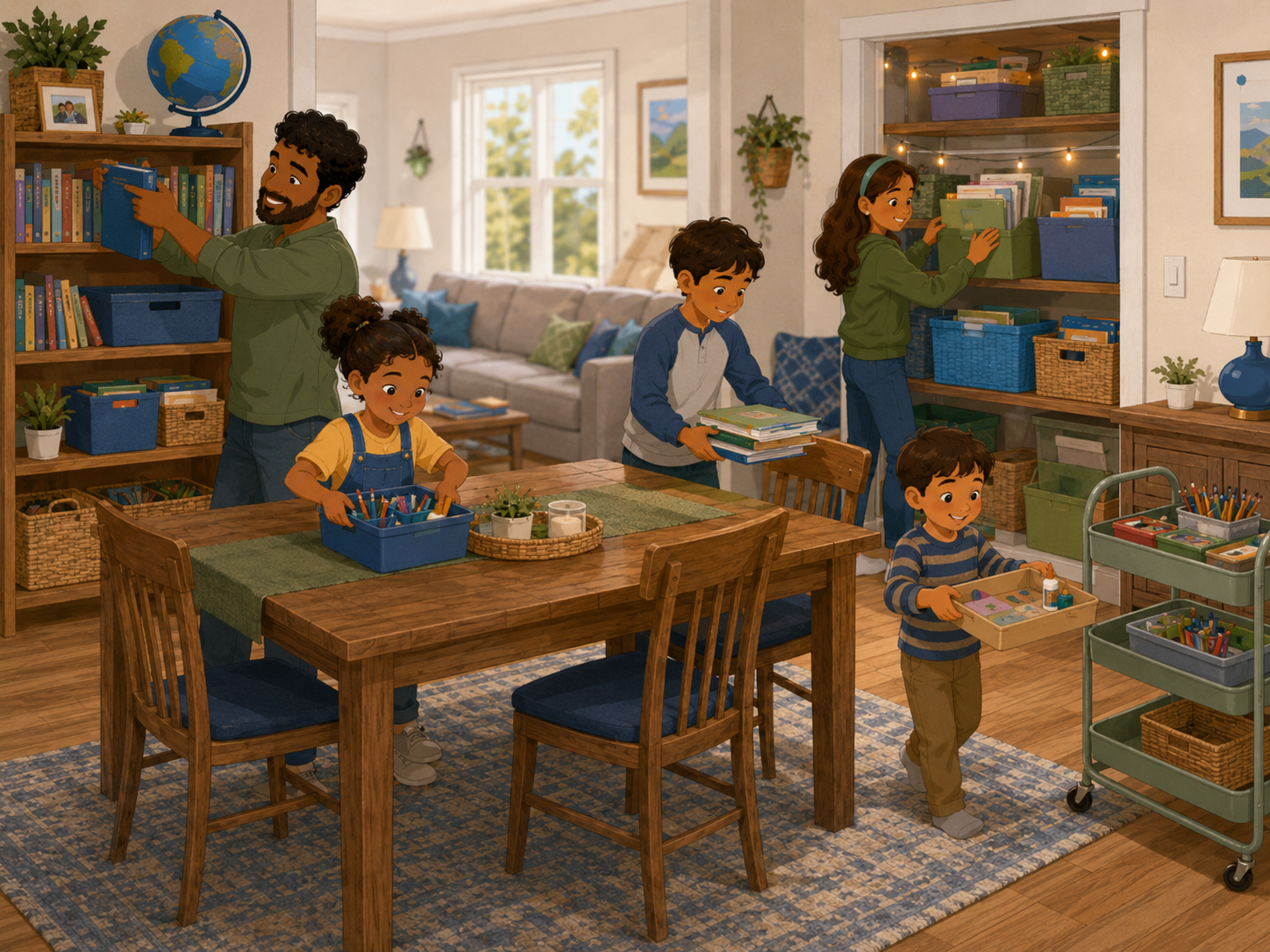
The important thing about your learning space is that the space belongs to the learner and not the other way around. Be prepared for spaces to become messy and cluttered during the school day. That’s okay. However, the homeschool space should also protect family boundaries. When the school day ends, there should be a visible reset. Books return to bins. Supplies return to the cart. Projects go into a tray or box. The table becomes a family table again. The living room becomes a living room again. This daily reset teaches organization and helps the household avoid the feeling that school is always unfinished and everywhere.
The most useful homeschool space is not necessarily the prettiest one. It is the one that supports the family’s actual rhythm. It should be simple enough to maintain, flexible enough for several ages, organized enough to reduce stress, and affordable enough that families do not feel pressured to create a perfect classroom. A well-designed homeschool space helps learning happen while allowing the home to remain a home.
What if I have a room I’d like to dedicate to our homeschooling day?
If a family does have a room that can be dedicated to homeschooling during the day, the room should still be organized for flexibility rather than filled like a traditional classroom. The most effective setup usually includes several clear areas: a shared table for lessons and projects, a quiet reading corner, a supply station, a technology area, and a display or planning wall. Shelving should be arranged so that frequently used materials are easy for students to reach, while specialty items such as science supplies, art materials, and testing or recordkeeping files are stored separately. If multiple children will use the room, each student should have a personal drawer, bin, or shelf for current work. A dedicated room also makes it easier to leave long-term projects in progress, but the space should still have an end-of-day reset routine so that clutter does not build. The room should feel calm, useful, and adaptable, with enough open space for reading on the floor, hands-on activities, movement breaks, and group discussion. A dedicated homeschool room works best when it serves the learning rhythm of the family rather than trying to copy a school classroom.
How can we help? Add your comments or questions below. Anyone is free to answer or add additional comments. This is your safe community for sharing ideas and concerns.