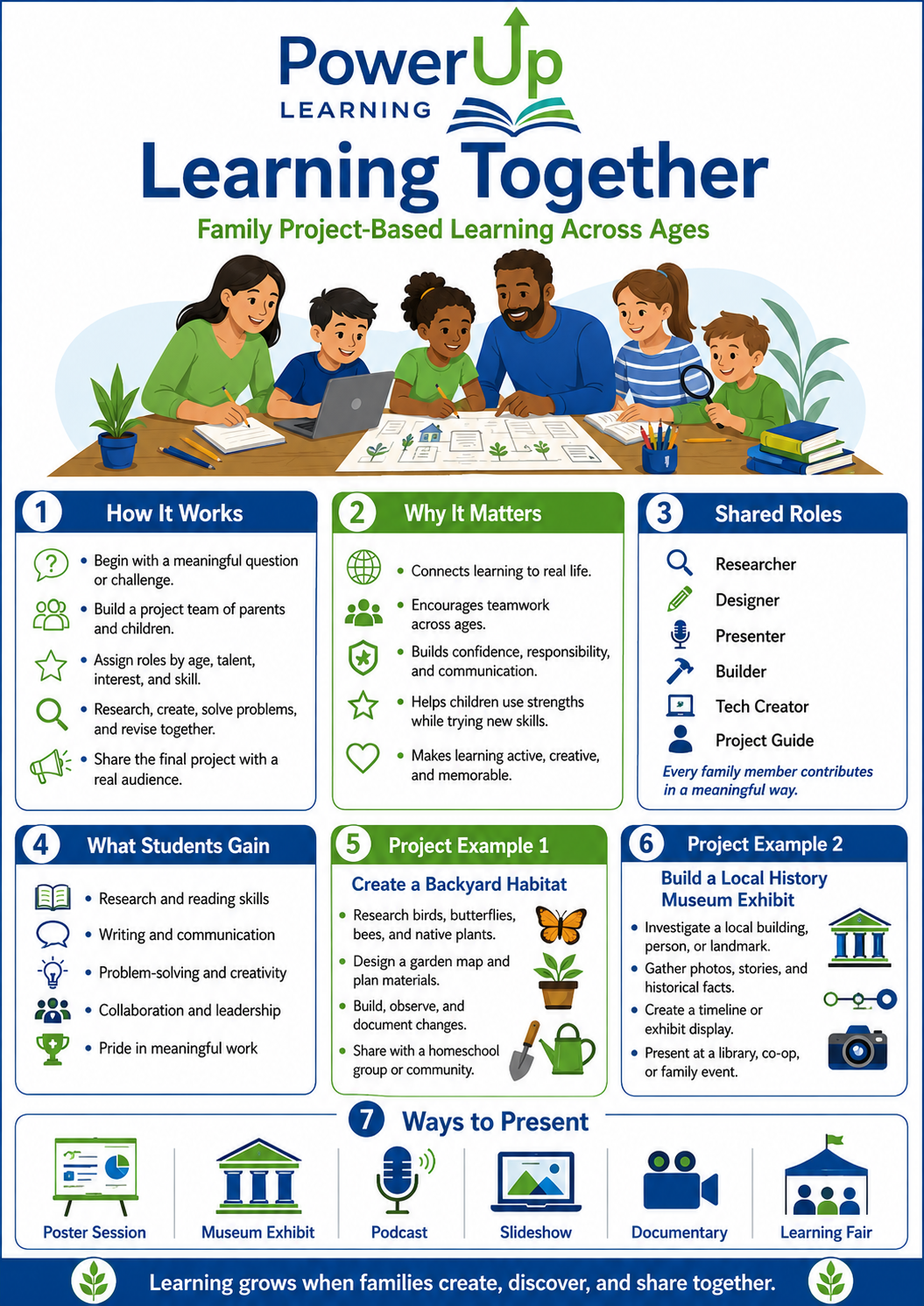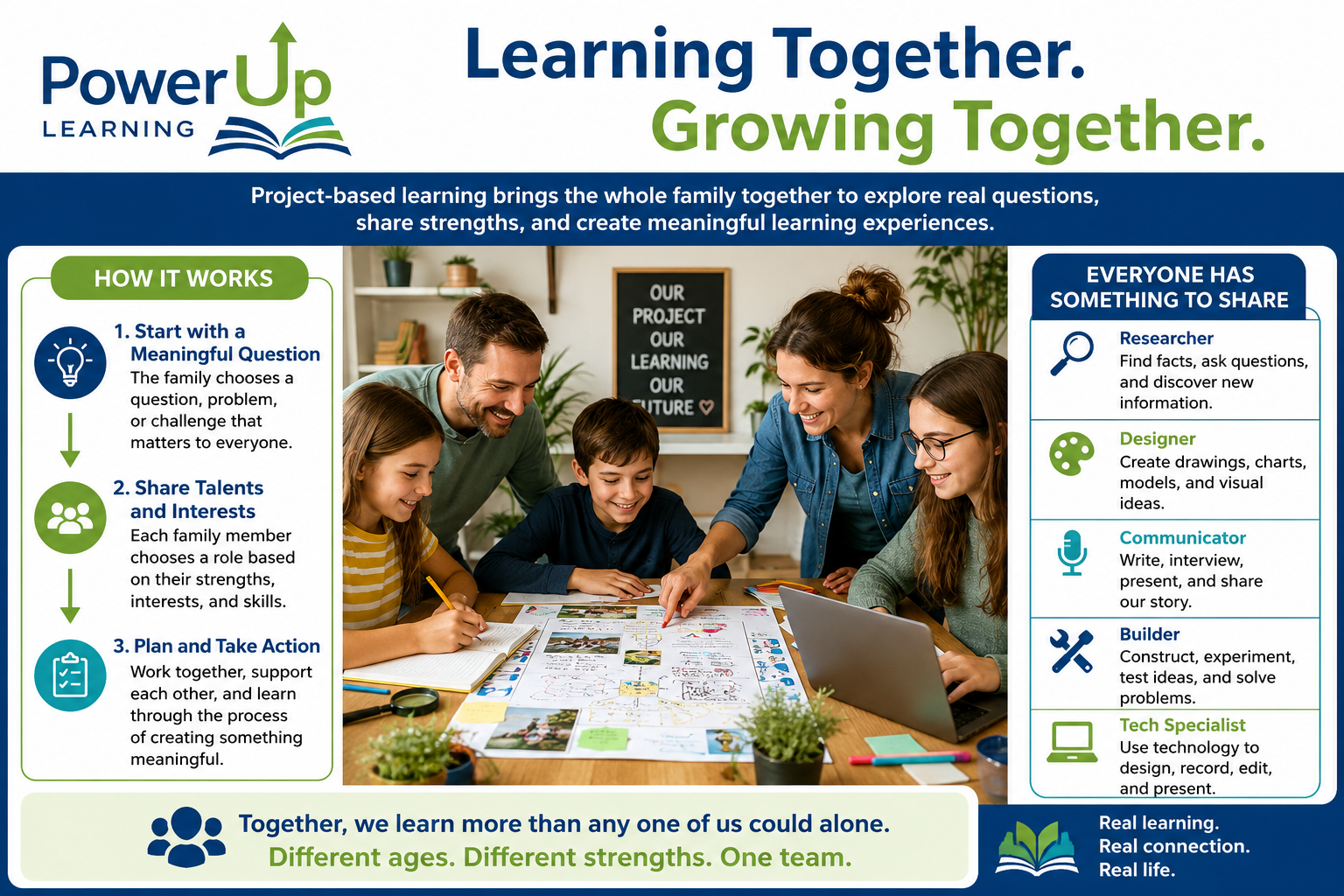
Project-based learning works especially well in a homeschool setting because it allows children of different ages and parents to work as a shared project team. Instead of every child completing the same assignment at the same level, the family begins with a meaningful question, problem, or challenge and then divides the work according to each person’s talents, interests, and skills. For example, a family might investigate local history, design a pollinator garden, create a family heritage exhibit, build a simple business plan, produce a podcast, study water quality, or create a guide to an important community issue. The project becomes the organizing structure for reading, writing, research, math, science, art, technology, communication, and presentation skills.
The purpose of this kind of project is not only to complete a final product. Its deeper purpose is to help children learn how knowledge is used in real life. A younger child may contribute by drawing pictures, sorting materials, asking questions, taking photographs, reading simple texts, or helping build a model. An older student may conduct research, write explanations, analyze data, create digital slides, edit video, or lead part of the presentation. A parent may serve as project manager, mentor, driver, editor, safety supervisor, or community contact. Each person has a role, but the work remains connected. This helps children see that learning is not isolated by age or subject. It also shows that every team member has something useful to offer.
The process usually begins with choosing a project question. A strong question is open-ended and connected to something the family cares about, such as: How can we attract more butterflies to our yard? What can we learn from the oldest cemetery in our town? How did our community change over time? How can we reduce household waste? What makes a good children’s book? Once the question is chosen, the family creates a project plan. This plan should include the final product, needed materials, timeline, team roles, research sources, field trips or interviews, and checkpoints for progress. The parent should help keep the project organized, but children should have real voice in deciding what they want to investigate and how they want to contribute.
A useful project team might include several types of roles. One child may be the researcher, gathering facts from books, websites, interviews, or videos. Another may be the designer, creating drawings, charts, models, posters, or visual layouts. A child who enjoys speaking may become the presenter or interviewer. A child who enjoys building may become the maker, constructing models, displays, or experiments. A child who enjoys technology may create a slideshow, short video, podcast, or digital scrapbook. Parents may guide the schedule, help locate resources, teach research skills, and model how to ask good questions. The strongest projects allow roles to overlap so that children can both use their strengths and practice new skills.
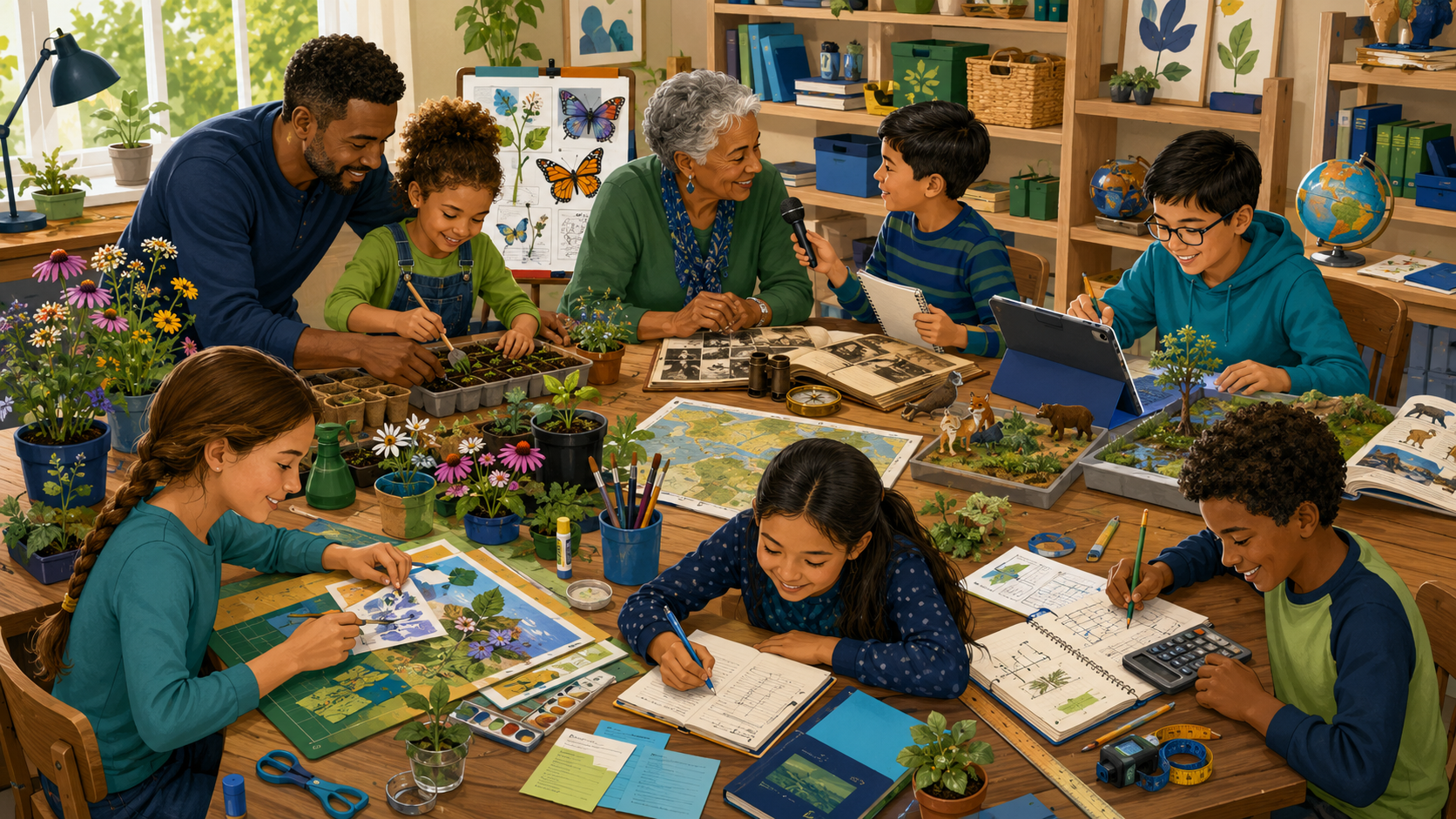
This type of learning also allows family members to share personal interests. A parent who enjoys gardening can help with a pollinator project. A grandparent who knows local history can be interviewed. A child who loves animals can research habitats. A student interested in art can design the display. A student interested in math can measure growth, calculate costs, or create graphs. A student interested in writing can prepare captions, scripts, labels, or a short article. When children see that their interests matter, they often become more invested in the work. When they see parents learning alongside them, they also understand that learning continues throughout life.
The outcomes of project-based learning are both academic and personal. Academically, students practice reading for information, writing for a real audience, organizing evidence, solving problems, using math in context, applying scientific thinking, and communicating clearly. Personally, they build confidence, persistence, responsibility, collaboration, and pride in their work. They also learn how to divide tasks, meet deadlines, revise ideas, give and receive feedback, and explain their thinking to others. These are skills that transfer beyond one subject area.
Presentation is an important final step because it gives the project a real audience. Families can present their work to relatives, a homeschool co-op, a library group, a community organization, a church group, a local historical society, or an online family learning group. Presentation options can include a poster session, museum-style exhibit, oral presentation, short documentary, podcast episode, dramatic performance, science demonstration, art display, digital slideshow, website page, brochure, children’s book, community map, model, or family learning fair. Students may also present through a “gallery walk,” where guests move from station to station while each child explains one part of the project.
A strong final presentation should allow each team member to speak from their own contribution. Younger children might explain a drawing, model, or object. Older students might explain research findings, data, or historical context. Parents can introduce the project and describe the learning process, but the children should be the main voices. This helps students develop ownership and gives the audience a clear view of how different ages worked together.
The best project-based learning activities end with reflection. After the presentation, the family should discuss what worked well, what was difficult, what each person learned, and what they would do differently next time. Reflection helps students understand that learning is not only about the finished product. It is also about the process of asking questions, trying ideas, solving problems, using talents, and growing together as a learning team.
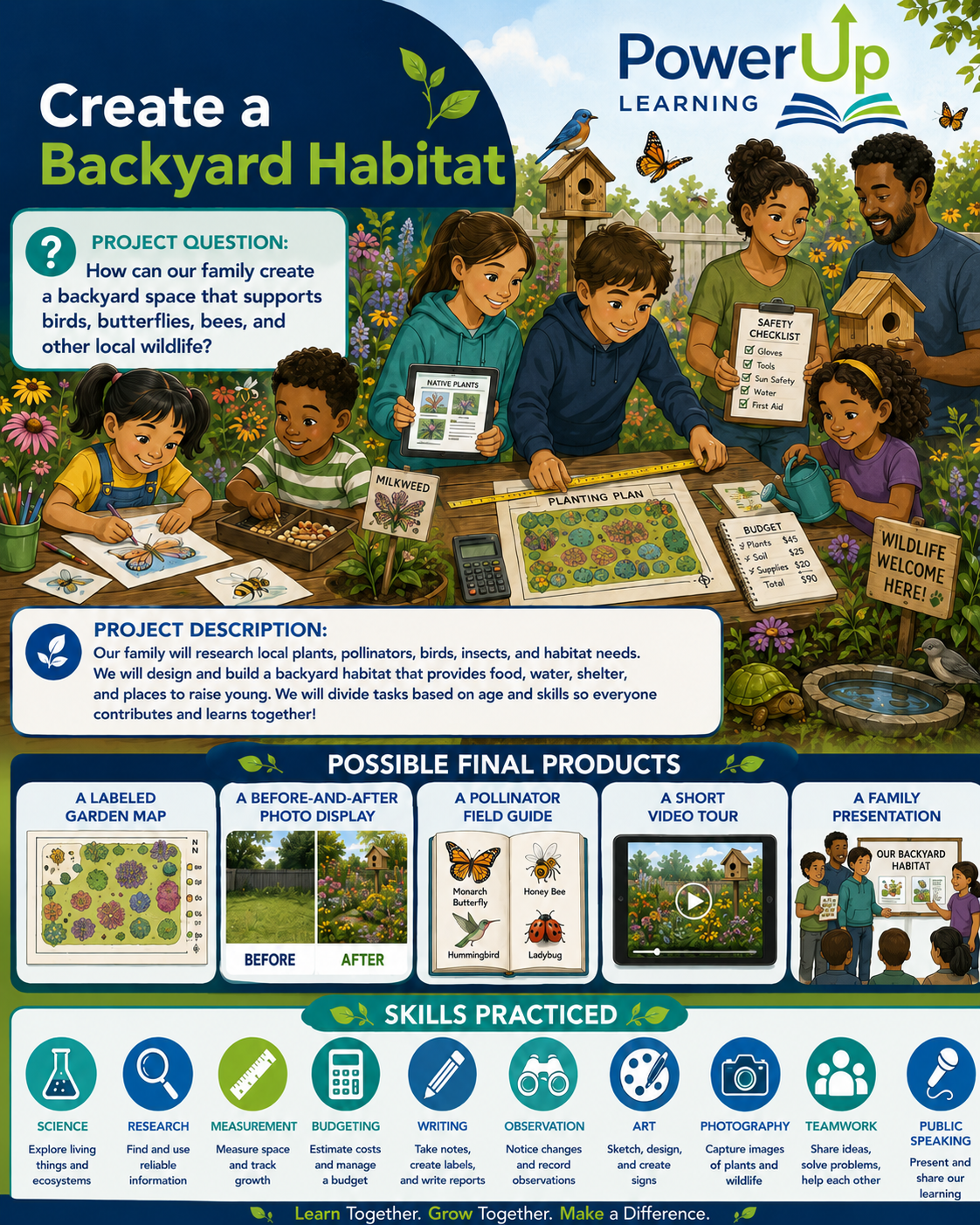
Project Example 1: Create a Backyard Habitat
Project Question:
How can our family create a backyard space that supports birds, butterflies, bees, and other local wildlife?
Project Description:
The family works as a project team to research local plants, pollinators, birds, insects, and habitat needs. Younger children can draw animals, help sort seeds, water plants, or create labels. Older students can research native plants, calculate costs, measure the garden space, create a planting plan, and track changes over time. Parents can help with budgeting, safety, supplies, and contacting a local garden center or conservation group.
Possible Final Products:
A labeled garden map
A before-and-after photo display
A pollinator field guide
A short video tour
A family presentation for a homeschool group, library, or neighborhood gathering
Skills Practiced:
Science, research, measurement, budgeting, writing, observation, art, photography, teamwork, and public speaking.
Make it stand out
Whatever it is, the way you tell your story online can make all the difference.
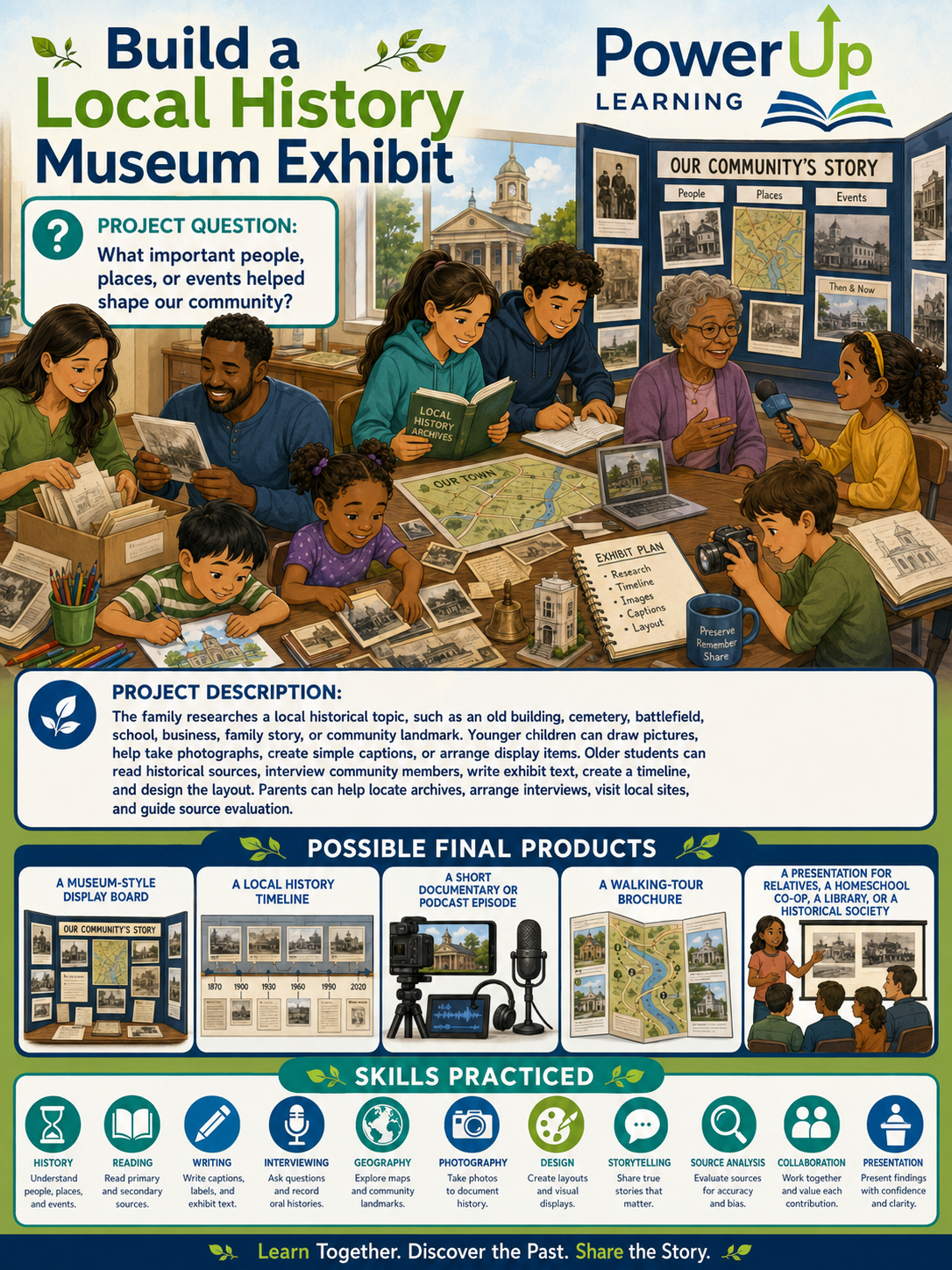
Project Example 2: Build a Local History Museum Exhibit
Project Question:
What important people, places, or events helped shape our community?
Project Description:
The family researches a local historical topic, such as an old building, cemetery, battlefield, school, business, family story, or community landmark. Younger children can draw pictures, help take photographs, create simple captions, or arrange display items. Older students can read historical sources, interview community members, write exhibit text, create a timeline, and design the layout. Parents can help locate archives, arrange interviews, visit local sites, and guide source evaluation.
Possible Final Products:
A museum-style display board
A local history timeline
A short documentary or podcast episode
A walking-tour brochure
A presentation for relatives, a homeschool co-op, a library, or a historical society
Skills Practiced:
History, reading, writing, interviewing, geography, photography, design, storytelling, source analysis, collaboration, and presentation.
Make it stand out
Whatever it is, the way you tell your story online can make all the difference.