June 2: The Indian Citizenship Act of 1924
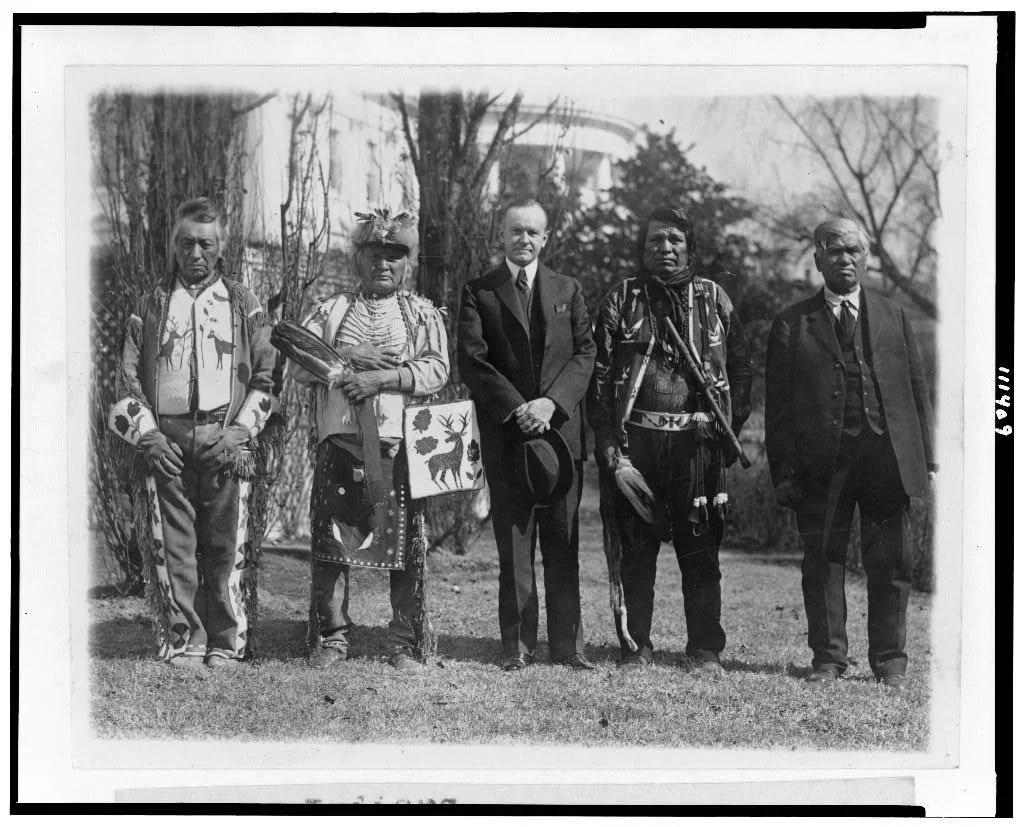
President Calvin Coolidge with four Osage leaders after the passage of the Indian Citizenship Act, which granted U.S. citizenship to Native Americans born in the United States | Library of Congress
On June 2, 1924, President Calvin Coolidge signed the Indian Citizenship Act, also known as the Snyder Act, into law. The act granted United States citizenship to all Native Americans born within the territorial limits of the United States. This was an important turning point in American history because it addressed citizenship status at the federal level for Native people, many of whom had served in the U.S. military during World War I but still did not have full citizenship recognition.
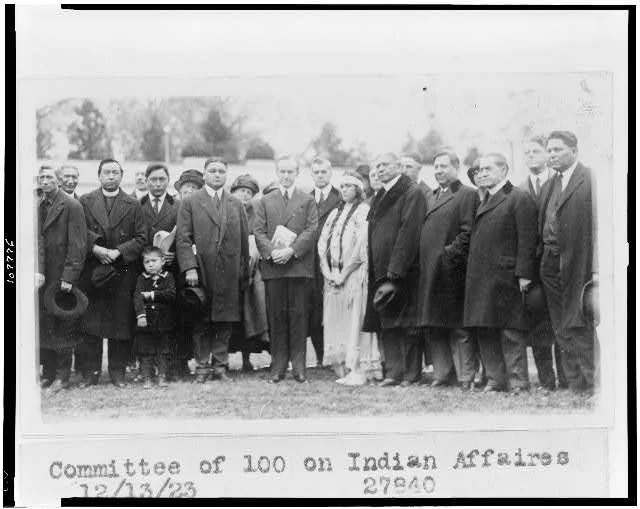
1923 | Library of Congree
The Indian Citizenship Act was signed into law on June 2, 1924, by President Calvin Coolidge. The law granted United States citizenship to all Native Americans born within the territorial limits of the United States who were not already citizens. Before this act, citizenship for Native Americans had been complicated and uneven. Some Native people had received citizenship through treaties, military service, marriage, land allotment policies, or individual applications, but many still were not recognized as U.S. citizens. The act marked an important legal change because it formally recognized Native Americans as citizens of the country in which their tribal nations had existed long before the United States was founded.
The Indian Citizenship Act was influenced by several historical developments. Many Native Americans had served in the United States military during World War I, and their service helped increase public support for citizenship. At the same time, federal Indian policy had long pressured Native people to assimilate into American society, especially through boarding schools, land allotment, and efforts to weaken tribal identity and sovereignty. Because of this, the act had a complicated meaning. It expanded citizenship rights, but it was also passed within a broader history of federal policies that often failed to respect Native nations as self-governing peoples.
Although the Indian Citizenship Act made Native Americans U.S. citizens, it did not immediately guarantee full voting rights or equal treatment. Voting laws were still controlled by individual states, and many states continued to prevent Native Americans from voting through legal restrictions, residency rules, literacy tests, taxation requirements, or discriminatory practices. Native Americans continued to fight for voting access, civil rights, and protection of tribal sovereignty long after 1924. The act remains important because it highlights both progress and contradiction in American history: Native Americans were granted citizenship, but the struggle for full political rights, respect for tribal nations, and equal participation in American democracy continued.
Discovery Projects
Project 1: Citizenship, Sovereignty, and Native Identity
project resource: https://narf.org/the-indian-citizenship-act-at-100-years-old/
Project Goal:
Students will examine the Indian Citizenship Act of 1924 and explain why citizenship had a complex meaning for Native Americans.
Project Description:
Students will research the Indian Citizenship Act and place it within the larger history of Native nations, tribal sovereignty, treaty rights, and U.S. citizenship. They will explain why the law was important, but also why it did not resolve questions of voting rights, equality, or self-government.
Research Questions:
What did the Indian Citizenship Act of 1924 do?
Why were Native Americans not considered U.S. citizens before 1924?
How do you think World War I military service influence public support for Native citizenship?
Why did U.S. citizenship not automatically guarantee voting rights?
How can a person be both a U.S. citizen and a citizen/member of a sovereign Native nation?
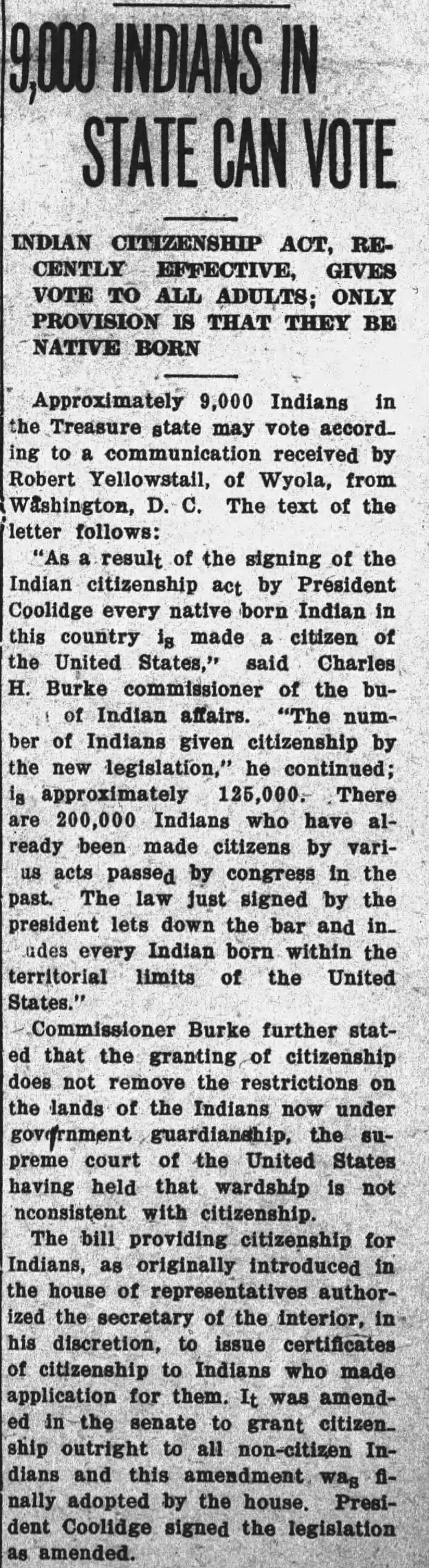
Rocky Mountain American newspaper
Manhattan, Montana · Thursday, July 24, 1924
Project Options:
Students may create:
A citizenship timeline
A cause-and-effect chart
A museum exhibit panel
A short explanatory essay
A classroom presentation
A comparison chart on citizenship and sovereignty
Reflection Question:
Why is citizenship sometimes a promise, but not a complete guarantee of equality?
Project 2: Voting Rights After Citizenship
Project Goal:
Students will investigate why the Indian Citizenship Act did not immediately secure voting rights for all Native Americans.
Project Description:
Students will research the difference between federal citizenship and state-controlled voting rights. They will examine how some states continued to use legal barriers, residency arguments, guardianship rules, or other restrictions to prevent Native Americans from voting even after 1924. Students will connect this history to broader American debates about voting rights and democratic participation.
Research Questions:
Why did citizenship not automatically mean voting rights in every state?
What barriers did Native Americans face when trying to vote after 1924?
Why did some states resist Native voting rights?
How does this history compare with other voting rights struggles in American history?
What does this reveal about the difference between legal status and actual political power?
Final Project Options:
Students may create:
A voting rights timeline
A map showing state voting restrictions
A mock newspaper editorial from the 1920s
A civic rights presentation
A short documentary script
A compare-and-contrast project with another voting rights movement
Reflection Question:
What is the difference between being granted a right and being able to exercise that right?
Project 3: Primary Source Study — Reading the Indian Citizenship Act
Project Goal:
Students will analyze the text of the Indian Citizenship Act as a primary source and evaluate what the law did and did not say.
Project Description:
Students will read the brief text of the Indian Citizenship Act and identify its key language. They will then compare the law’s wording with historical context about Native voting rights, sovereignty, military service, and federal Indian policy. The project should help students understand that laws can be short, but their consequences can be broad and complicated.
Research Questions:
What words or phrases are most important in the Indian Citizenship Act?
What does the law clearly grant?
What issues does the law leave unresolved?
How does the law reflect federal power over Native citizenship?
Why is it important to read both the law itself and the historical context around it?
Final Project Options:
Students may create:
An annotated primary-source document
A legal language poster
A before-and-after citizenship chart
A short research paper
A classroom discussion guide
A civic history infographic
Reflection Question:
How can a short law carry a complicated historical meaning?