June 3, 1965: Edward H. White II Becomes the First American to Walk in Space
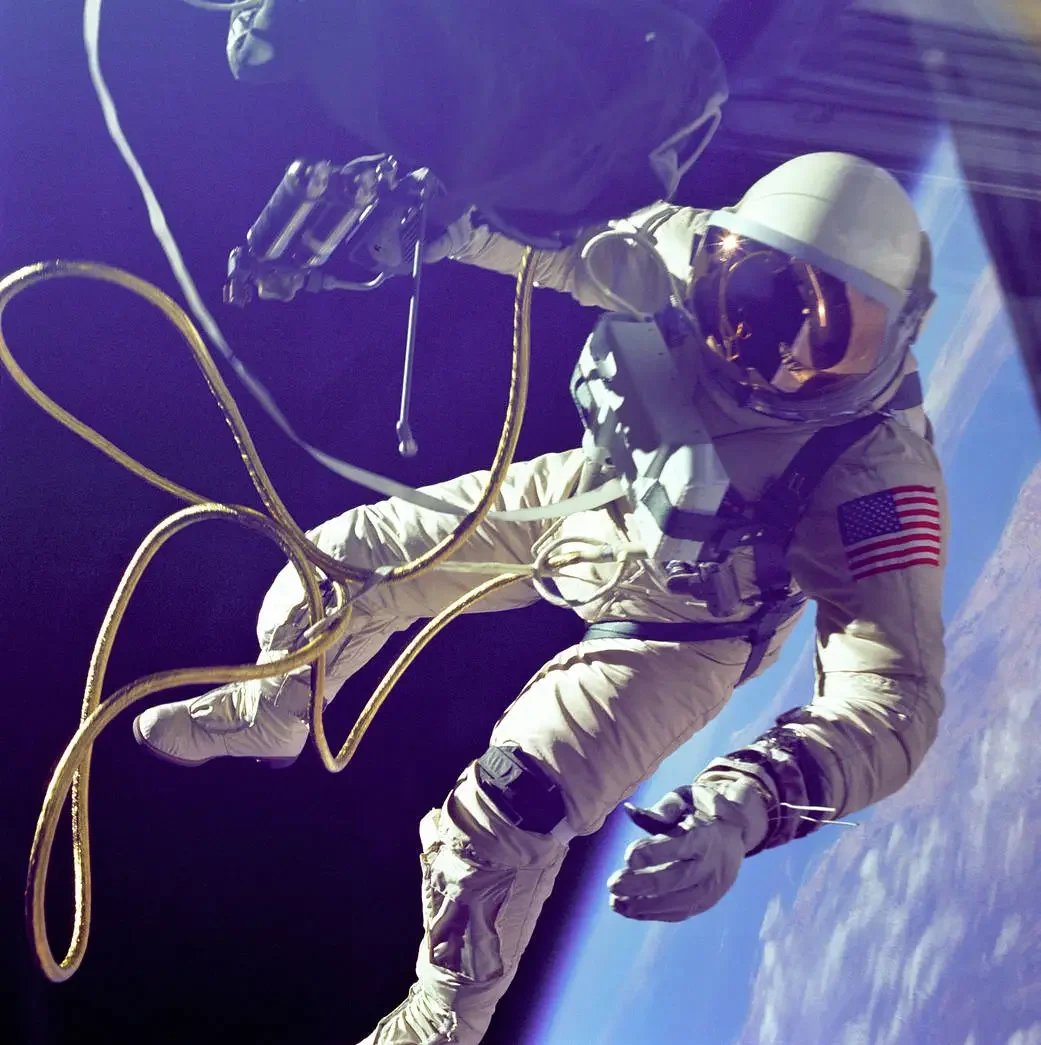
On June 3, 1965, Edward H. White II became the first American to step outside his spacecraft and let go, effectively setting himself adrift in the zero gravity of space. For 23 minutes White floated and maneuvered himself around the Gemini spacecraft while logging 6,500 miles during his orbital stroll. White was attached to the spacecraft by a 25 feet. Image source: NASA
On June 3, 1965, astronaut Edward H. White II became the first American to walk in space during the Gemini 4 mission. White was part of NASA’s Gemini program, which helped prepare the United States for the later Apollo missions to the Moon. Gemini 4 was commanded by James McDivitt, with White serving as pilot. During the mission, White opened the spacecraft hatch and moved outside the capsule, becoming the first American astronaut to perform an extravehicular activity, or EVA.
White’s spacewalk lasted about 23 minutes and became one of the most memorable moments of the Space Race. He used a handheld maneuvering unit that released small bursts of oxygen to help him move in space, while a tether kept him connected to the Gemini spacecraft. Floating above Earth, White described the experience with wonder and excitement. When mission control told him it was time to return to the capsule, he was reluctant to end the spacewalk, later saying it was one of the saddest moments of his life.
Edward White’s spacewalk was important because it proved that American astronauts could leave their spacecraft, move in space, and return safely. This skill became essential for later missions, including Apollo Moon landings, space station construction, and modern spacewalks used for repairs and scientific work. White’s courage and success helped build confidence in NASA’s ability to meet President John F. Kennedy’s goal of landing astronauts on the Moon. Although White died tragically in the Apollo 1 fire in 1967, his achievement as the first American to walk in space remains a major milestone in the history of human space exploration.
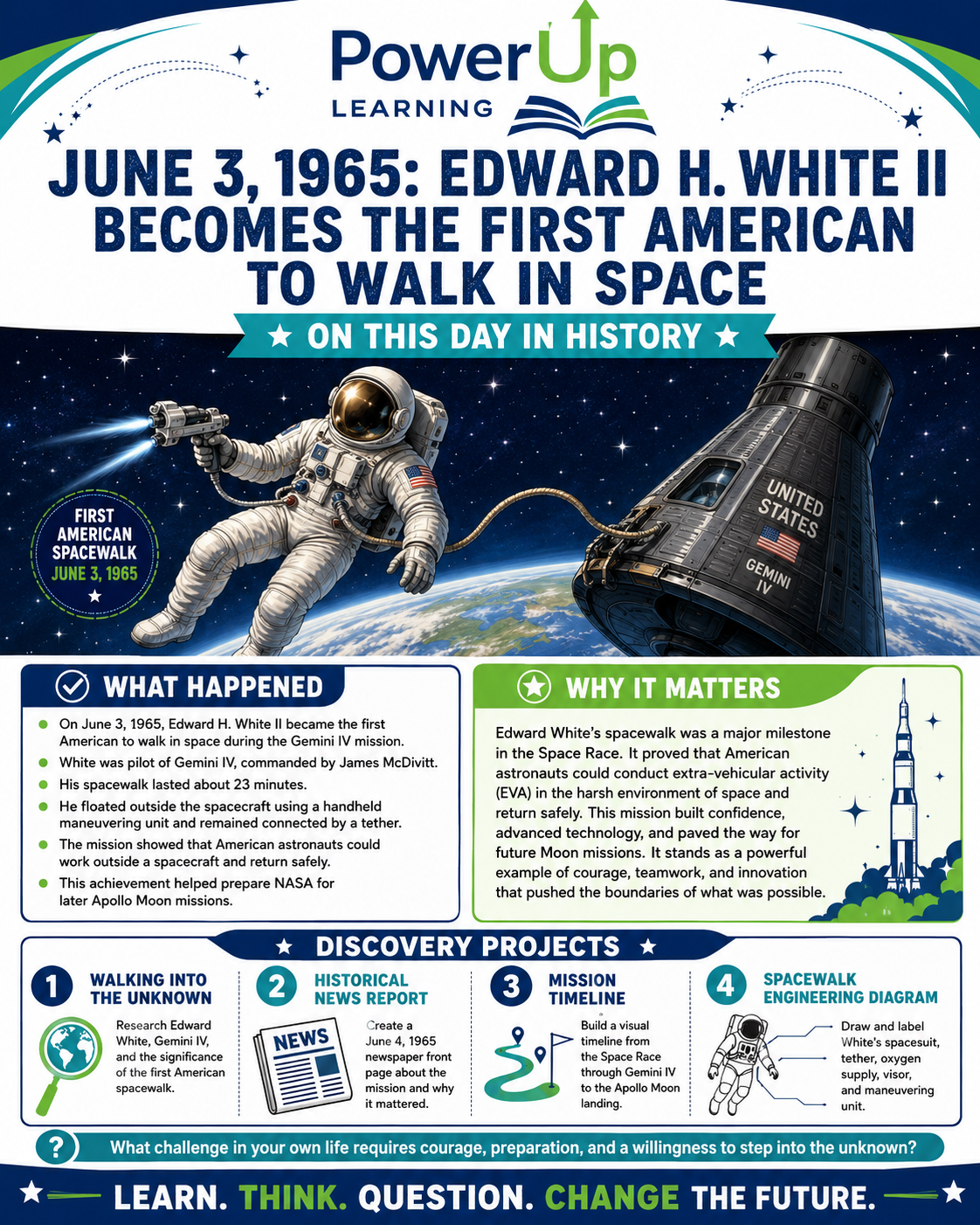
Student Project: Walking Into the Unknown — America’s First Spacewalk
Project Goal
Students will investigate Edward White’s first American spacewalk and explain how the Gemini IV mission advanced American space exploration, technology, national confidence, and future NASA missions.
Project Description
Students will research the Gemini IV mission, the Space Race, Edward White’s role as an astronaut, and the technological challenges of working outside a spacecraft. They will examine why a spacewalk was dangerous, what equipment made it possible, and how the mission helped prepare the United States for the Apollo program. Students should connect the event to larger themes in American history, including Cold War competition, scientific innovation, risk, teamwork, and national achievement.
Research Questions
Who was Edward H. White II, and how did he become part of NASA’s astronaut program?
What was the Gemini IV mission designed to accomplish?
What made a spacewalk dangerous in 1965?
How did White move, breathe, and remain connected to the spacecraft?
Why was the first American spacewalk important during the Space Race?
How did the Gemini missions help prepare NASA for the Apollo moon landings?
What does this event reveal about courage, innovation, and problem-solving?
Project 2: Historical News Report
Students create a newspaper front page dated June 4, 1965, reporting on Edward White’s spacewalk. The article should include a headline, summary of the event, background on the Space Race, a short profile of White, and an explanation of why the mission mattered.
Project 3: Mission Timeline
Students create a visual timeline showing major events before, during, and after Gemini IV. The timeline may include Soviet space achievements, the start of Project Gemini, the June 3 spacewalk, later Gemini missions, and the Apollo moon landing.
Project 4: Spacewalk Engineering Diagram
Students draw and label Edward White’s spacewalk equipment, including the spacesuit, tether, oxygen supply, umbilical connection, visor, and handheld maneuvering unit. Each label should explain how that piece of equipment helped keep White alive or helped him move..
Reflection Question
Edward White’s spacewalk required courage, preparation, teamwork, and trust in technology. What is one challenge in your own life that requires you to “step into the unknown,” and what kind of preparation would help you face it?