June 23: Wilma Rudolph and the Power of Perseverance
Wilma Rudolph was born on June 23, 1940, in Saint Bethlehem, Tennessee, and grew up in a large family in the segregated South. As a child, she faced serious health challenges, including double pneumonia, scarlet fever, and polio. Polio weakened her left leg, and for several years she wore a leg brace. Doctors were uncertain whether she would walk normally again, but Rudolph’s family helped her through years of therapy and exercises. Her mother regularly took her for treatment, and her siblings helped massage her leg at home. By determination and practice, Rudolph eventually walked without the brace and began playing basketball and running.
As Rudolph grew older, her athletic ability became clear. She became a strong basketball player in high school, but her speed made her especially gifted in track and field. While still a teenager, she qualified for the 1956 Olympic Games in Melbourne, Australia, where she won a bronze medal as part of the United States 4 × 100-meter relay team. She later attended Tennessee State University and trained under coach Ed Temple, who helped develop many outstanding women runners. Rudolph’s greatest athletic achievement came at the 1960 Olympic Games in Rome, where she won three gold medals in the 100-meter dash, the 200-meter dash, and the 4 × 100-meter relay.
Wilma Rudolph became known around the world as “the fastest woman in the world,” but her importance reached beyond sports. Her success challenged ideas about what women athletes could accomplish and inspired many young people, especially girls and African American students, to pursue their goals. After retiring from competition, Rudolph worked as a teacher, coach, and advocate for young athletes. She used her public voice to encourage education, opportunity, and perseverance. Her life remains an important American story because she turned illness, hardship, and social barriers into a legacy of courage, achievement, and hope.Why It Matters
Wilma Rudolph helps students explore American history, women’s history, sports history, civil rights, health, perseverance, and goal setting. Her life raises important historical questions: How do people overcome obstacles? How can athletic achievement change public attitudes? How can one person’s success inspire others to keep trying?
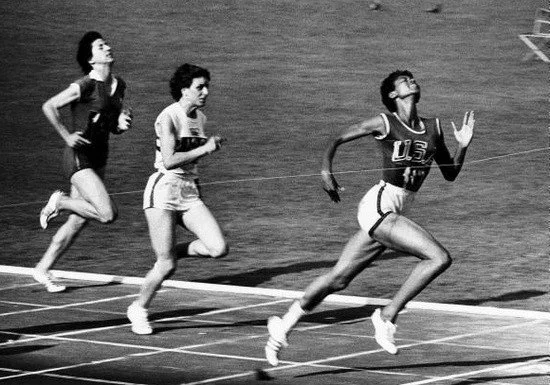
Wilma Rudolph wins the women's 100-meter dash at the 1960 Summer Olympics in Rome.
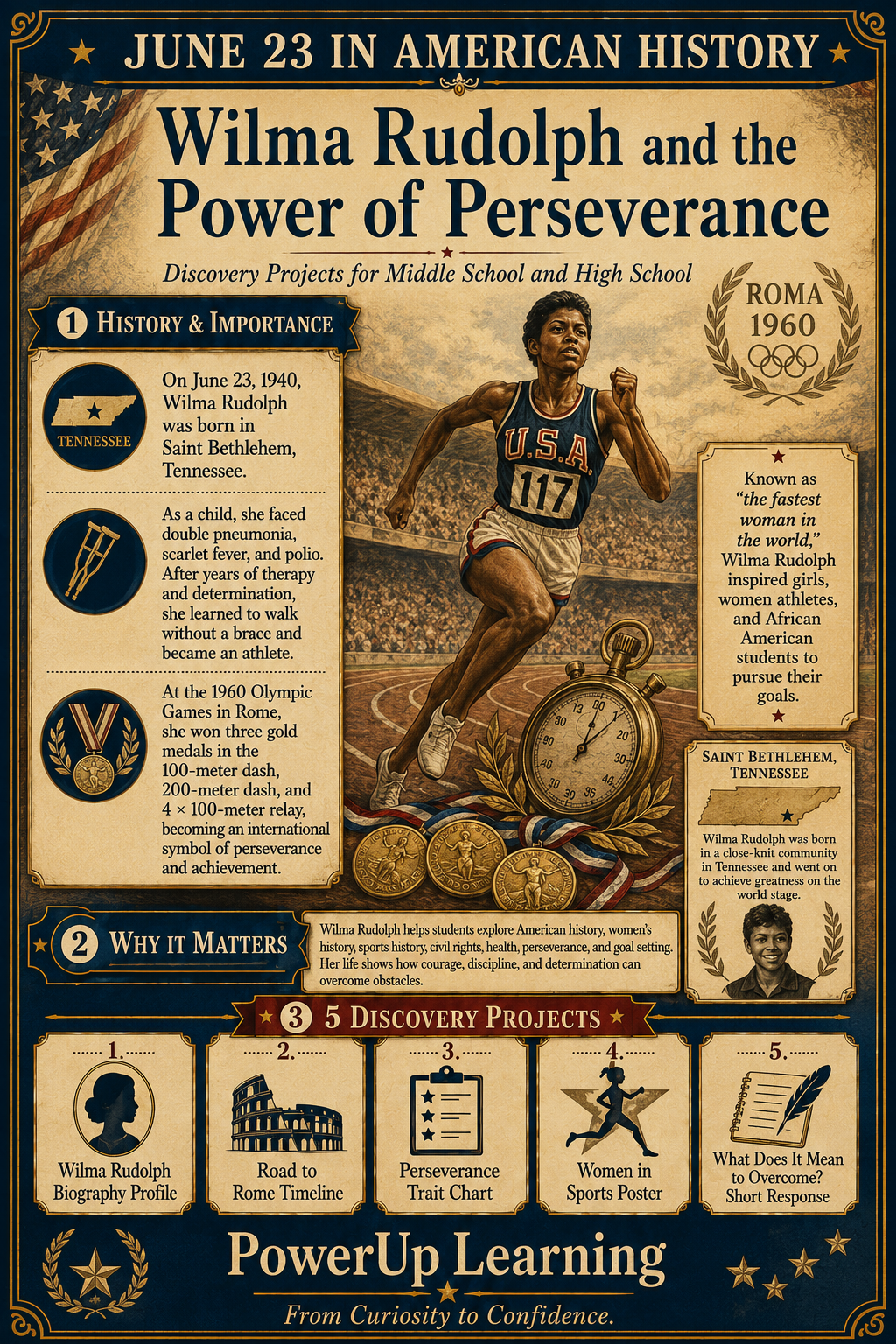
Discovery Projects
Project 1: Wilma Rudolph Biography Profile
Project Goal:
Create a one-page biography profile about Wilma Rudolph and her impact on American sports and history.
What to Include:
The profile should include Rudolph’s name, birth date, birthplace, childhood challenges, Olympic achievements, and a short explanation of why she was important. Students should explain how perseverance, training, family support, and courage helped her become an Olympic champion.
Student Directions:
Research Wilma Rudolph’s life and career. Take notes about her childhood, her health challenges, her early interest in sports, her Olympic races, and her long-term influence. Then create a one-page profile that explains why her story matters in American history.
Final Product:
A one-page illustrated biography profile.
Reflection Question:
How did Wilma Rudolph’s early challenges make her later achievements even more powerful?
Project 2: Road to Rome Timeline
Project Goal:
Create a timeline showing important events in Wilma Rudolph’s life leading up to the 1960 Olympics.
What to Include:
The timeline should include at least six events. Possible events include Rudolph’s birth in 1940, her childhood illness and recovery, her development as an athlete, her participation in the 1956 Olympics, her training at Tennessee State, and her three gold medals at the 1960 Rome Olympics.
Student Directions:
Research the major events in Rudolph’s life. Put them in chronological order. For each event, write one or two sentences explaining what happened and why it mattered. Add drawings, symbols, or images to make the timeline visually clear.
Final Product:
A paper or digital timeline.
Reflection Question:
Which event on your timeline seems most important to Wilma Rudolph’s success? Why?
Project 3: Perseverance Trait Chart
Project Goal:
Create a character trait chart showing the qualities that helped Wilma Rudolph succeed.
What to Include:
Choose at least five character traits connected to Rudolph’s life. Possible traits include perseverance, courage, discipline, patience, confidence, determination, resilience, and focus.
For each trait, include:
The trait word
A student-friendly definition
One fact from Rudolph’s life that shows the trait
A small symbol, drawing, or icon
One sentence explaining why the trait matters
Student Directions:
Think about the personal qualities Wilma Rudolph needed as she moved from childhood illness to Olympic success. Then create a chart that connects her life story to traits students can practice in their own learning.
Final Product:
An illustrated character trait chart.
Reflection Question:
Which character trait from Wilma Rudolph’s life would help you most in your own education?
Project 4: Women in Sports Poster
Project Goal:
Create a poster explaining how Wilma Rudolph helped expand the story of women in American sports.
What to Include:
The poster should include Rudolph’s name, a short summary of her Olympic achievement, and an explanation of why her success mattered for women athletes. Students should include the date June 23, 1940, and the phrase Today in American History.
Student Directions:
Research women’s athletics in the mid-1900s and Wilma Rudolph’s role as an Olympic champion. Then create a poster that teaches others why her accomplishments were historically important. Use clear headings, strong visuals, and accurate facts.
Final Product:
An educational poster.
Reflection Question:
Why is Wilma Rudolph’s success important in the history of women’s athletics?
Project 5: “What Does It Mean to Overcome?” Short Response Project
Project Goal:
Write a short response explaining how Wilma Rudolph’s life shows the meaning of overcoming obstacles.
What to Include:
The response should explain who Wilma Rudolph was, what challenges she faced, what she achieved, and why her story still inspires people today. Students should include at least one historical fact about her childhood, training, Olympic success, or legacy.
Student Directions:
Begin by defining the word perseverance in your own words. Then explain how Wilma Rudolph showed perseverance in her life. Use historical evidence to support your answer.
Middle school students may write 2–3 paragraphs. High school students may write 4–5 paragraphs and include more historical evidence.
Final Product:
A short written response or essay.
Reflection Question:
How can learning about Wilma Rudolph help students think differently about obstacles in their own lives?
Student Project Tips
Students should begin by reading about Wilma Rudolph, the 1960 Olympics, women’s athletics, and the challenges faced by African American athletes during the mid-1900s. They should take notes and choose the project format that best fits their strengths. Some students may prefer creating a biography profile or timeline, while others may prefer designing a poster, building a character trait chart, or writing about perseverance.
Before beginning, students should ask:
What is the main question I am answering?
What information do I need to find?
What final product will I create?
How will I show what I learned?
When the project is finished, students should review their work and make sure it is accurate, organized, respectful, and clear. Each project should help the student understand why Wilma Rudolph became an important figure in American history, women’s history, and sports history.