June 22: Katherine Dunham and the Power of Dance
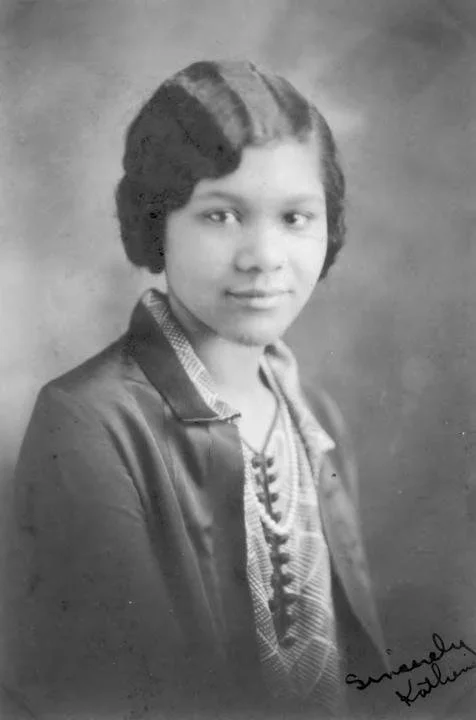
Katherine Dunham in the 1920s | Library of Congress
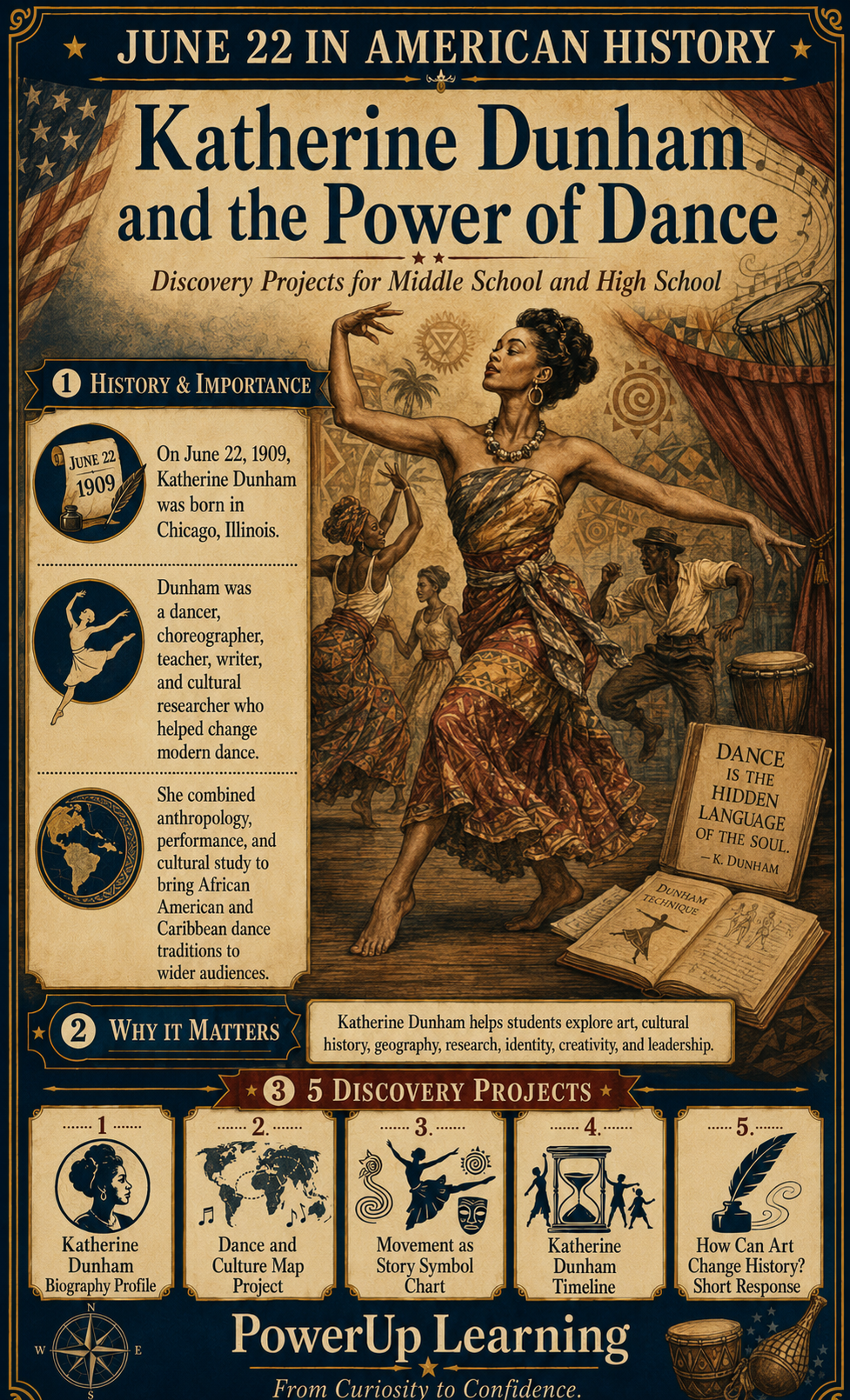
On June 22, 1909, Katherine Dunham was born in Chicago, Illinois.
Katherine Dunham was an influential American dancer, choreographer, teacher, writer, and cultural researcher whose work changed the direction of modern dance. Born on June 22, 1909, in Chicago, Illinois, Dunham developed a lifelong interest in performance, learning, and cultural expression. She studied anthropology at the University of Chicago, where she explored how dance, music, ritual, history, and community identity are connected. This academic background helped her understand dance as more than movement. For Dunham, dance was a way to study people, preserve cultural traditions, and communicate meaning.
Dunham traveled to the Caribbean to study dance and cultural practices directly within the communities where they were lived and performed. Her research influenced the choreography she later brought to American stages, where she incorporated African American, Caribbean, African, and South American movement traditions. Through her performances, Dunham helped audiences see that dance could tell stories, honor heritage, and express complex ideas about identity, history, struggle, and celebration. Her work challenged narrow ideas about what belonged in American concert dance and helped expand the cultural vocabulary of modern performance.
Katherine Dunham’s legacy is important because she connected creativity with scholarship, performance with cultural respect, and art with education. She showed that careful research could deepen artistic expression and that movement could preserve knowledge across generations. As a teacher and mentor, Dunham influenced many dancers and performers, but her impact reached beyond the stage. Her life invites students to consider how one person can use talent, discipline, curiosity, and leadership to broaden public understanding of culture and create lasting change in American history.Why It Matters
Katherine Dunham helps students explore American art, cultural history, geography, research, identity, creativity, and leadership. Her life raises important historical questions: How can art preserve culture? How can research shape creative work? How can one person use discipline, talent, and learning to change the way people understand history and human expression?
Discovery Projects
Project 1: Katherine Dunham Biography Profile
Project Goal:
Create a one-page biography profile about Katherine Dunham and her impact on American dance and culture.
What to Include:
The profile should include Dunham’s name, birth date, major roles, and a short explanation of why she was important. Students should explain how she combined dance, research, culture, and education. Include at least three qualities that helped Dunham become an influential artist and leader.
Student Directions:
Research Katherine Dunham’s life and career. Take notes about her childhood, education, study of anthropology, dance career, and influence on modern dance. Then create a one-page profile that explains why her work mattered in American history.
Final Product:
A one-page illustrated biography profile.
Reflection Question:
How did Katherine Dunham use both research and creativity to make a lasting impact?
Project 2: Dance and Culture Map Project
Project Goal:
Create a map project showing places connected to Katherine Dunham’s study of dance and culture.
What to Include:
The map should include places connected to Dunham’s life and work, such as Chicago, Joliet, the University of Chicago, Haiti, Jamaica, Martinique, Trinidad, or other Caribbean locations connected to her research and performance influences. Students should label each place and explain why it mattered.
Student Directions:
Study Katherine Dunham’s travels, education, and cultural research. Then create a labeled map that shows how geography influenced her work. Use color, labels, and a short caption to explain how different places helped shape Dunham’s understanding of dance.
Final Product:
A labeled map with a short explanation.
Reflection Question:
How can learning about different places help an artist create more meaningful work?
Project 3: Movement as Story Symbol Chart
Project Goal:
Create a symbol chart explaining how dance can communicate meaning without spoken words.
What to Include:
Choose at least five ideas that dance can express. Possible ideas include joy, grief, celebration, identity, community, freedom, strength, memory, or heritage.
For each idea, include:
The word or idea
A student-friendly definition
A small drawing, pose, icon, or symbol
One sentence explaining how movement could express that idea
Student Directions:
Think about how people use movement, rhythm, posture, facial expression, and space to communicate. Then create a chart showing how dance can tell a story or express emotion. Connect the project to Katherine Dunham’s belief that movement could carry cultural meaning.
Final Product:
An illustrated symbol chart.
Reflection Question:
Why can movement sometimes communicate ideas that words cannot fully explain?
Project 4: Katherine Dunham Timeline
Project Goal:
Create a timeline showing important events in Katherine Dunham’s life and career.
What to Include:
The timeline should include at least six events. Possible events include Dunham’s birth in 1909, her education at the University of Chicago, her study of anthropology, her research in the Caribbean, the development of her dance company, her choreography and performances, her teaching, and her long-term influence on American dance.
Student Directions:
Research the major events in Katherine Dunham’s life. Put the events in chronological order. For each event, write one or two sentences explaining what happened and why it mattered. Add small drawings, symbols, or images to make the timeline visually clear.
Final Product:
A paper or digital timeline.
Reflection Question:
Which event on your timeline seems most important to Dunham’s lasting influence? Why?
Project 5: How Can Art Change History? Short Response Project
Project Goal:
Write a short response explaining how Katherine Dunham used art to influence American culture and history.
What to Include:
The response should explain who Katherine Dunham was, why her work was important, and how dance can help people understand culture, identity, and history. Students should include at least one historical fact about Dunham’s education, research, choreography, teaching, or cultural influence.
Student Directions:
Begin by defining the word culture in your own words. Then explain how Katherine Dunham used dance to share cultural knowledge and expand American performing arts. Use historical evidence to support your answer.
Middle school students may write 2–3 paragraphs. High school students may write 4–5 paragraphs and include more historical evidence.
Final Product:
A short written response or essay.
Reflection Question:
How can an artist help people see history, culture, or identity in a new way?
Student Project Tips
Students should begin by reading about Katherine Dunham, American modern dance, anthropology, and cultural research. They should take notes and choose the project format that best fits their strengths. Some students may prefer creating a biography profile or timeline, while others may prefer mapping Dunham’s cultural influences, designing a symbol chart, or writing about how art can shape history.
Before beginning, students should ask:
What is the main question I am answering?
What information do I need to find?
What final product will I create?
How will I show what I learned?
When the project is finished, students should review their work and make sure it is accurate, organized, respectful, and clear. Each project should help the student understand why Katherine Dunham became an important figure in American history, performing arts, and cultural education.