June 28: Molly Pitcher and the Battle of Monmouth
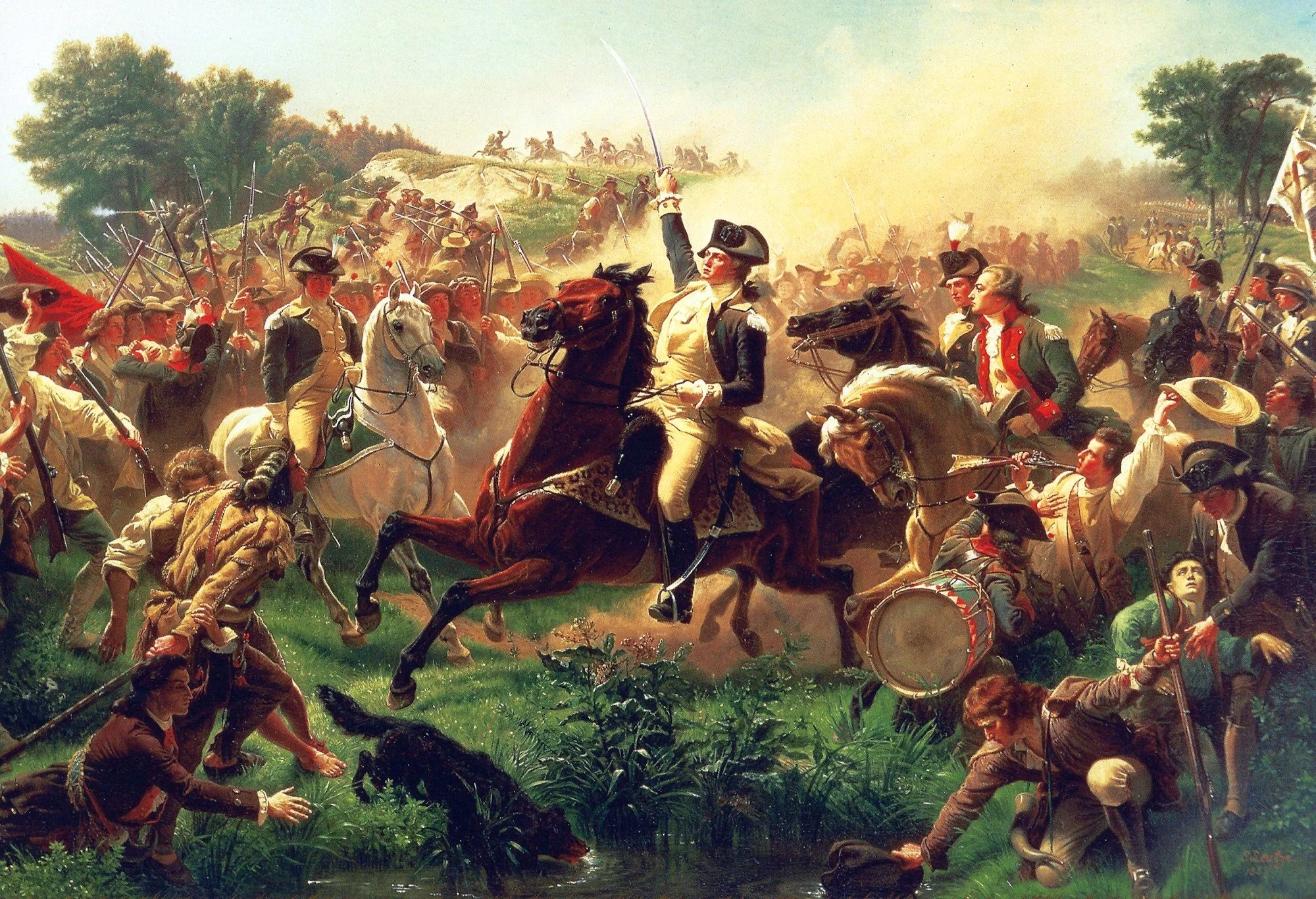
Emanuel Leutze (1816–188) 6
Washington Rallying the Troops at Monmouth | painting Emanuel Leutze
On June 28, 1778, American and British forces fought the Battle of Monmouth near present-day Freehold, New Jersey. The battle became one of the longest single days of combat during the American Revolution and took place in extreme summer heat. General George Washington and the Continental Army attacked the rear of the British army as it moved across New Jersey after leaving Philadelphia. Although the battle did not produce a clear battlefield victory, it showed that the Continental Army had become stronger, more disciplined, and better prepared after its difficult winter at Valley Forge.
One of the most famous stories connected to the Battle of Monmouth is the legend of Molly Pitcher, most often identified as Mary Ludwig Hays. During the battle, women carried water to soldiers who were exhausted by the heat and smoke of combat. According to tradition, Mary Hays carried water to the troops and later stepped in to help operate a cannon after her husband collapsed from heat or injury. Historians note that the Molly Pitcher story may combine the actions of more than one woman, but Mary Ludwig Hays is the person most closely connected with the Monmouth tradition.
The Battle of Monmouth is important because it helps us understand both military history and the many kinds of service that supported the American Revolution. Soldiers fought on the battlefield, but women, camp followers, nurses, cooks, water carriers, and families also played essential roles in keeping the army alive and functioning. Molly Pitcher’s story reminds us that American history includes people whose contributions were not always formally recorded but still became part of the nation’s memory.
Why It Matters
Molly Pitcher and the Battle of Monmouth help students explore the Revolutionary War, courage, teamwork, women’s contributions, battlefield conditions, and the difference between history and legend. This event raises important questions: How do ordinary people become remembered as heroes? Why are some historical stories difficult to verify? How did women support the American Revolution? What does courage look like during a crisis?
Discovery Projects
Project 1: Battle of Monmouth Map Challenge
Project Goal:
Create a map that explains where the Battle of Monmouth happened and why its location mattered.
What to Include:
The map should show New Jersey, Monmouth Courthouse, Philadelphia, New York City, the route of the British army, and the approximate location of the battle. Students should also label the American and British forces and include the date June 28, 1778.
Student Directions:
Research the movement of the British army after it left Philadelphia and the way Washington’s army followed. Then create a map that shows where the battle took place and why New Jersey became important during the Revolutionary War.
Final Product:
A labeled paper or digital map.
Reflection Question:
Why was the location of Monmouth important to both the American and British armies?
Project 2: Molly Pitcher: History or Legend?
Project Goal:
Investigate the story of Molly Pitcher and explain what historians know, what they believe, and what remains uncertain.
What to Include:
Students should identify Molly Pitcher, Mary Ludwig Hays, and the Battle of Monmouth. They should explain which parts of the story are commonly told and which parts are harder to prove. Students should also explain why legends can still matter, even when historians must be careful with evidence.
Student Directions:
Research the Molly Pitcher story from at least two sources. Create a chart with three columns: Known History, Legend or Tradition, and Why the Story Matters. Use careful language, such as “according to tradition,” “historians believe,” or “the story is often connected to.”
Final Product:
A history-versus-legend chart.
Reflection Question:
Why is it important to separate historical evidence from legend when studying the past?
Project 3: Revolutionary War Support Roles Chart
Project Goal:
Create a chart showing the many support roles that helped the Continental Army survive and continue fighting.
What to Include:
Students should include at least five support roles, such as water carrier, nurse, cook, laundress, wagon driver, blacksmith, scout, messenger, or camp follower. For each role, students should explain what the person did and why the work mattered.
Student Directions:
Research life around the Continental Army and think beyond the soldiers carrying muskets. Then create a chart showing how many different people helped an army function during the Revolutionary War.
Final Product:
An illustrated support roles chart.
Reflection Question:
Why do armies depend on more than soldiers during a war?
Project 4: Courage Under Pressure Storyboard
Project Goal:
Create a storyboard showing a key moment from the Battle of Monmouth.
What to Include:
The storyboard should include at least six panels. Students may focus on the extreme heat, soldiers needing water, Washington rallying the army, Molly Pitcher helping at the cannon, or the Continental Army holding its position.
Student Directions:
Choose one scene from the Battle of Monmouth and break it into a sequence of events. Add captions that explain what is happening in each panel. The storyboard should be historically respectful and should show how courage, teamwork, and quick decisions mattered during the battle.
Final Product:
A six-panel illustrated storyboard.
Reflection Question:
How can a single moment during a battle become part of a larger historical memory?
Project 5: Women of the American Revolution Poster
Project Goal:
Design a poster showing how women contributed to the American Revolution.
What to Include:
The poster should include Molly Pitcher or Mary Ludwig Hays, the date June 28, 1778, and the phrase Today in American History. Students should include at least three ways women supported the Revolutionary War, such as carrying water, nursing the wounded, cooking, managing farms and businesses, making supplies, gathering information, or supporting soldiers in camp.
Student Directions:
Research women’s roles during the American Revolution. Then create a poster that teaches others that women were part of the struggle for independence, even when their names were not always recorded in official military documents.
Final Product:
An educational poster.
Reflection Question:
Why should women’s contributions be included when we study the American Revolution?
Student Project Tips
Students should begin by learning about the American Revolution, the Battle of Monmouth, George Washington, the Continental Army, and the Molly Pitcher tradition. This topic works well for students interested in military history, women’s history, legends, maps, battlefield stories, historical evidence, and the Revolutionary War.
Before beginning, students should ask:
What happened at the Battle of Monmouth on June 28, 1778?
Who was Molly Pitcher, and why is she connected to the battle?
What parts of the story are history, and what parts may be legend?
How did women support the Continental Army?
Why do some people become symbols of courage in American history?