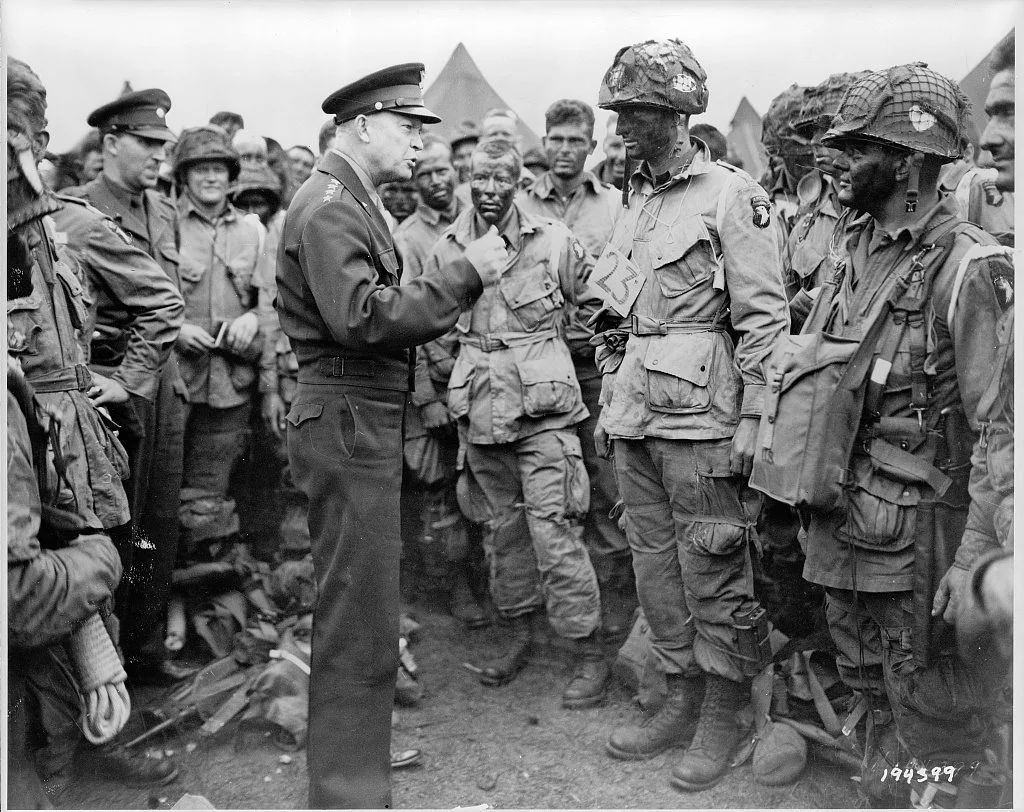
General Dwight D. Eisenhower gives the order of the day, "Full victory--nothing else" to paratroopers somewhere in England, just before they board their airplanes to participate in the first assault in the invasion of the continent of Europe
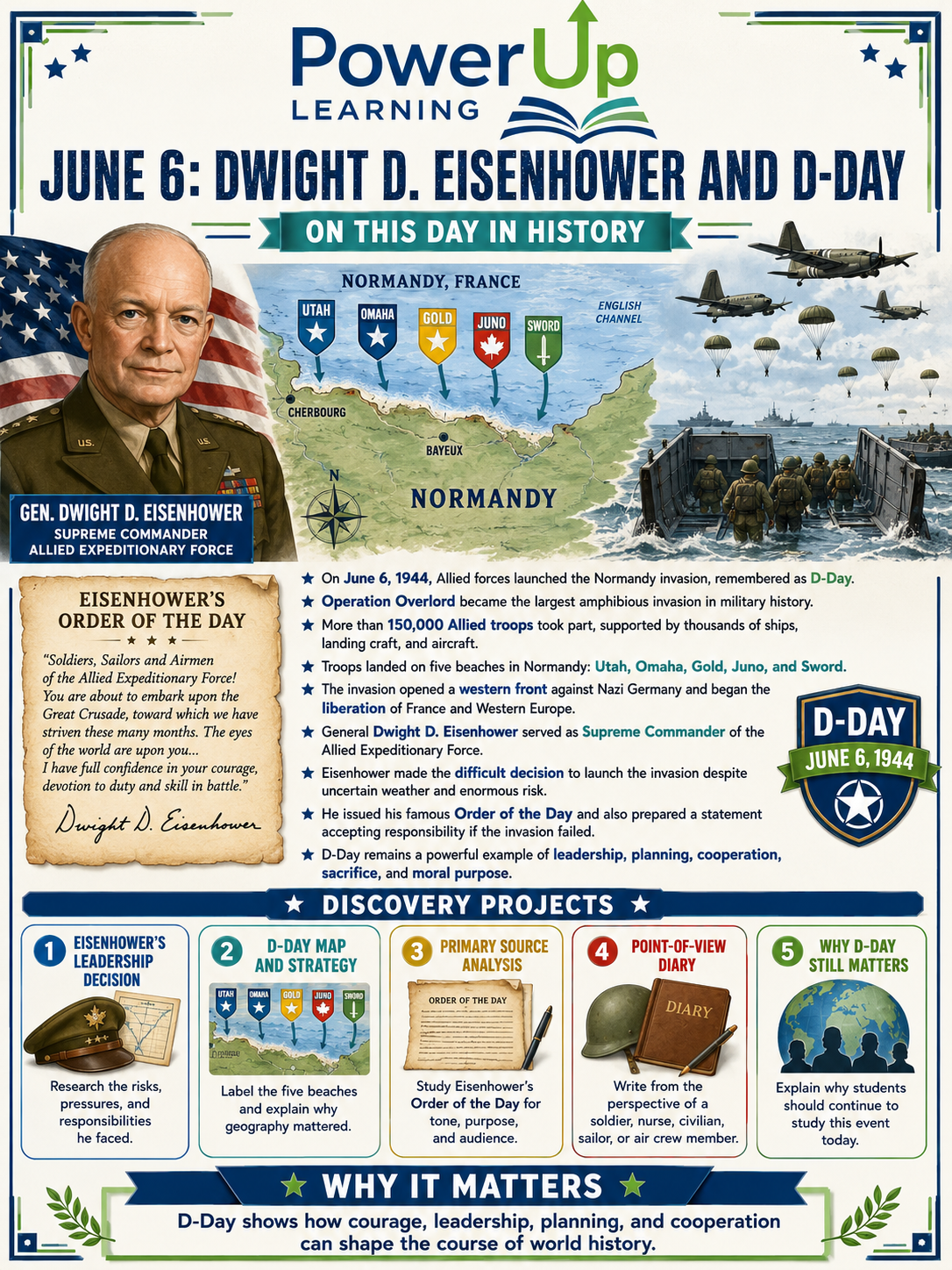
On June 6, 1944, Allied forces launched the Normandy invasion, remembered as D-Day, one of the most consequential military operations of World War II. The operation, code-named Operation Overlord, brought together land, air, and sea forces in what the Eisenhower Presidential Library describes as the largest amphibious invasion in military history. Allied troops landed on five beaches in Normandy, France: Utah, Omaha, Gold, Juno, and Sword. More than 150,000 Allied troops took part, supported by thousands of ships, landing craft, and aircraft. The invasion opened a western front against Nazi Germany and began the long, costly campaign to liberate France and Western Europe.
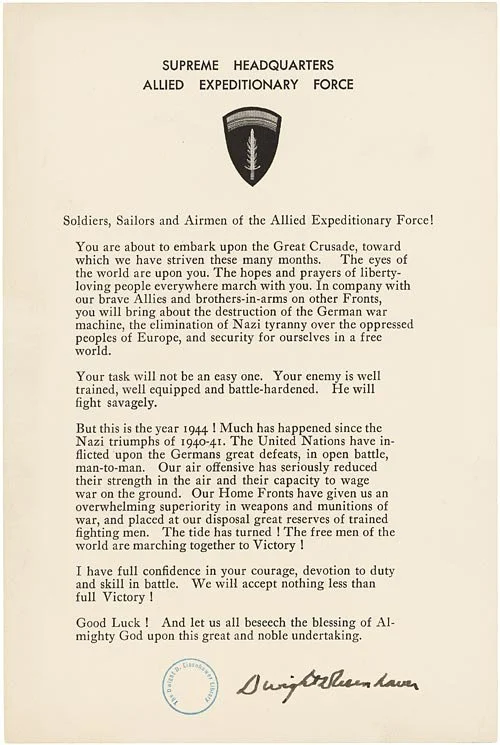
The individual at the center of this historic event was General Dwight D. Eisenhower, Supreme Commander of the Allied Expeditionary Force. Eisenhower had to coordinate American, British, Canadian, and other Allied forces while making one of the most difficult decisions of the war: whether to launch the invasion despite uncertain weather and enormous risk. Before the operation began, he issued his famous Order of the Day to the soldiers, sailors, and airmen who would take part in the invasion. The National Archives explains that the message was intended to encourage Allied forces as they prepared for the D-Day invasion. Eisenhower also drafted a statement accepting responsibility in case the invasion failed, revealing the weight of leadership he carried that day.
The importance of D-Day reaches far beyond the beaches of Normandy. It marked a turning point in the fight against Nazi Germany and placed the Allies on a decisive path toward victory in Europe. The event also demonstrates how leadership, planning, cooperation, sacrifice, and moral purpose can shape world history. Eisenhower’s role is especially important because he had to lead not only through command, but through trust, communication, and accountability. D-Day reminds students that history is not only made by armies and governments; it is also shaped by individuals who make difficult decisions under pressure and by ordinary people who carry out extraordinary responsibilities.
Discovery Projects
5 Middle School and High School Projects
1. Eisenhower’s Leadership Decision Project
Students research Eisenhower’s decision to proceed with D-Day and create a leadership profile explaining the risks, pressures, and responsibilities he faced. Final products may include a one-page leadership brief, a poster, or a slide presentation.
2. D-Day Map and Strategy Project
Students create a labeled map of the Normandy invasion beaches: Utah, Omaha, Gold, Juno, and Sword. They should explain which Allied forces landed at each beach and why geography mattered to the success or difficulty of the invasion.
3. Primary Source Analysis: Eisenhower’s Order of the Day
Students read excerpts from Eisenhower’s Order of the Day and analyze its purpose, tone, and intended audience. They should answer: How did Eisenhower motivate the troops? What words communicated confidence? What does the document reveal about wartime leadership?
4. Point-of-View Diary Project
Students write a historically grounded diary entry from the perspective of one person connected to D-Day: Eisenhower, an Allied soldier, a nurse, a French civilian, a sailor, or an aircraft crew member. The entry should include accurate historical details and explain the emotional weight of the day.
5. Why D-Day Still Matters Project
Students create a short essay, podcast script, video, or classroom exhibit answering the question: “Why should students still study D-Day today?” Their project should connect the event to themes such as democracy, freedom, sacrifice, military planning, cooperation among nations, and the consequences of dictatorship.