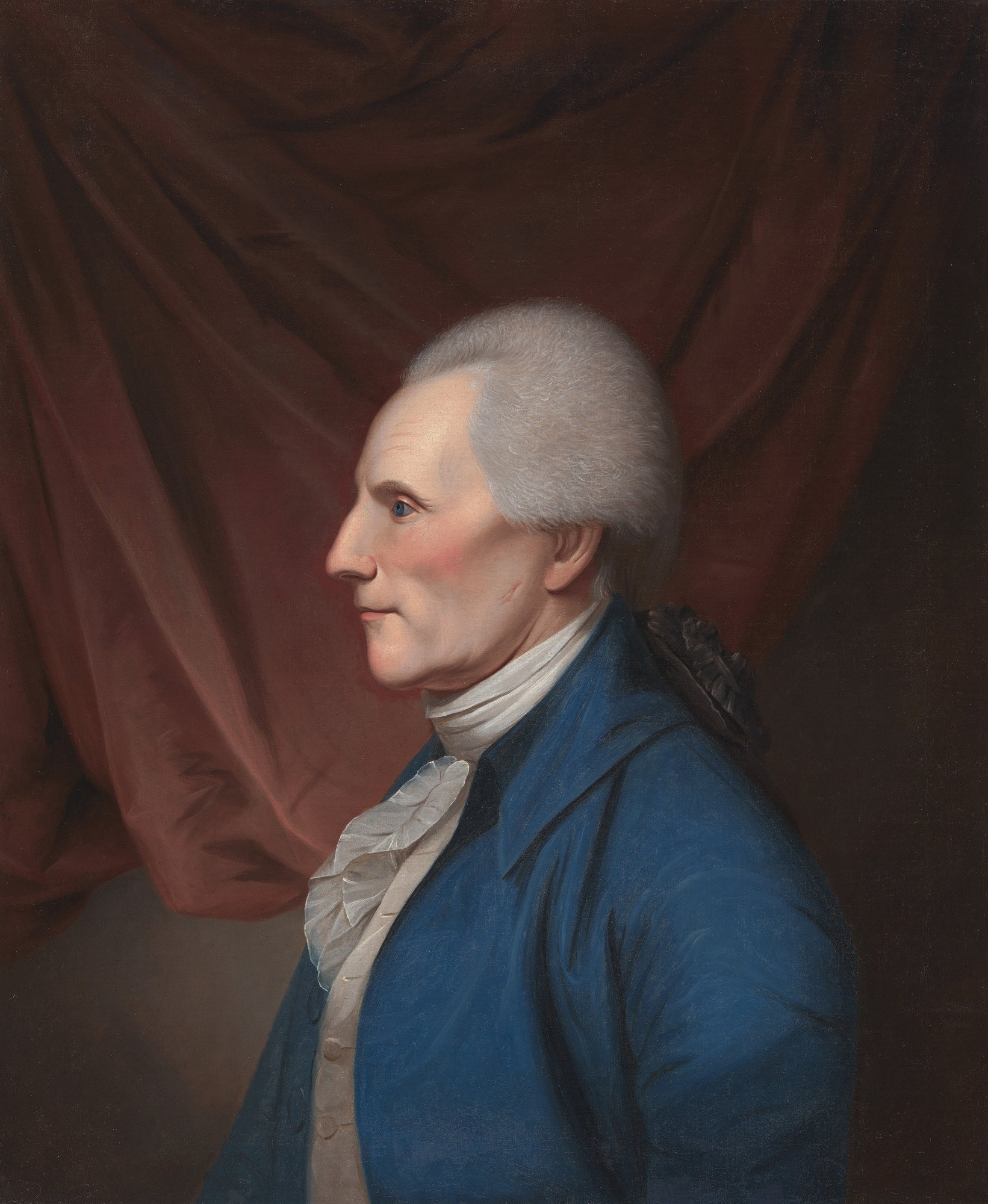
Richard Henry Lee, painted by Charles Willson Peale, remembered for introducing the resolution that moved Congress toward independence | source: Smithsonian
On June 7, 1776, Richard Henry Lee of Virginia introduced a resolution to the Second Continental Congress declaring that the American colonies “are, and of right ought to be, free and independent States.” This became known as the Lee Resolution. It was one of the most important steps toward the Declaration of Independence because it formally placed the question of independence before Congress. The National Archives explains that the resolution had three major parts: a declaration of independence, a call for foreign alliances, and a plan for confederation.
Richard Henry Lee is the central person in this story. He was acting under instructions from the Virginia Convention, which had authorized its delegates to support independence. His motion did not immediately create the Declaration of Independence, but it set the process in motion. On June 11, Congress appointed committees to draft a declaration, plan foreign alliances, and prepare a form of confederation. The Declaration of Independence followed less than a month later, on July 4, 1776.
After independence, Richard Henry Lee continued to serve the United States in important public roles. He served as president of the Continental Congress and later became one of Virginia’s first United States senators. Lee supported liberty and independence, but he was also cautious about giving too much power to the new federal government. He became associated with Anti-Federalist concerns and strongly supported the addition of a Bill of Rights to protect individual freedoms. His life and career are important because he helped move the colonies toward independence, shaped early American political debate, and defended the idea that liberty required both self-government and constitutional protections.
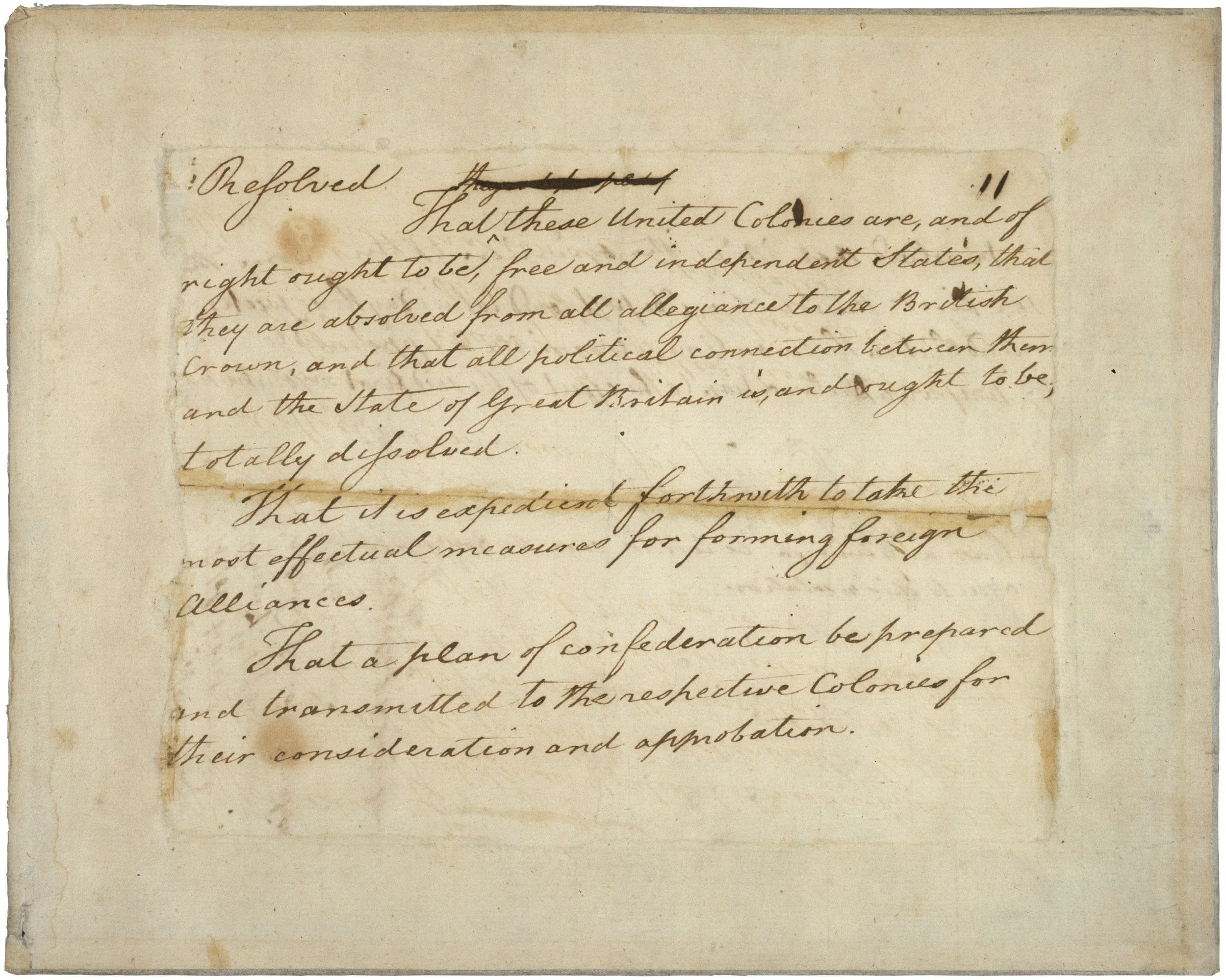
The Lee Resolution, introduced on June 7, 1776, formally called for American independence, foreign alliances, and a plan of confederation | source: National Archives
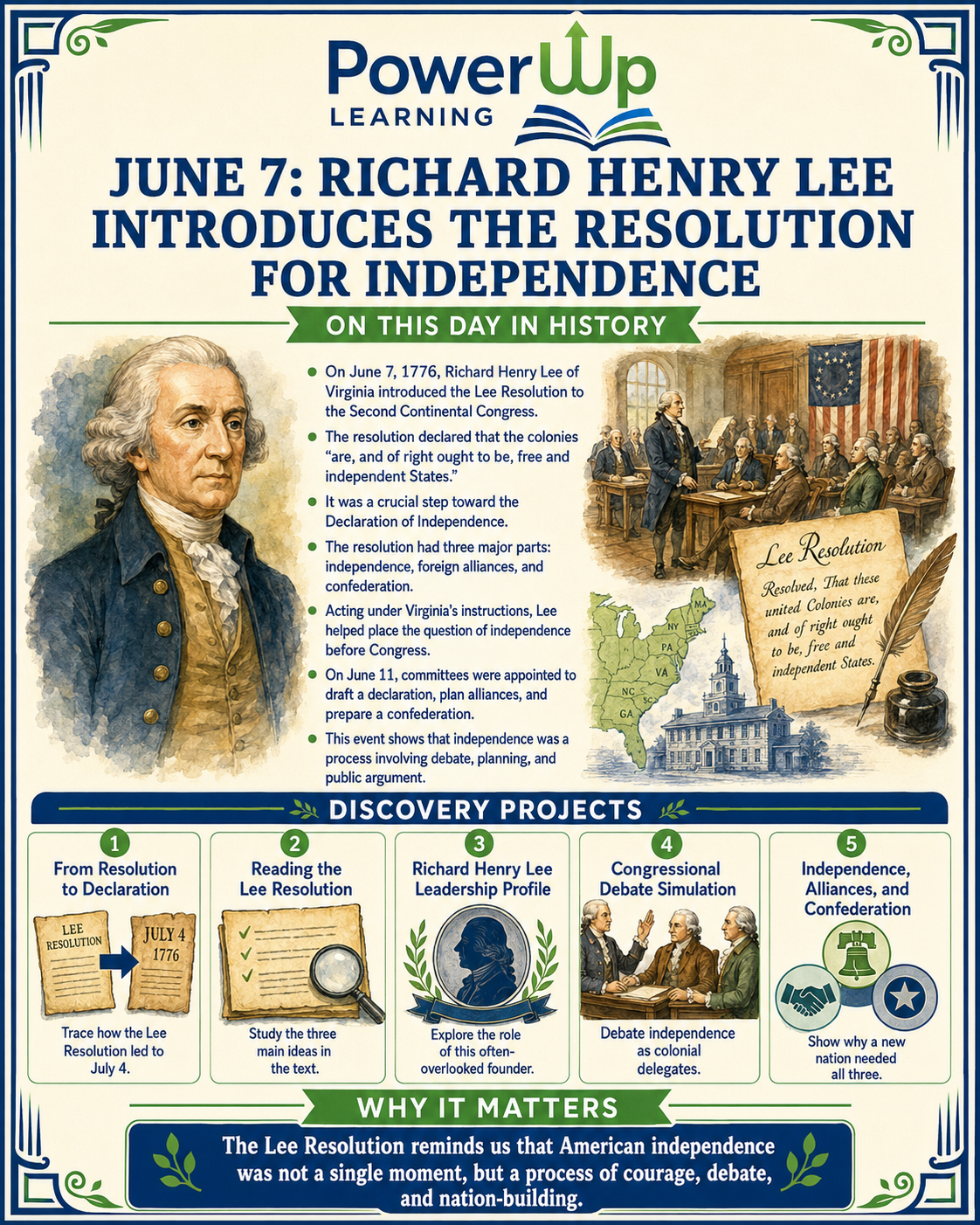
Student Projects
Project 1: From Resolution to Declaration
Project Goal:
Students will explain how the Lee Resolution helped lead to the Declaration of Independence.
Project Description:
Students will create a timeline beginning with Virginia’s instruction to support independence, continuing through Richard Henry Lee’s June 7 resolution, the appointment of congressional committees, the drafting of the Declaration, and the July 4 adoption of the Declaration of Independence.
Research Questions:
What did Richard Henry Lee propose on June 7, 1776?
Why was the Lee Resolution important before the Declaration of Independence?
Why did Congress appoint committees after the resolution was introduced?
How did colonial instructions influence congressional action?
Why is July 4 remembered more widely than June 7?
Final Project Options:
Students may create a digital timeline, poster timeline, illustrated sequence chart, short documentary script, or classroom presentation.
Reflection Question:
Why do some turning points in history become famous while others remain less well known?
Project 2: Reading the Lee Resolution as a Primary Source
Project Goal:
Students will analyze the language and meaning of the Lee Resolution.
Project Description:
Students will read the text of the Lee Resolution and identify its three major ideas: independence, foreign alliances, and confederation. They will explain why each part was necessary if the colonies were going to separate from Great Britain and become a new nation.
Research Questions:
What are the three parts of the Lee Resolution?
Why did independence require more than simply declaring separation?
Why were foreign alliances important during the Revolutionary War?
Why did the colonies need a plan for confederation?
How does the wording of the resolution compare with the Declaration of Independence?
Final Project Options:
Students may create an annotated primary-source page, legal language poster, three-part infographic, research paragraph, or comparison chart.
Reflection Question:
How can a short resolution change the direction of a nation?
Project 3: Richard Henry Lee Leadership Profile
Project Goal:
Students will investigate Richard Henry Lee’s role in the movement toward independence.
Project Description:
Students will research Richard Henry Lee’s political career, his role in the Continental Congress, and his contribution to the independence movement. They will explain why Lee’s June 7 motion was significant and compare his role with better-known figures such as Thomas Jefferson, John Adams, or Benjamin Franklin.
Research Questions:
Who was Richard Henry Lee?
Why was he chosen to introduce the resolution for independence?
What risks did colonial leaders take by supporting independence?
Why are some Founding figures remembered more than others?
How does Lee’s role help us understand collective leadership during the Revolution?
Final Project Options:
Students may create a biography poster, leadership profile, mock interview, short research essay, podcast episode, or “forgotten founder” exhibit panel.
Reflection Question:
How does studying a less commonly emphasized founder change our understanding of the American Revolution?
Project 4: Congressional Debate Simulation
Project Goal:
Students will understand the debate over independence by role-playing delegates in the Second Continental Congress.
Project Description:
Students will represent different colonies and debate whether Congress should support independence. Each student or group must research one colony’s position, concerns, economic interests, military situation, and political pressures in June 1776. The class will then hold a structured debate before voting on the Lee Resolution.
Research Questions:
Why were some colonies ready to support independence by June 1776?
Why were others more cautious?
What risks did independence create for the colonies?
What arguments supported remaining connected to Britain?
What arguments supported full independence?
Final Project Options:
Students may create delegate speeches, debate notes, colony position cards, a congressional voting chart, or a mock newspaper report on the debate.
Reflection Question:
Why is political consensus difficult during moments of crisis?
Project 5: Independence, Alliances, and Confederation
Project Goal:
Students will examine why the Lee Resolution included independence, foreign alliances, and confederation.
Project Description:
Students will analyze the Lee Resolution as a nation-building document. They will explain why the colonies needed to declare independence, seek foreign support, and create a plan for working together. Students will then connect those three ideas to the later Declaration of Independence, the Franco-American alliance, and the Articles of Confederation.
Research Questions:
Why did the colonies need foreign alliances during the Revolutionary War?
Why was France important to the American cause?
Why did the states need a plan of confederation?
What challenges came with turning colonies into states?
How did the Lee Resolution point toward later American government?
Final Project Options:
Students may create a cause-and-effect chart, three-column analysis poster, foreign alliance map, Articles of Confederation preview, slideshow, or museum exhibit panel.
Reflection Question:
Why does creating a new nation require both ideals and practical planning?