Frank Lloyd Wright in 1926 | public domain
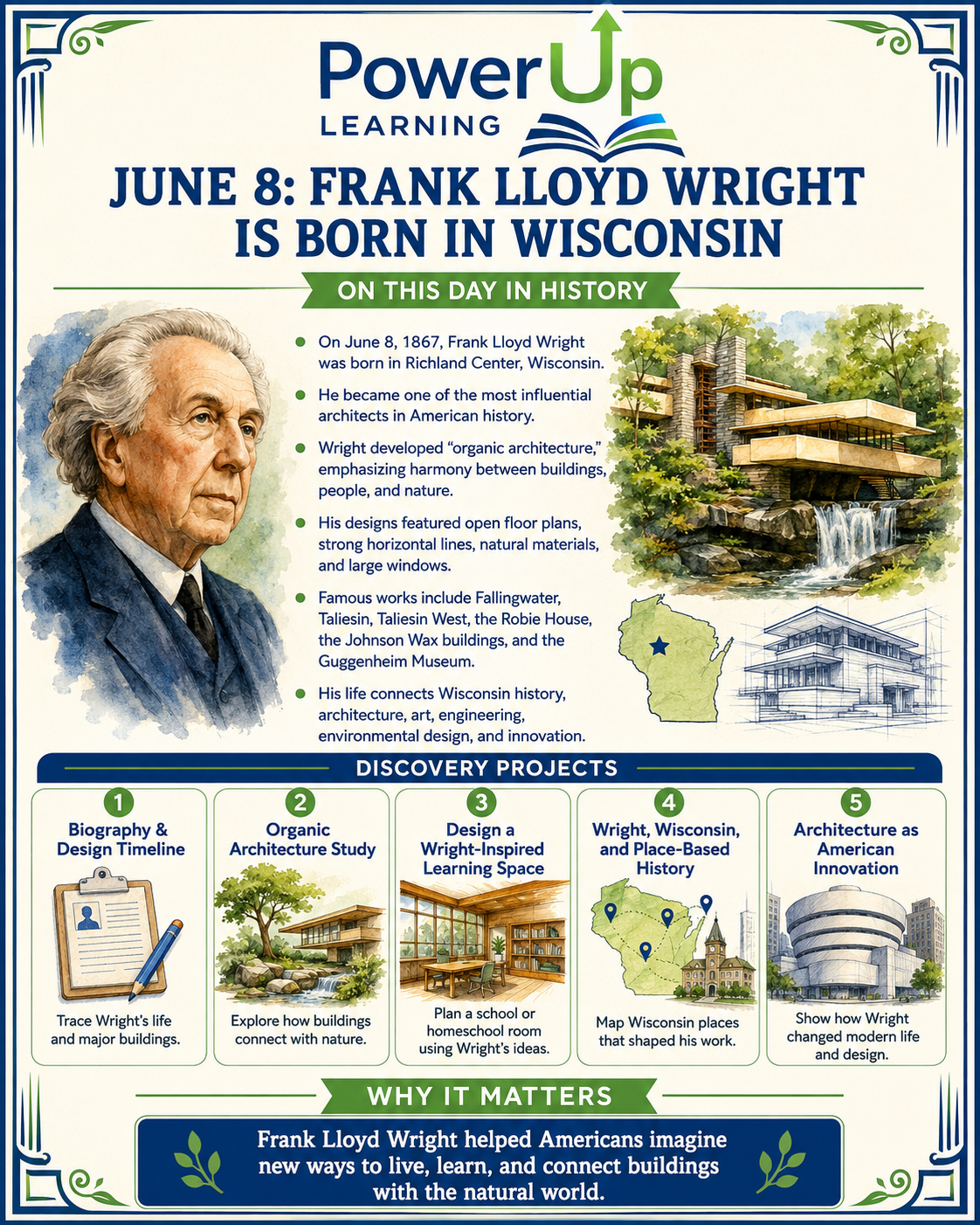
On June 8, 1867, Frank Lloyd Wright was born in Richland Center, Wisconsin. He became one of the most influential architects in American history, known for changing the way people thought about homes, buildings, space, landscape, and modern design. The Frank Lloyd Wright Foundation describes Wright as the son of William Carey Wright, a preacher and musician, and Anna Lloyd Jones, a teacher whose Welsh family had settled near Spring Green, Wisconsin.
Frank Lloyd Wright was born on June 8, 1867, in Richland Center, Wisconsin, and became one of the most influential architects in American history. His Wisconsin roots shaped much of his thinking about land, landscape, and the relationship between buildings and the natural world. After working in Chicago, including time connected to the architectural world of Louis Sullivan, Wright developed his own distinctive approach to design. He rejected the idea that American buildings should simply imitate European styles and instead sought to create architecture that reflected modern life, regional identity, and the surrounding environment.
Wright is best known for developing the idea of organic architecture, which emphasized harmony between people, buildings, and nature. His designs often featured open floor plans, strong horizontal lines, natural materials, built-in furniture, large windows, and a smooth flow between indoor and outdoor spaces. His Prairie Style homes, especially in the Midwest, helped redefine American residential architecture by creating houses that seemed to grow naturally from the landscape. Later works such as Fallingwater, Taliesin, Taliesin West, the Robie House, the Johnson Wax buildings, and the Guggenheim Museum showed his continuing interest in innovation, movement, light, and space.
Frank Lloyd Wright’s contribution to architecture was larger than any single building. He changed how Americans thought about homes, workplaces, museums, schools, and the connection between design and daily life. He believed architecture should shape how people live, learn, gather, and experience beauty. His work influenced modern architecture, environmental design, interior planning, and the idea that buildings should respond to their setting rather than stand apart from it. Wright remains important because he helped create a distinctly American architectural language and challenged future architects to think creatively about space, nature, and human experience.
Student Projects
Project 1: Frank Lloyd Wright Biography and Design Timeline
Project Goal:
Students will investigate Frank Lloyd Wright’s life and explain how his Wisconsin roots influenced his work as an American architect.
Project Description:
Students will create a timeline of Wright’s life, beginning with his birth in Richland Center, Wisconsin, and continuing through major stages of his career. The timeline should include his early years, his connection to Wisconsin, his development of Prairie Style architecture, his work at Taliesin, and major buildings such as Fallingwater and the Guggenheim Museum.
Research Questions:
Who was Frank Lloyd Wright?
Why is his Wisconsin background important?
What were some of the major stages of his architectural career?
How did Wright’s ideas change American architecture?
Why is he still studied today?
Final Project Options:
Students may create a digital timeline, poster timeline, illustrated biography, slideshow, podcast script, or museum-style exhibit panel.
Reflection Question:
How can one person’s ideas change the way people think about the spaces where they live, work, and learn?
Project 2: Organic Architecture Design Study
Project Goal:
Students will explain the meaning of organic architecture and show how Wright used design to connect buildings with nature.
Project Description:
Students will study one Wright building, such as Fallingwater, Taliesin, Taliesin West, the Robie House, or the Johnson Wax buildings in Racine. They will identify design elements that show a relationship between the building and its environment. Students should examine features such as light, materials, landscape, shape, windows, rooflines, and interior space.
Research Questions:
What does organic architecture mean?
How did Wright try to connect buildings with their natural surroundings?
What materials, shapes, and design choices did he use?
How does the building affect the way people move, gather, or feel inside the space?
How is Wright’s idea of organic architecture relevant today?
Final Project Options:
Students may create an annotated building diagram, architectural poster, short research essay, model, slideshow, or before-and-after comparison with a more traditional building.
Reflection Question:
How can architecture help people feel more connected to nature?
Project 3: Design Your Own Wright-Inspired Learning Space
Project Goal:
Students will apply Wright’s design principles to create a school, homeschool room, library, or community learning space.
Project Description:
Students will design a learning space inspired by Frank Lloyd Wright’s ideas. Their design should consider natural light, flexible space, human comfort, connection to the outdoors, materials, and how the room supports learning. Students should include a drawing, floor plan, model, or digital design and explain how their choices support students.
Research Questions:
What makes a learning space effective?
How can design affect attention, curiosity, comfort, and collaboration?
How might Wright’s ideas influence a modern classroom or homeschool space?
What role should windows, light, color, furniture, and outdoor access play?
How can architecture support different kinds of learners?
Final Project Options:
Students may create a floor plan, 3D model, design board, digital rendering, labeled sketch, or oral design presentation.
Reflection Question:
How does the design of a room change the way people learn?
Project 4: Wright, Wisconsin, and Place-Based History
Project Goal:
Students will analyze how Wisconsin’s landscape and communities shaped Wright’s work and how Wright shaped Wisconsin’s cultural history.
Project Description:
Students will research Wright’s Wisconsin connections, including Richland Center, Spring Green, Taliesin, Madison, and Racine. They will explain how Wisconsin’s rural landscapes, family history, and regional identity influenced Wright’s architectural thinking. Students may also examine one Wisconsin Wright building and explain why it matters historically.
Research Questions:
Where in Wisconsin was Wright born?
What Wisconsin places were important in Wright’s life and career?
How did landscape influence his design philosophy?
Why is Taliesin important to Wisconsin and American architecture?
How can a place shape a person’s creative work?
Final Project Options:
Students may create a Wisconsin map, travel brochure, local history poster, short video script, place-based biography, or illustrated guide to Wright sites in Wisconsin.
Reflection Question:
How can a person’s home state influence the ideas they share with the world?
Project 5: Architecture as American Innovation
Project Goal:
Students will evaluate Frank Lloyd Wright as an American innovator and connect his work to broader changes in twentieth-century life.
Project Description:
Students will examine how Wright’s designs reflected changes in American society, including suburban growth, modern materials, new ideas about family life, technology, transportation, and the relationship between people and nature. Students will compare Wright’s design ideas with another American innovation from the same general period, such as automobiles, skyscrapers, modern furniture, electric lighting, or planned communities.
Research Questions:
Why can architecture be considered a form of innovation?
How did Wright’s designs challenge older building traditions?
What problems was Wright trying to solve through architecture?
How did modern life influence building design?
What makes a design idea historically important?
Final Project Options:
Students may create a comparison chart, innovation poster, research essay, documentary script, museum exhibit, or persuasive presentation arguing why Wright should be considered a major American innovator.
Reflection Question:
How does innovation change not only what people use, but how they live?