May 27: Golden Gate Opens
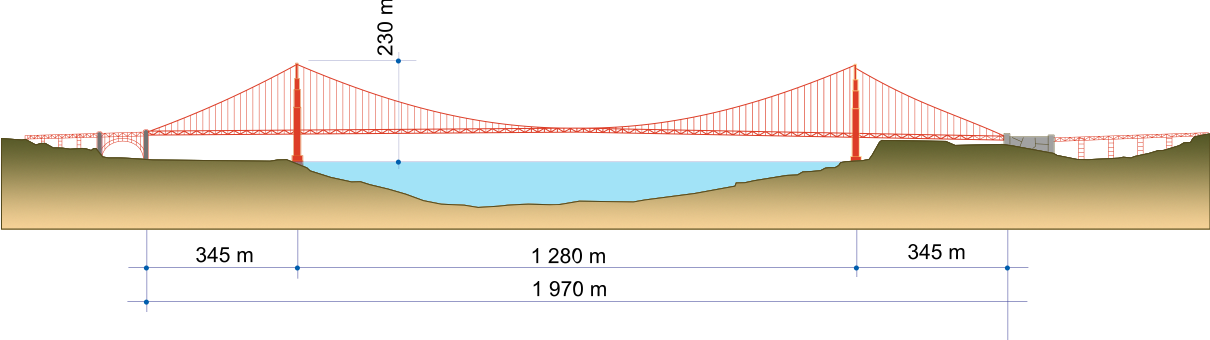
Source: Roulex 45, CC BY-SA 3.0: https://commons.wikimedia.org/wiki/File:Golden-Gate-Bridge.svg
On May 27, 1937, the Golden Gate Bridge opened first to pedestrians, not automobiles. The event was called Pedestrian Day and marked the beginning of a week-long Golden Gate Bridge Fiesta celebrating the bridge’s completion. More than 200,000 people paid 25 cents to walk across the bridge, and the next day President Franklin D. Roosevelt officially opened it to vehicle traffic by pressing a telegraph key from the White House. The bridge was a major engineering achievement built during the Great Depression, with construction beginning in 1933 and finishing ahead of schedule and under budget. It became a symbol of innovation, public investment, and regional pride. For education, the event is especially useful because it connects history, engineering, geography, economics, transportation, civic planning, and design. Students can study not only how the bridge was built, but also why communities invest in large public works projects and how those projects reshape daily life.
Project: Golden Gate Bridge Public Works Investigation
Project Goal
Students will investigate the opening of the Golden Gate Bridge as both a historical event and an example of how engineering, civic planning, and public investment can change a community. The goal is for students to understand that major public works projects are not only construction achievements; they also reflect the needs, values, challenges, and hopes of the society that builds them.
Project Description
Students will research the May 27, 1937 opening of the Golden Gate Bridge and examine why the bridge mattered to the San Francisco Bay Area. They will study the bridge as a public works project built during the Great Depression, consider the engineering challenges involved, and explain how the bridge affected transportation, local identity, and economic development. Students should use at least two sources, including one historical or primary-source image, article, timeline, or document.
Research Questions
Why was the Golden Gate Bridge considered such an important engineering achievement in 1937?
What problems did the bridge help solve for people living in the San Francisco Bay Area?
How did Pedestrian Day show public excitement about the bridge?
What challenges did builders face during construction?
How can a bridge, road, school, dam, or other public works project change the way a community grows?
Final Project Options
Students may choose one of the following formats:
Option 1: Illustrated Research Poster
Create a poster with a title, short historical summary, map or diagram, three important facts, and one explanation of why the bridge mattered.
Option 2: Newspaper Front Page
Design a 1937-style newspaper front page announcing Pedestrian Day. Include a headline, short article, quote box, image or drawing, and a sidebar explaining the bridge’s importance.
Option 3: Mini Slide Presentation
Create a 5-slide presentation covering the bridge’s construction, opening day, engineering features, community impact, and one modern connection.
Option 4: Public Works Comparison
Compare the Golden Gate Bridge to another public works project, such as a local bridge, highway, school, park, or dam. Explain what problem each project was designed to solve.
Reflection
After completing the project, students should write three questions inspired by what they discovered, focusing on what they still wonder, want to explore further, or now see differently.